
Grand Canyon Rivers of Time: The Cinematic Science Behind the Film That Reframes the Canyon Before You See It
Most visitors see the Grand Canyon for the first time through a windshield, a parking lot, and then suddenly, an abyss. There is no gentle introduction. The rim just drops away, and the brain scrambles to make sense of something that is simultaneously enormous and ancient in a way that human perception was never designed to process in an instant. The result is awe, yes, but often a quiet disorientation: What am I actually looking at?
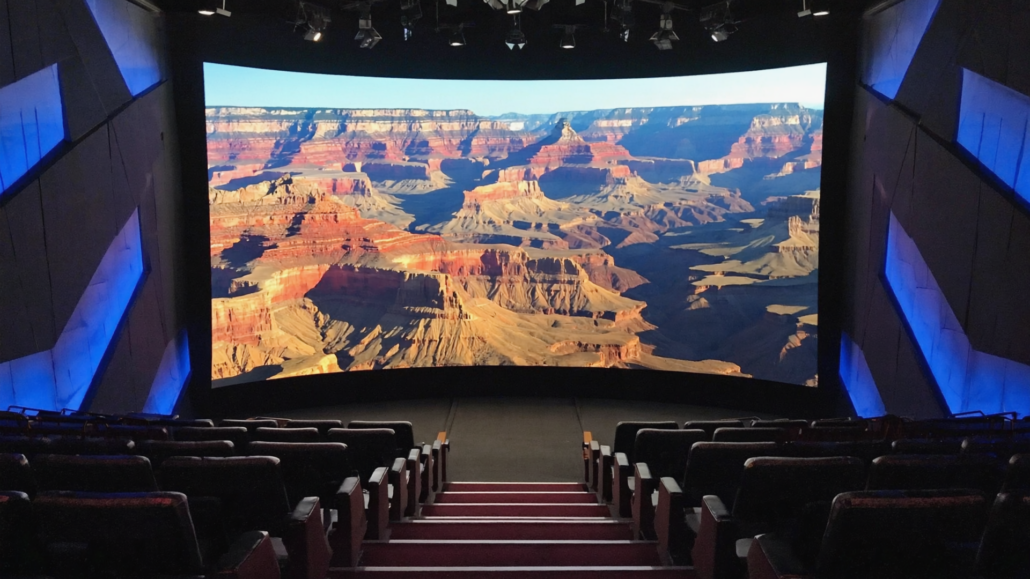
That question is the entire reason Grand Canyon: Rivers of Time exists. Screened on a six-story IMAX screen using IMAX with Laser technology at the Grand Canyon IMAX Theater in Tusayan, just outside the South Rim entrance, this film does something no interpretive sign or trailhead kiosk can: it compresses five billion years of geological and cultural history into a cinematic experience that fundamentally changes how a person sees the canyon before they ever stand at its edge. That is not marketing language. It is a structural fact about how human understanding works, and it is worth examining closely.
This article breaks down the science, the storytelling craft, and the cinematic technology behind Grand Canyon: Rivers of Time, and explains why watching it before entering Grand Canyon National Park is one of the most underrated decisions a first-time visitor can make.
Why the Brain Struggles With the Grand Canyon, and What Film Can Fix
The Grand Canyon is often described as one of the most humbling sights on Earth, but that humility comes with a cognitive cost. The human visual system is calibrated for human-scale environments. We evolved to judge distances in feet, not miles, and to process time in days, not geological eons. Standing at the South Rim and looking down 6,000 feet into a canyon carved over millions of years produces a kind of perceptual overload that is well-documented in visitor experience research.
What happens is this: the brain sees an enormous space but cannot assign meaningful reference to it. The Colorado River at the canyon’s bottom looks like a thin blue-gray thread. In reality, it runs 300 feet wide in places. The rock formations stacked in the canyon walls represent layers deposited over hundreds of millions of years, but they just look like stripes of color. Without context, the canyon is visually stunning but conceptually opaque.
This is precisely the gap that large-format cinema fills. Grand Canyon IMAX Theater‘s flagship film is engineered to provide that context before the sensory experience overwhelms it. By presenting the canyon’s geology, hydrology, and cultural history in a structured narrative with cinematic scale, the film essentially pre-loads the visitor’s brain with a framework for interpretation. When you stand at the rim afterward, the stripes have names. The river has a story. The scale has reference points. The awe becomes informed awe, which is a categorically different and richer experience.
Cognitive scientists who study environmental education have long noted that contextual priming, receiving structured information about a place before visiting it, dramatically improves both comprehension and emotional engagement during the visit itself. The Grand Canyon is the ideal test case for this principle. And a six-story IMAX screen is the ideal delivery vehicle, because it operates at a scale that approaches the canyon’s own visual magnitude.
The Problem With Arriving Cold
Visitors who arrive at the South Rim without any contextual preparation tend to spend their first hour simply adjusting to the scale. They take photographs that will never fully capture what they see. They read a few interpretive panels. They might feel vaguely guilty that they are not sure what they are supposed to feel. This is the “arriving cold” problem, and it is extremely common.
The difference between arriving cold and arriving primed by a film like Grand Canyon: Rivers of Time is the difference between looking at a painting and understanding what the painter was trying to say. The visual experience is identical. The interpretive depth is not.
What IMAX with Laser Technology Actually Means for This Film
IMAX with Laser is not simply a bigger projector. It represents a fundamental shift in how large-format cinema is delivered, and understanding the technology explains why it matters specifically for a film about geological landscapes.
Traditional projection systems use xenon lamp technology, which produces bright images but with certain limitations in color range and contrast, particularly in very dark or very bright scenes. Laser projection replaces the xenon arc lamp with dual laser light sources that deliver a significantly wider color gamut, meaning a broader spectrum of colors rendered with greater accuracy, along with a higher contrast ratio. In practical terms, this means that the deep reds and ochres of Precambrian rock layers appear as they actually look in afternoon light. The blue-gray of the Colorado River in shadow reads as genuinely blue-gray rather than as a compressed approximation. The difference in a geological film is not cosmetic. It is the difference between seeing the canyon and understanding it.
The Grand Canyon IMAX Theater‘s six-story screen amplifies this further. IMAX frames are dramatically larger than standard cinema frames, capturing roughly ten times the resolution of conventional 35mm film. When that image is projected by a laser system onto a screen that is multiple stories tall, the resulting image fills the viewer’s peripheral vision completely. The brain stops processing it as a screen and begins processing it as an environment. This is the core mechanism behind why IMAX works as an educational medium, not just an entertainment one.
The Peripheral Vision Effect
Standard cinema occupies roughly 30 to 40 degrees of a viewer’s horizontal field of vision. IMAX, particularly on screens of the size used at the Grand Canyon large format theater in Tusayan, can occupy close to 70 degrees or more depending on seating position. This matters because peripheral vision is processed differently by the brain than central vision. Peripheral input carries strong signals related to spatial awareness, motion, and environmental immersion. When a film fills peripheral vision, the viewer’s nervous system begins responding to the onscreen environment as if it were real space.
For a film about a canyon, this effect is transformative. Aerial sequences filmed above the South Rim do not feel like watching a drone video. They feel like standing at altitude. Rock formation close-ups do not feel like documentary footage. They feel like being in the canyon. This immersive response is precisely why IMAX with Laser technology is not a luxury upgrade for this kind of film; it is the essential delivery mechanism for the content itself.
The Geological Story: Five Billion Years in Under an Hour
The Grand Canyon’s geological history is one of the most complete and readable rock records on Earth. Grand Canyon: Rivers of Time takes on the challenge of translating that record into a narrative that a non-specialist audience can follow, feel connected to, and remember when they walk out into the canyon itself.
The canyon’s rock layers span from relatively young formations near the rim to some of the oldest exposed rock on the planet’s surface in the Inner Gorge. The National Park Service’s geological overview of Grand Canyon identifies the Vishnu Schist in the Inner Gorge as dating to roughly 1.7 to 1.8 billion years old, making it among the most ancient exposed basement rock accessible to the public anywhere in North America. Above it, the canyon walls record a succession of marine sediments, desert dunes, shallow seas, and river deltas, each layer a chapter in a planetary autobiography.
What the film does exceptionally well is translate these layers from abstract geological terminology into visual and narrative sequences that lodge in memory. A viewer who watches the film will walk to the rim understanding that the canyon is not simply a hole in the ground. It is a library. The Kaibab Limestone at the top, the youngest layer, formed roughly 270 million years ago when the region was a shallow tropical sea. Below it, the Toroweap Formation, the Coconino Sandstone (an ancient desert of towering dunes), the Hermit Shale, the Supai Group, and downward through time to the Precambrian basement. Each layer represents not just a time period but an entire world, a completely different version of what is now northern Arizona.
The Role of the Colorado River
The canyon was not simply deposited. It was carved. The Colorado River is the sculptor, and the film devotes significant attention to the mechanics of that carving: how the river’s gradient, its sediment load, and the uplift of the Colorado Plateau combined to produce a canyon that cuts so deep, so fast (in geological terms), and so dramatically.
Current geological understanding, informed by ongoing research including work published through institutions like the U.S. Geological Survey’s research on Grand Canyon geology, suggests the canyon as we know it began forming somewhere between 5 and 6 million years ago, though the rock it cuts through is far older. This distinction between the age of the rock and the age of the canyon is one of the most common points of confusion for visitors, and the film addresses it clearly.
Seeing the river’s role dramatized on a six-story screen, with aerial footage of the Colorado winding through the Inner Gorge and animations showing how water and sediment act as geological tools, gives visitors a mental model they will carry with them to every viewpoint. The canyon stops being mysterious and starts being logical. Enormous, yes. Ancient, absolutely. But also comprehensible, which makes it more awe-inspiring, not less.
The Cultural History Layer: Indigenous Nations and the Living Canyon
Geological history is only one dimension of what Grand Canyon: Rivers of Time covers. The film’s treatment of the canyon’s human history, specifically the deep cultural connections of Indigenous peoples to this landscape, is what elevates it from a geology documentary to a genuine cultural orientation for visitors.
The Grand Canyon region has been inhabited by human communities for at least 12,000 years. The canyon itself and the lands surrounding it carry profound significance for eleven affiliated tribal nations, including the Havasupai, the Hualapai, the Navajo Nation, the Hopi, and the Southern Paiute, among others. These are not historical relationships. They are ongoing ones. Tribal nations continue to maintain cultural, spiritual, and legal connections to Grand Canyon lands, and several manage their own visitor programs and tribal parks in the region.
The film presents this history with care and depth, treating Indigenous cultural history not as a prologue to the “main story” of Euro-American exploration but as an integral and continuing narrative. For many visitors, this framing is genuinely new. The standard tourist approach to the Grand Canyon focuses on geological wonder and John Wesley Powell’s 1869 expedition, but the human story of this landscape is far older, more complex, and more alive than that framing suggests.
Why This Context Changes the Visit
Visitors who understand the canyon’s cultural history before they enter the park engage differently with what they see. They notice the ruins of ancient granaries tucked into canyon walls. They understand why certain viewpoints or areas carry particular significance. They read interpretive materials with a framework that connects individual facts into a coherent picture. The film does not replace the deeper reading a visitor might do on Indigenous history, but it provides an orientation that makes subsequent engagement possible and meaningful.
This is especially important for international visitors to the United States, who may have limited prior exposure to the diversity and depth of Native American cultural history. The Grand Canyon is one of the few places in the country where that history is literally written into the landscape at a scale that is impossible to ignore, and the film ensures visitors arrive prepared to see it.
How the Film Structure Mirrors the Canyon’s Own Layers
One of the more elegant aspects of Grand Canyon: Rivers of Time is that its narrative structure mirrors the geological structure it describes. Just as the canyon reveals deeper and older history the further down you go, the film moves from the present-day canyon experience, what a visitor sees and feels at the rim, down through geological time, through cultural history, and into the deep past of the planet itself before returning the viewer to the surface with new eyes.
This is not an accident. Large-format documentary filmmaking at its best uses the structural possibilities of the medium to reinforce content. A film that begins at the rim and descends into the past, then resurfaces, replicates the experience of hiking into the canyon and back out. It creates an emotional arc that matches the physical arc of the landscape. When the film ends and the lights come up, viewers are not simply informed. They have been somewhere.
The Pacing Advantage of IMAX Runtime
Large-format films typically run shorter than conventional feature films, often in the 40 to 60 minute range, and Grand Canyon: Rivers of Time is calibrated for that window. This runtime is not a limitation. It is an advantage for visitor orientation content. Studies of educational media consistently find that attention and retention are both higher in shorter, high-intensity formats than in longer conventional ones. A 45-minute IMAX film that holds full sensory engagement throughout is more educationally effective than a two-hour conventional documentary that loses attention partway through.
The IMAX format also demands higher production quality per minute of content, because every frame is projected at a scale where imperfection is immediately visible. This discipline of quality tends to produce tighter, more purposeful storytelling. Every sequence in Grand Canyon: Rivers of Time earns its place on screen because the cost and craft of IMAX production demand it.
The Tusayan Location: Why “Before You Enter” Is the Right Sequence
The Grand Canyon Visitor Center IMAX is located in Tusayan, Arizona, just outside the South Rim entrance gates. This is not incidental geography. It is a fundamentally correct sequencing for the visitor experience.
The alternative, watching the film after a day at the rim, is common but less effective. By afternoon, most visitors are physically tired, emotionally saturated, and cognitively overwhelmed. The interpretive benefit of the film is reduced when it is viewed as a recap rather than a primer. Watching Grand Canyon: Rivers of Time before entering the park means the film’s frameworks are active in the viewer’s mind during the most cognitively open moment of the visit, the first approach to the rim.
The logistics reinforce this. The facility on Route 64 in Tusayan offers on-site dining at Pizza Hut Express and Explorers Café, a large souvenir and hiking gear retail store, and the ability to purchase various National Park entrance passes before reaching the gate. During peak season, when entrance lines can stretch significantly, having a pass in hand before arriving at the gate is a practical advantage. The facility also offers Ultra-Fast 150 kW and Hyper-Fast 350 kW EV charging, making it an effective stop for road-trip travelers arriving from Flagstaff, Las Vegas, or Phoenix who need to charge before or after the park.
The Pink Jeep Connection: Film as Foundation for Guided Experience
The on-site Pink Jeep Tours office adds another dimension to the Tusayan stop. Every Pink Jeep Tour departing from Grand Canyon Visitor Center IMAX includes a ticket to Grand Canyon: Rivers of Time, which means the film functions as a deliberate orientation layer for guided tour participants. This is smart design. Guests who watch the film before boarding a Pink Jeep Tour arrive at each geological viewpoint with a conceptual vocabulary that transforms what a guide tells them. When a guide mentions the Kaibab Limestone at the rim or points to the Tapeats Sandstone visible partway down, guests who have seen the film know exactly what that means and why it matters.
Pink Jeep Tours, recognized as Best Tour Operator, departs directly from the front door of the facility, which means the transition from film to field is seamless. There is no driving to a separate tour office, no logistical gap between cinematic orientation and physical experience. The sequence is: film, then canyon, with a knowledgeable guide connecting the two.
For visitors considering a guided experience, this combination is one of the most complete approaches to understanding the Grand Canyon available at the South Rim. The film provides the geological and cultural framework. The guide provides real-time interpretation at specific viewpoints. The canyon provides the experience itself. Each layer supports the others.
Grand Canyon Geology History: A Visual Timeline Visitors Can Actually Use
For visitors who want to connect what they see in the film to what they will observe at the canyon, a basic visual timeline of the major rock formations is one of the most useful tools available. The table below organizes the primary visible layers of the South Rim canyon wall from top to bottom, with the approximate age of each formation and the environment in which it was deposited.
| Rock Formation | Approximate Age | Depositional Environment | Visual Clue at the Rim |
|---|---|---|---|
| Kaibab Limestone | ~270 million years | Shallow tropical sea | Pale gray layer at the very rim; contains marine fossils |
| Toroweap Formation | ~273 million years | Coastal tidal flats | Yellowish limestone just below the rim cap |
| Coconino Sandstone | ~275 million years | Ancient desert dune field | Bright white cliff band; cross-bedding visible from viewpoints |
| Hermit Shale | ~280 million years | Floodplain and river delta | Reddish-brown slope below the white Coconino band |
| Supai Group | 300–315 million years | River deltas, coastal plains | Deep red cliffs and slopes; visually dominant from Mather Point |
| Redwall Limestone | ~340 million years | Deep marine sea | Massive red cliff face (naturally gray; stained red by iron above) |
| Tonto Group (Tapeats Sandstone, Bright Angel Shale, Muav Limestone) | 505–525 million years | Shallow sea advancing inland | The broad Tonto Platform; green-gray slopes above the Inner Gorge |
| Vishnu Schist / Zoroaster Granite | 1.7–1.8 billion years | Ancient mountain roots, metamorphic basement | Dark, jagged Inner Gorge walls; visible from Bright Angel Trail lower sections |
This framework, which the film builds visually and narratively, transforms what might otherwise look like an abstract wall of colored rock into a readable sequence. Visitors who carry this mental map into the park will find every viewpoint more meaningful.
Grand Canyon Cultural History: The Human Story the Film Tells
The geological record of the Grand Canyon is extraordinary, but the human record is equally rich, and Grand Canyon: Rivers of Time treats it with the same depth and respect. Understanding the scope of human history in this landscape reframes the canyon from a natural wonder into something more complex: a place where human civilization and geological time have intersected continuously for millennia.
Archaeologists have documented split-twig figurines found in canyon caves that date to approximately 4,000 years ago, suggesting ritual use of the canyon’s interior by Archaic-period peoples. Later, the Ancestral Puebloans (historically called Anasazi) built granaries and settlements in the canyon walls, and over 4,700 archaeological sites have been documented within Grand Canyon National Park, according to the National Park Service’s cultural history resources for Grand Canyon. The Havasupai people have lived in the western canyon for at least 800 years and continue to do so today, maintaining the Havasupai Reservation within the canyon itself.
The film does not treat this as background. It treats it as foreground, weaving Indigenous cultural history into the same narrative thread as geological history, which is precisely the right approach for a canyon where human habitation is itself embedded in the rock record. For visitors who may never have thought deeply about Indigenous relationships to public lands, this framing can be genuinely transformative.
The Explorer Narrative in Context
John Wesley Powell’s 1869 expedition through the canyon by river is one of the most famous adventure stories in American history, and the film acknowledges it. What the film does well is place that story in proportion: the Euro-American “discovery” of the canyon is a recent chapter in a very long book. The canyon was known, named, navigated, and inhabited by Indigenous peoples for thousands of years before Powell’s boats entered the Colorado. Presenting both narratives without diminishing either is a genuine storytelling achievement, and it models the kind of layered understanding that makes a visit to Grand Canyon National Park more than a scenic drive.
Comparing the Film Experience to Other Canyon Orientation Options
Visitors to the South Rim have several options for orienting themselves to the canyon before or during their visit. Understanding how the IMAX film compares to these alternatives helps travelers make the most informed decision about how to spend their limited time.
| Orientation Option | Depth of Geological Context | Cultural History Coverage | Immersive Scale | Best For |
|---|---|---|---|---|
| Grand Canyon: Rivers of Time (IMAX) | ✅ Comprehensive, visual | ✅ Integrated narrative | ✅ Six-story screen, laser projection | All visitors, especially first-timers |
| NPS Visitor Center (inside park) | ⚠️ Good, panel-based | ⚠️ Solid, exhibit-based | ❌ Standard exhibit scale | Self-paced readers; supplement to IMAX |
| Ranger-Led Programs | ✅ High depth, location-specific | ✅ Strong, program-dependent | ⚠️ Real canyon as backdrop | Visitors with flexible schedules |
| Guidebooks / Apps | ⚠️ Variable, text-heavy | ⚠️ Variable | ❌ Screen-scale only | Pre-trip research; reference during visit |
| Trailhead Interpretive Signs | ❌ Limited, point-specific | ❌ Minimal | ❌ Sign-scale | Supplemental only; not a primary orientation tool |
The comparison makes clear that the IMAX film is not one option among equals. It is the most comprehensive, most immersive, and most time-efficient orientation tool available to South Rim visitors, particularly because it is accessible before entering the park at all, saving time and cognitive bandwidth for the park itself.
Planning Your Visit Around Rivers of Time: Practical Logistics
Understanding the film’s value is one thing. Integrating it smoothly into a Grand Canyon trip requires some practical planning. The Grand Canyon Visitor Center IMAX in Tusayan is open year-round, which makes it accessible regardless of season. Tusayan is the last town before the South Rim entrance, so stopping here fits naturally into any arrival route from Flagstaff (about 80 miles south on US-180 and AZ-64), Williams (about 60 miles on AZ-64), or Las Vegas (about 280 miles via US-93 and AZ-64).
For families, the film is an ideal way to engage children with the canyon before the physical experience of standing at the rim. Children who have seen the film tend to ask more specific questions at viewpoints, which keeps them engaged and transforms a potentially passive “look at the big hole” experience into an active one. The facility’s dining options (Pizza Hut Express and Explorers Café) and retail store mean the stop can absorb an hour to an hour and a half comfortably without feeling rushed.
Booking IMAX tickets online in advance is the recommended approach. The facility offers savings when you book online, and securing seats ahead of time ensures you catch your preferred showtime without waiting. During summer peak season, shows fill quickly, and arriving without a ticket can mean a wait that disrupts the rest of a tightly planned day. You can also pick up various National Park entrance passes at the facility, which streamlines the entry process at the South Rim gate.
Timing Your Stop for Maximum Impact
The ideal sequence for a one-day South Rim visit is: arrive in Tusayan, watch the film, purchase your park pass if needed, charge your EV if applicable, then drive through the South Entrance and head directly to a primary viewpoint like Mather Point or Yavapai Point. With the film’s geological and cultural framework fresh in mind, that first view of the canyon will be experienced with a depth of understanding that cannot be replicated by arriving at the rim first and catching the film afterward.
For visitors planning to take a Pink Jeep Tour, the logistics are even simpler. Every Pink Jeep Tour departing from Grand Canyon Visitor Center IMAX includes a Rivers of Time ticket as part of the package. The tour office is on-site, with tours departing from the front door. The film and the guided experience are designed to work together, and the combination is one of the most complete ways to engage with the canyon’s geology and cultural history in a single day.
Those interested in some of the canyon’s more unusual visitor stories, like the time maintenance workers cleaned the canyon’s famous glass walkway suspended 4,000 feet above the gorge, will find that the IMAX film gives those later encounters with the canyon’s drama a much richer backdrop.
Frequently Asked Questions About Grand Canyon: Rivers of Time and the IMAX Theater
What is Grand Canyon: Rivers of Time about?
Grand Canyon: Rivers of Time is an IMAX film that covers the geological formation of the Grand Canyon, the role of the Colorado River in carving it, and the deep cultural history of Indigenous peoples connected to the canyon. It is designed to give visitors a comprehensive contextual orientation before they enter Grand Canyon National Park.
Where is the Grand Canyon IMAX Theater located?
The Grand Canyon IMAX Theater is part of Grand Canyon Visitor Center IMAX, located in Tusayan, Arizona, just outside the South Rim entrance to Grand Canyon National Park. It is a privately operated facility, separate from the NPS-operated visitor center inside the park at Grand Canyon Village.
How long is the Rivers of Time IMAX film?
Like most large-format IMAX documentary films, Grand Canyon: Rivers of Time runs in the range typical for the format, making it an efficient orientation experience that fits comfortably into a day trip itinerary without consuming the majority of your canyon time.
What makes IMAX with Laser different from a regular movie theater?
IMAX with Laser uses dual laser projection to deliver a wider color range and higher contrast than conventional xenon lamp projection, combined with a six-story screen that fills the viewer’s peripheral vision. The result is a level of visual immersion that standard cinema cannot match, which is particularly effective for a film about a landscape as visually dramatic as the Grand Canyon.
Can I buy National Park passes at the Grand Canyon Visitor Center IMAX?
Yes. Grand Canyon Visitor Center IMAX sells various National Park entrance passes on-site, which can save significant time at the South Rim entrance gate, particularly during peak summer season when entry lines can be long.
Is the IMAX film appropriate for young children?
Yes. The film is appropriate for all ages and is particularly effective for children, who tend to engage more actively with the canyon experience after seeing the film’s visual and narrative framework. The six-story screen and laser projection make it a genuinely exciting experience for younger visitors as well as adults.
Do Pink Jeep Tours include the IMAX film?
Yes. Every Pink Jeep Tour departing from Grand Canyon Visitor Center IMAX includes a ticket to Grand Canyon: Rivers of Time. The tour office is on-site, and tours depart directly from the front door of the facility.
Should I watch the film before or after entering the park?
Before. The film is most effective as a contextual primer viewed before your first approach to the rim. Visitors who watch it before entering the park arrive at their first viewpoint with a geological and cultural framework already active, which produces a significantly richer experience. Watching it after the fact can feel like reviewing rather than preparing.
Is there food available at the Grand Canyon Visitor Center IMAX?
Yes. The facility has both Pizza Hut Express and Explorers Café on-site, making it easy to combine the film, a meal, and practical trip planning in a single stop before entering the park.
Does the facility offer EV charging?
Yes. Grand Canyon Visitor Center IMAX offers both Ultra-Fast 150 kW and Hyper-Fast 350 kW EV charging on-site, which is particularly useful for road-trip travelers arriving from Flagstaff, Las Vegas, or Phoenix who need to charge before or after their park visit.
How does this IMAX theater differ from the NPS visitor center inside the park?
The Grand Canyon IMAX Theater and Grand Canyon Visitor Center IMAX are privately operated facilities in Tusayan, outside the park gates. The official NPS Visitor Center is located inside the park at Grand Canyon Village and offers exhibits, ranger programs, and trip planning assistance. The two facilities serve complementary purposes, but the IMAX theater’s large-format cinematic experience is not replicated inside the park.
How can I save money on IMAX tickets?
Booking IMAX tickets online in advance is the recommended approach. Online pricing saves 20% compared to stated admission pricing at the door, and advance booking also secures your preferred showtime, which is particularly important during peak season.
Key Takeaways: What Rivers of Time Does for the Grand Canyon Visit
- Grand Canyon: Rivers of Time is a large-format IMAX film screened on a six-story screen using IMAX with Laser technology at the Grand Canyon IMAX Theater in Tusayan, just outside the South Rim entrance.
- The film covers approximately five billion years of Grand Canyon geology, including the major rock formations visible from the rim, and the role of the Colorado River in carving the canyon over the past 5 to 6 million years.
- It also presents a substantive treatment of the canyon’s cultural history, including the deep and ongoing connections of eleven affiliated tribal nations to the Grand Canyon landscape.
- IMAX with Laser technology delivers a wider color range, higher contrast, and greater visual immersion than conventional cinema, which is particularly meaningful for a film about a visually complex geological landscape.
- Watching the film before entering the park is the most effective sequence. Visitors arrive at the rim with a geological and cultural framework already in place, which transforms the visual experience of the canyon from overwhelming to comprehensible.
- The Grand Canyon Visitor Center IMAX facility also offers on-site dining, a retail store, National Park pass sales, EV charging, and the Pink Jeep Tours office, making it a comprehensive pre-park stop.
- Every Pink Jeep Tour departing from Grand Canyon Visitor Center IMAX includes a Rivers of Time IMAX ticket, combining cinematic orientation with guided field interpretation in a single package.
- Book IMAX tickets online in advance to save 20% and secure your preferred showtime, particularly during summer peak season.
The canyon has been forming for millions of years. It will keep forming long after every current visitor has come and gone. But the window in which a visitor gets to see it, really see it, with the context needed to understand what they are looking at, is measured in hours. Grand Canyon: Rivers of Time is the most effective tool available for making those hours count. Start your Grand Canyon adventure with IMAX, and you will find that the rim looks different when you know what you are standing above.
For those curious about some of the more extraordinary ways people have engaged with the canyon’s sheer scale, it is worth noting that Will Smith’s bungee jump for charity over the Grand Canyon attracted global attention precisely because the canyon’s depth makes every encounter with its vertical scale feel genuinely monumental. The film captures that scale in a way no other pre-visit medium can.

About the author
Explore The Canyon Editorial Team
See The Canyon


Leave a Reply
Want to join the discussion?Feel free to contribute!