
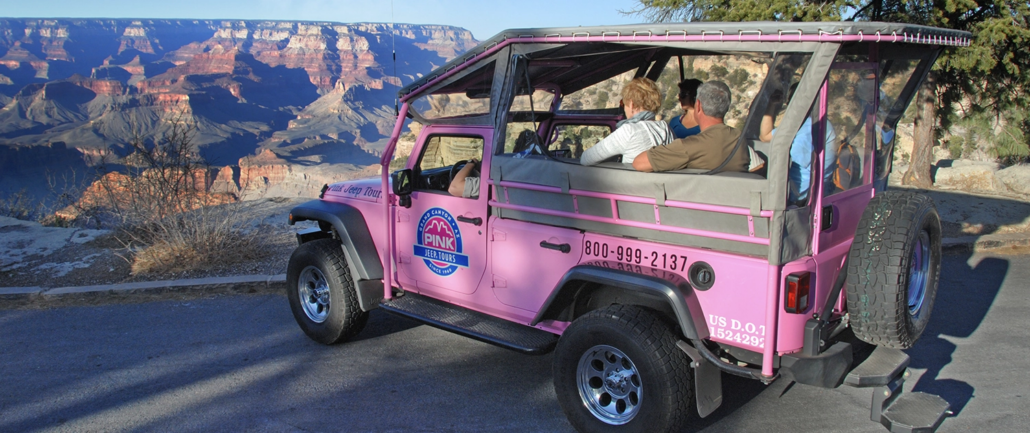
Pink Jeep Tours vs. Self-Guided Hiking at the Grand Canyon: An Honest Comparison for Every Traveler
Most people planning a Grand Canyon trip fall into one of two camps: those convinced that booking a guided tour is unnecessary (“it’s a canyon, you just walk up and look at it”) and those who assume self-guided hiking is too dangerous or too demanding for their fitness level. Both assumptions lead travelers to make the wrong choice for their circumstances, and at one of the most visited natural wonders on Earth, the wrong choice can mean missing the experience entirely.
This comparison exists to cut through the noise. Pink Jeep Tours Grand Canyon and self-guided hiking represent genuinely different philosophies of how to experience the South Rim, and neither is objectively superior. What matters is which approach matches your group’s fitness, time, budget, and desired depth of experience. This guide ranks the most important decision factors in order of impact, giving each the serious analysis it deserves rather than a superficial bullet point.
One important note before diving in: the Grand Canyon is not a casual afternoon park. It kills more visitors than almost any other national park in the country, primarily through dehydration, heat exhaustion, and falls. Every factor discussed here carries real consequences. Read accordingly.
1. Physical Access: Who Can Actually Reach the Good Stuff
This is the most important factor in the entire comparison, and it’s the one most travel guides bury at the bottom. The canyon’s most dramatic geology, its hidden alcoves, its sweeping inner-rim viewpoints, and its sense of true wilderness scale are not accessible from the South Rim paved trail. They require either significant physical exertion or a vehicle that can go where passenger cars cannot. This is where the Pink Jeep Tours Grand Canyon experience creates a structural advantage that no amount of good intentions can overcome on foot.
The South Rim’s accessible viewpoints, Mather Point, Yavapai Point, Desert View, are magnificent. But they are also where nearly every visitor goes. The overlooks are crowded, the viewing angles are familiar from a thousand travel photos, and the sense of genuine discovery is limited. Self-guided hiking can deepen the experience dramatically, but only if hikers are prepared to go below the rim, which introduces a cascade of physical demands that many visitors underestimate.
What the Jeep Gets You
Pink Jeep Tours operates purpose-built vehicles designed for unpaved terrain, giving groups access to viewpoints and geological formations that require navigating primitive roads. This matters for two groups in particular: travelers with mobility limitations who could never safely hike below the rim, and time-constrained visitors who want genuine depth without a multi-day commitment. A guided jeep tour can deliver canyon perspectives in two to four hours that a self-guided hiker would need a full day and serious fitness to approach.
The terrain access argument also extends to safety. Jeep tours follow routes that guides know intimately, including seasonal road conditions, wildlife activity patterns, and geological hazards. Solo hikers descending the Bright Angel or South Kaibab Trail face conditions that change rapidly, shade disappears, temperatures spike, water sources are limited, and the consequences of underestimating these conditions are documented in ranger incident reports every season.
What Self-Guided Hiking Gets You
No jeep tour replicates the sensation of standing on a narrow trail switchback with nothing but 4,000 feet of open air below you. Hiking into the canyon, even just to the first rest stop on the Bright Angel Trail at Mile-and-a-Half Resthouse, fundamentally changes how visitors perceive scale. The walls rise above you. The sounds of the rim disappear. The geology shifts from an abstract visual spectacle into something physically surrounding you. This experiential quality is irreplaceable, and for physically capable visitors with adequate time, it represents the highest-return investment they can make.
The practical advice here: if your group includes anyone with significant mobility limitations, heart or respiratory conditions, or if you are visiting in peak summer heat, the jeep tour wins this category outright. For everyone else, the honest answer is that both options offer legitimate but fundamentally different kinds of access, and the ideal trip combines them.
2. Time Efficiency and Itinerary Flexibility
For most American travelers, the Grand Canyon visit is part of a broader Southwest road trip, not the sole destination of a two-week expedition. This reality makes time efficiency a critical variable, and it heavily favors structured guided tours for certain traveler profiles.
Consider the logistics of a self-guided canyon day: parking at the South Rim is notoriously difficult during peak season. The free shuttle system, while well-designed, operates on fixed schedules and can involve long waits during busy periods. Hikers need to account for trail time at roughly twice the descent speed for ascent (the canyon’s “two-up, one-down” rule of thumb), plus time at viewpoints, food and water breaks, and the psychological adjustment period most first-time visitors experience when they realize how much larger the canyon is than photographs suggested.
A well-structured Grand Canyon South Rim tour by jeep handles the logistics entirely. Transportation, route sequencing, stop timing, and guide knowledge all operate as a pre-optimized system. A group that arrives in Tusayan at 9 a.m. can complete a substantive canyon experience and be back for lunch, having covered more geological ground than most self-guided hikers manage in a full day.
The Hidden Time Cost of Self-Guided Planning
Self-guided hiking at the Grand Canyon requires significant advance preparation that many visitors do not factor into their trip planning. Permits for overnight backcountry trips must be secured months in advance through the National Park Service backcountry permit system. Even day hikes benefit from early starts (before 7 a.m. in summer), pre-positioned water, and knowledge of which trailheads have toilet facilities and ranger stations.
None of this preparation is prohibitive for experienced hikers. But for first-time visitors or families coordinating around children’s energy levels and adults’ varying fitness, the planning overhead is real. Guided tours absorb this friction entirely, which is why many seasoned travelers who have hiked the canyon independently still book jeep tours for subsequent visits when they want a different kind of experience without the logistical load.
Flexibility Considerations
Self-guided hiking offers genuine schedule flexibility that tours cannot match. Hikers can linger at viewpoints, turn back early if conditions change, or push deeper if they feel strong. Tour groups operate on group schedules, which means the pace is determined by the slowest or most engaged participant. For solo travelers and couples, this matters less. For groups with mixed interests, it can create tension. Understanding this trade-off honestly is more useful than pretending one option is universally superior.
3. Safety and Risk Management
The Grand Canyon’s rescue statistics are not a scare tactic, they are operational data that should directly inform how you plan your visit. National Park Service rangers conduct hundreds of search and rescue operations annually, with the majority involving day hikers who underestimated heat, water requirements, or their own fitness levels. The canyon’s unique climate creates a counterintuitive danger: descending feels easy (you’re going downhill in cool shade), while ascending in the afternoon sun becomes genuinely dangerous.
This risk profile fundamentally changes the comparison between guided tours and self-guided hiking. It does not make self-guided hiking a bad choice, but it does mean that the safety margin between an experienced, well-prepared hiker and an underprepared visitor is enormous, and that guided tours eliminate the most common failure modes entirely.
Where Guided Tours Reduce Risk
Pink Jeep Tours guides are trained in wilderness first aid and carry emergency communication equipment. They know the conditions of specific roads and viewpoints on any given day, including recent wildlife activity, rockfall areas, and weather patterns. Groups travel in vehicles rather than on exposed trails, eliminating the most common physical hazards associated with rim hiking. For visitors with no canyon experience, this embedded safety infrastructure has genuine value that goes beyond comfort.
The vehicle-based tour also removes the single most dangerous moment in canyon hiking: the decision to turn back. Many rescue incidents involve hikers who continued descending past their turnaround point because “it seemed fine” and then found themselves unable to safely ascend in deteriorating heat. Jeep tour participants are never in a position where their own optimism can override safety logic, because the guide controls the route and timing.
Self-Guided Safety Strategies That Work
Experienced hikers consistently report that the key to safe self-guided canyon hiking is treating it as a desert hike, not a mountain hike. The rules are different: start before dawn in summer, carry at least one liter of water per hour of hiking, eat salty snacks to retain electrolytes, and set a non-negotiable turnaround time before you start (not when you feel tired, before you leave the trailhead). Rangers recommend the “turnaround rule” specifically because hikers cannot reliably assess their own fatigue until they are already in trouble.
For groups with children, the practical safe limit for summer day hiking is the first rest stop on the Bright Angel Trail (Mile-and-a-Half Resthouse), which is achievable for most school-age kids in reasonable fitness. Going deeper in summer with children requires serious planning and very early starts. In cooler months, the calculus changes significantly, and more of the canyon becomes safely accessible to a broader range of visitors.
4. Depth of Geological and Cultural Knowledge
The Grand Canyon is one of the most geologically significant places on Earth, representing nearly two billion years of exposed rock layers, but most visitors leave knowing nothing more than “it’s really big and really old.” This is not the visitor’s fault. The canyon’s scale overwhelms casual observation, and without interpretive context, the colored rock bands and erosional formations blur into an undifferentiated visual spectacle. Guided tours that include expert narration transform this experience from impressive to genuinely educational.
This is one area where the best Grand Canyon guided tours create unambiguous value that self-guided hiking cannot easily replicate. Pink Jeep Tours guides are trained to identify and explain specific geological formations, explain the canyon’s Native American cultural history, and point out features that most visitors would walk past without noticing. The Vishnu Basement Rocks at the canyon’s bottom, for instance, represent some of the oldest exposed rock on the planet. The Redwall Limestone layer, which appears red due to iron oxide staining from the layers above it (it’s actually grey), is a detail that changes how visitors see the entire formation.

The Self-Guided Knowledge Gap
Self-guided hikers can partially bridge this gap with preparation. The National Park Service publishes excellent trail guides, and the Yavapai Geology Museum near the South Rim offers genuinely outstanding interpretive displays. Several well-reviewed geology-focused guidebooks cover the canyon in substantial depth. For visitors who prepare in advance and engage actively with park ranger programs, the self-guided experience can be deeply educational.
But preparation takes time and effort, and most visitors arrive at the canyon without having done it. The guided tour delivers knowledge automatically, embedded in the experience rather than requiring pre-trip homework. For families with children, the guide’s ability to make geology tangible and engaging for different age groups is a specific skill worth paying for. Abstract geological time scales become vivid when a guide places a child’s hand on a rock layer and explains that it was formed before complex life existed on Earth.
Cultural and Historical Layers
The Grand Canyon’s human history is as rich as its geology, and it is almost entirely invisible to uninformed visitors. Indigenous peoples have lived in and around the canyon for thousands of years. The Havasupai, Hopi, Navajo, Zuni, and Southern Paiute nations each have distinct relationships with the canyon landscape. Early European American explorers, the Harvey Girls, Teddy Roosevelt’s conservation advocacy, and the contested development history of the South Rim all add dimensions that a knowledgeable guide can weave into a coherent narrative. Self-guided hikers who do not research this history miss an entire layer of the canyon’s significance.
5. Cost Comparison: What You Actually Get for Your Money
The instinct to compare guided tour prices against “free hiking” misunderstands the real cost structure of a Grand Canyon visit. Self-guided hiking is not free. The park entrance fee applies to all visitors regardless of whether they book a tour. Transportation to and within the park costs money. Proper hiking gear, food, and water all cost money. And critically, the time investment required for a substantive self-guided experience has a real value that should appear in any honest cost comparison.
| Cost Category | Pink Jeep Tour (Per Person) | Self-Guided Day Hike (Per Person) |
|---|---|---|
| Park Entrance Fee | ✅ Often included or separate | $35 per vehicle (7-day pass) |
| Transportation | ✅ Included in tour | Gas + parking fees apply |
| Water and Food | ⚠️ Varies by tour package | $20–$40 per person |
| Gear Requirements | ✅ Minimal, vehicle-based | Hiking boots, poles, pack, sun protection |
| Expert Knowledge | ✅ Included via guide | Requires guidebooks or ranger programs |
| Time Required | 2–4 hours | Full day (6–10 hours for below-rim) |
| Accessibility | ✅ Broad, most fitness levels | ❌ Limited by physical condition |
| Booking Requirement | Advance booking recommended | No booking required (day hikes) |
The honest cost conclusion: for families of four, the all-in cost differential between a jeep tour and a self-guided visit is often smaller than people expect, particularly when gear, food, parking, and the value of time are included. For solo travelers and couples on tight budgets who are physically capable and well-prepared, self-guided hiking remains the lower-cost option. But the gap is narrower than the sticker price comparison suggests.
How to Think About Value, Not Just Price
Value in this context means experience per dollar, not simply minimizing expenditure. A family that spends $300 on a jeep tour and comes away with deep canyon knowledge, access to off-road viewpoints, and a genuinely safe experience has received high value. A family that saves $200 by hiking independently but spends the day on crowded rim-top trails without context or depth has received lower value, even at the lower price. The relevant question is not “what is the cheaper option” but “what am I actually buying.”
6. Group Composition and the Social Experience
The most underrated factor in choosing between a guided tour and self-guided hiking is group composition, specifically, the age range, fitness spread, and shared interest level within your traveling party. A group of four adults in their thirties with hiking experience faces a completely different decision than a multi-generational family that includes a 70-year-old grandparent, two teenagers, and a seven-year-old.
Self-guided hiking at the Grand Canyon is inherently calibrated to the least capable member of the group. If one person cannot safely descend below the rim, the entire group either splits or stays on the rim. This is not a criticism of any individual’s fitness, it is a structural reality that affects itinerary planning. Guided jeep tours largely solve this problem by offering a vehicle-based experience that does not require physical exertion from participants. Grandparents, young children, visitors recovering from injury, and people with chronic health conditions can all participate in an equivalent experience.
Solo Travelers and Couples
Solo travelers face a different calculus. Self-guided hiking offers solitude and flexibility that group tours fundamentally cannot provide. The experience of standing alone at an inner-rim viewpoint, with no other humans in sight, is one of the Grand Canyon’s most powerful offerings, and it is only available to those willing to hike to places where crowds thin. For solo adventurers, this experience is worth significant effort and planning.
Couples often report that the decision comes down to whether they want an active shared challenge (hiking together into the canyon) or a comfortable shared experience with learning embedded (jeep tour). Both are legitimate relationship experiences. The adventurous framing of hiking together, managing difficulty, celebrating viewpoints, sharing the physical accomplishment, has appeal that a vehicle tour cannot replicate. But couples where one partner is significantly more physically capable than the other often find jeep tours more harmonious, avoiding the tension that arises when one person is struggling while the other wants to go farther.
International Visitors and First-Timers
For international tourists visiting the Grand Canyon for the first time, guided tours offer a specific value that domestic visitors often underestimate: contextual orientation. International visitors frequently arrive without the background knowledge that American visitors absorb through years of cultural exposure to the canyon’s imagery and significance. A knowledgeable guide who can explain the canyon’s place in American conservation history, its relationship to Indigenous cultures, and its geological significance in global terms creates a dramatically richer experience than rim walking without context.
The Grand Canyon tour booking process is also significantly smoother for international visitors through an established operator. Currency, language, logistics, and safety protocols are all handled within the tour framework, reducing the friction that international travel already involves.
7. Photography and the Pursuit of Iconic Images
Serious photographers and dedicated content creators face a unique version of this decision, because their goals at the Grand Canyon are fundamentally different from those of general tourists. The canyon’s most photographed viewpoints, the curved horizon shot from Mather Point, the layered sunset from Hopi Point, the inner gorge reflection from Desert View Watchtower, are achievable without any tour. In fact, the independence of self-guided hiking is often an advantage for photographers who need to be at specific locations at specific times of day.
Golden hour photography at the Grand Canyon requires rim access at dawn and dusk, when the low-angle light turns the Redwall Limestone formations from pink to orange to deep crimson. This timing often conflicts with tour schedules, which are typically designed around mid-morning to early afternoon operation. For photographers whose primary goal is capturing the canyon in optimal light, self-guided access gives them control that no tour can replicate.
Where Guided Tours Serve Photographers
Jeep tours, however, provide access to locations that photographers would spend hours trying to reach independently. Off-road viewpoints that require navigating unmarked terrain offer genuinely unusual angles that do not appear in the standard travel photography canon. For content creators seeking differentiated images rather than technically superior versions of common shots, guided off-road access can be more valuable than rim-top freedom.
The practical synthesis for serious photographers: book a jeep tour for a morning or afternoon session to access unusual locations and gather geological context, then return independently at golden hour for light-quality shooting from rim viewpoints. This two-session approach costs more but produces a body of work that covers both the distinctive and the iconic.
8. Seasonal Conditions and Their Impact on Your Choice
The Grand Canyon’s seasons are extreme enough that they can reverse the relative advantages of guided tours versus self-guided hiking entirely. What makes hiking safe and rewarding in October becomes life-threatening in July. What makes a jeep tour comfortable in spring becomes dusty and challenging in dry desert winds. Understanding how seasonal conditions interact with each option is essential for accurate planning.
| Season | Self-Guided Hiking Conditions | Pink Jeep Tour Conditions | Recommended Option |
|---|---|---|---|
| Summer (Jun–Aug) | ⚠️ Dangerous below rim after 10 a.m. High rescue rates. Inner canyon exceeds 110°F. | ✅ Vehicle access, no sustained exertion. Air-conditioned vehicle options available. | Jeep tour strongly preferred |
| Fall (Sep–Nov) | ✅ Excellent conditions. Cooler temperatures, reduced crowds. Best hiking season. | ✅ Ideal conditions. Clear skies, comfortable temperatures. | Both excellent, personal preference |
| Winter (Dec–Feb) | ⚠️ Icy trails require microspikes. Snow possible at rim. Shorter daylight hours. | ⚠️ Some routes may be limited by snow/ice. Check conditions before booking. | Jeep tour preferred for safety |
| Spring (Mar–May) | ✅ Good conditions early season. Late spring heat builds quickly. | ✅ Excellent. Wildflowers, moderate temperatures, lighter crowds than summer. | Both viable, hike early, tour later |
The seasonal analysis reveals something important: during the two most dangerous months of the Grand Canyon visitor calendar (July and August), guided vehicle tours are not merely a convenience upgrade, they are a genuinely safer default for most visitor profiles. The canyon’s inner gorge temperatures during this period are among the most extreme environments accessible to casual tourists in the continental United States. Rangers do not exaggerate when they describe the below-rim environment in summer as equivalent to a desert survival scenario.
For visitors planning off-peak fall and winter trips, the calculus shifts. October and November are widely considered by experienced canyon visitors to be the best months for self-guided hiking: temperatures are manageable, crowds are reduced, the angle of light is extraordinary for photography, and the canyon’s color palette deepens as summer haze clears. If your travel window includes these months, self-guided hiking deserves serious consideration regardless of your general preference for guided experiences.
9. The Hybrid Approach: Why Choosing One Option Is Often a False Constraint
The framing of “Pink Jeep Tours versus self-guided hiking” creates a false binary that many experienced Grand Canyon visitors reject entirely. The canyon is large enough, diverse enough, and logistically complex enough that a multi-day visit comfortably accommodates both approaches, and the combination often produces a more complete experience than either option alone.
A practical hybrid itinerary for a two-day South Rim visit might look like this: Day one begins with a morning jeep tour to access geological context, off-road viewpoints, and the interpretive knowledge that makes subsequent independent exploration more meaningful. Day two involves an early morning self-guided hike, using the geological vocabulary acquired the previous day to identify rock layers, understand erosion patterns, and appreciate formations that would have been visually anonymous without that foundation.
This sequencing has a specific advantage: the guided experience primes the self-guided experience. Visitors who have heard a geologist-trained guide explain the Kaibab Limestone formation at the rim do not look at the canyon the same way afterward. The white-grey layer at the top of the canyon, which forms the rim itself, stops being “rock” and becomes a recognizable reference point that anchors everything they see during their hike.
Practical Grand Canyon Tour Booking Strategy for Hybrid Visitors
Booking logistics for a hybrid visit are straightforward when centered around Tusayan, the gateway community immediately south of the park entrance. The Tusayan shuttle service connects the town directly to the South Rim, making it possible to book a jeep tour for a morning departure and use the shuttle for independent rim access in the afternoon or the following day without needing to manage vehicle logistics inside the park.
Pink Jeep Tours and the broader tour booking infrastructure operated through the Grand Canyon Visitor Center in Tusayan make it straightforward to coordinate both activities. Staff at the visitor center understand the park’s current conditions and can advise on which combination of activities makes sense given your group’s composition, the weather forecast, and any current trail or road closures. This local expertise is itself a form of guided service that reduces planning friction for visitors who arrive without detailed prior knowledge.
10. The Decision Framework: Matching the Option to the Traveler
After examining nine distinct factors, a clear pattern emerges: the choice between Pink Jeep Tours and self-guided hiking is primarily a function of four variables, physical capability, available time, group composition, and depth of desired knowledge. This framework synthesizes those variables into actionable guidance.
Book a Guided Jeep Tour If…
- Your group includes members with mobility limitations, heart or respiratory conditions, or significant age-related physical constraints.
- You are visiting during summer months (June through August) and cannot commit to pre-dawn hiking starts.
- Your total visit is one day or less, and you want substantive geological and cultural depth rather than rim-top viewing.
- You have international visitors in your group who would benefit from interpretive context in an accessible, structured format.
- You want access to off-road viewpoints not reachable by standard passenger vehicles.
- You are traveling with children under 10 and want a safe, engaging, and manageable experience for all ages simultaneously.
- This is your first canyon visit and you want expert orientation before committing to independent exploration.
Prioritize Self-Guided Hiking If…
- All members of your group are physically capable, properly equipped, and experienced with desert hiking.
- You are visiting in fall or spring and can manage early morning starts to beat heat.
- Solitude, physical challenge, and the sensory experience of being inside the canyon are your primary goals.
- You have multiple days and can afford the time investment of a full below-rim day hike.
- Photography at specific times of day is a priority, requiring schedule flexibility that tours cannot provide.
- Budget is a significant constraint and all group members are capable hikers.
Do Both If…
- You have two or more days at the South Rim.
- Your group has mixed fitness levels and interests that no single approach serves equally well.
- You want both interpretive depth and physical immersion in the canyon environment.
- This is a once-in-a-lifetime visit and you want to maximize what you see and learn.
The award winning Grand Canyon tours operated by Pink Jeep Tours through the Grand Canyon Visitor Center have earned recognition precisely because they serve the broadest range of visitor profiles with consistent quality. But that recognition does not mean jeep tours are the universal right answer. What it means is that the operator has built a product worthy of serious consideration by anyone who fits the profile above.
For visitors who want to see the canyon deeply rather than just efficiently, both options deserve space in the itinerary. The canyon itself rewards every additional hour and every additional form of access. Its scale is genuinely beyond what any single mode of exploration exhausts.
Frequently Asked Questions
How far in advance should I book Pink Jeep Tours at the Grand Canyon?
During peak summer months (June through August) and holiday weekends, booking two to four weeks in advance is strongly recommended. Tours frequently sell out during these periods. For fall and spring visits, one to two weeks advance booking is generally sufficient, though earlier is always safer. Winter bookings can often be arranged with shorter notice, but conditions should be confirmed before finalizing plans.
Do I need a permit to day hike below the rim at the Grand Canyon?
No permit is required for rim-to-rim or below-rim day hikes that do not include overnight camping. However, overnight backcountry trips require a backcountry permit from the National Park Service, which must typically be applied for months in advance. Day hikers simply need to pay the standard park entrance fee.
Is Pink Jeep Tours appropriate for children?
Yes. Pink Jeep Tours are generally well-suited for children of various ages, making them one of the most family-friendly options for Grand Canyon South Rim tours. The vehicle-based format eliminates the physical demands that make below-rim hiking problematic for young children, and guides are typically experienced at tailoring explanations for different age groups. Always check specific tour requirements, as some tours may have minimum age or weight guidelines.
What is the hardest part of self-guided hiking at the Grand Canyon that most people don’t expect?
The ascent. Almost universally, visitors underestimate how difficult it is to climb back out of the canyon after a relatively easy descent. The Bright Angel Trail’s upper switchbacks, which seem manageable going down in cool morning air, become punishing in afternoon heat for hikers who are already fatigued from the descent. Planning your turnaround time based on your start time and the day’s forecast temperature, not on how you feel at the bottom, is the single most important safety decision you will make.
Are guided jeep tours accessible for visitors with disabilities?
Many Pink Jeep Tours are significantly more accessible than self-guided hiking for visitors with mobility limitations. Vehicle-based tours eliminate trail navigation, uneven terrain, and sustained physical exertion. However, boarding the jeep vehicles does require some physical ability, and specific accessibility accommodations vary by tour. Contacting the tour operator directly before booking to discuss specific needs is always recommended.
What should I wear and bring on a Pink Jeep Tour?
Comfortable, layered clothing appropriate to the season is standard. Sun protection (hat, sunscreen, sunglasses) is important year-round given the high desert elevation and UV exposure. Closed-toe shoes are recommended. Water is essential regardless of season. A light jacket is useful in shoulder seasons and winter. Camera equipment and binoculars enhance the experience, as guides will identify wildlife and geological features that are worth closer inspection.
Can I combine a Pink Jeep Tour with an IMAX film at the Grand Canyon Visitor Center?
Yes, and this combination is particularly effective for first-time visitors. The IMAX presentation at the Grand Canyon Visitor Center in Tusayan provides a cinematic overview of the canyon’s geological and cultural history, which gives visitors a conceptual framework before they physically encounter the landscape. Combining this orientation with a jeep tour on the same day creates a layered experience that is significantly richer than either activity alone. The visitor center’s Tusayan location makes coordination straightforward.
Is the Bright Angel Trail or South Kaibab Trail better for first-time self-guided hikers?
Both trails are well-maintained and ranger-patrolled, but they have meaningful differences. The Bright Angel Trail has water stations (operational seasonally) and shade, making it safer for less experienced hikers. The South Kaibab Trail has no water and no shade below the rim, but it offers superior panoramic views and a more dramatic descent. First-time hikers, particularly those visiting in warm months, are generally better served by the Bright Angel Trail. The South Kaibab is best experienced by those with canyon hiking experience and proper preparation.
How does the Pink Jeep Tour experience differ from the standard rim shuttle?
The South Rim shuttle system is a free, fixed-route service that stops at designated viewpoints along the rim roads. It provides transportation but no interpretation, no off-road access, and no narrative context. Pink Jeep Tours provide a guided, interpretive, off-road experience that accesses locations the shuttle does not reach and provides geological and cultural knowledge embedded in the journey. They serve fundamentally different purposes: the shuttle is transportation, the jeep tour is an educational experience with transportation included.
What makes Pink Jeep Tours “award winning” compared to other Grand Canyon tour operators?
Pink Jeep Tours has received consistent recognition for guide training, vehicle safety standards, and the depth of interpretive knowledge their guides bring to tours. Industry recognition for tour operators typically reflects a combination of customer satisfaction ratings, operational safety records, and the quality of the guide training program. For travelers evaluating best Grand Canyon guided tours, third-party recognition from travel industry organizations provides a useful signal, though personal reviews from recent visitors remain the most current measure of current quality.
What time of year is best for combining a jeep tour and self-guided hiking?
October and November represent the optimal window for visitors who want to do both. Temperatures are manageable for below-rim hiking (particularly in the morning), crowds are lighter than summer, the light quality is exceptional for photography, and jeep tour routes are fully operational. Spring (March through May) is the second-best window, with the caveat that late May temperatures begin approaching summer levels and early starts become more important.
Is the Grand Canyon Visitor Center in Tusayan a good base for planning both activities?
Yes. The Grand Canyon Visitor Center in Tusayan functions as a comprehensive trip planning resource that covers both guided and self-guided options. Staff can advise on current trail conditions, park road status, and tour availability. The center’s location just outside the park entrance makes it logistically convenient as a starting point for either a morning jeep tour or a drive into the park for self-guided hiking. Its year-round operation, including during periods when some South Rim facilities are closed seasonally, makes it a reliable resource regardless of when you visit.
Key Takeaways
- Physical access is the most important factor. Guided jeep tours reach locations that most self-guided visitors never see, while self-guided hiking provides an immersive below-rim experience that no vehicle can replicate.
- Safety calculus shifts dramatically by season. Summer visits strongly favor guided vehicle tours for most visitor profiles. Fall and spring are the sweet spot for self-guided hiking.
- The “free hiking” cost comparison is misleading. When gear, food, transportation, and time are factored in, the cost difference between guided and self-guided options is often smaller than the sticker price suggests.
- Group composition often determines the decision. Mixed-ability groups, families with young children, and visitors with mobility limitations are better served by jeep tours. Solo travelers and physically capable adults gain the most from self-guided hiking.
- Guided tours provide knowledge that cannot be easily self-generated. The geological and cultural depth that expert guides provide transforms a visually impressive experience into a genuinely educational one.
- The hybrid approach is often the highest-value choice. For multi-day visitors, combining a morning jeep tour with a separate self-guided hike produces a richer total experience than either option alone.
- Booking through a trusted local operator simplifies everything. The Grand Canyon Visitor Center in Tusayan coordinates Pink Jeep Tours and can advise on current park conditions, helping visitors make informed decisions regardless of which option they choose.
- First-time visitors benefit disproportionately from guided orientation. The knowledge framework acquired on a guided tour makes every subsequent independent exploration of the canyon more meaningful and more safe.

About the author
Explore The Canyon Editorial Team
See The Canyon

