
Grand Canyon IMAX Theater: What to Expect from the Rivers of Time Experience in Tusayan
Most people spend months planning a Grand Canyon trip, then arrive at the South Rim and realize they have no idea what they’re actually looking at. The layers of rock, the river buried a mile below, the Indigenous cultures that called this landscape home for thousands of years, it’s all there, but without context, the view can feel almost abstract. That’s the problem the Grand Canyon IMAX theater in Tusayan was built to solve, and it does so more effectively than almost any other orientation experience available to visitors today.
But here’s what surprises most visitors: the Grand Canyon IMAX Theater isn’t just a waiting room activity before the “real” canyon experience begins. For families, international travelers, first-timers, and even seasoned national park veterans, the Grand Canyon: Rivers of Time film fundamentally changes what people see when they finally stand at the rim. This article breaks down exactly what to expect, how the experience compares to alternatives, and why the sequence in which you visit matters more than most travel guides acknowledge.
What Is the Grand Canyon IMAX Theater and Where Is It Located?
The Grand Canyon IMAX Theater is a large-format cinema located in Tusayan, Arizona, a small gateway community situated approximately one mile south of the South Rim entrance to Grand Canyon National Park. It operates as part of the Grand Canyon Visitor Center IMAX complex at explorethecanyon.com, which serves as a comprehensive trip-planning hub for visitors arriving from Phoenix, Las Vegas, Flagstaff, and beyond.
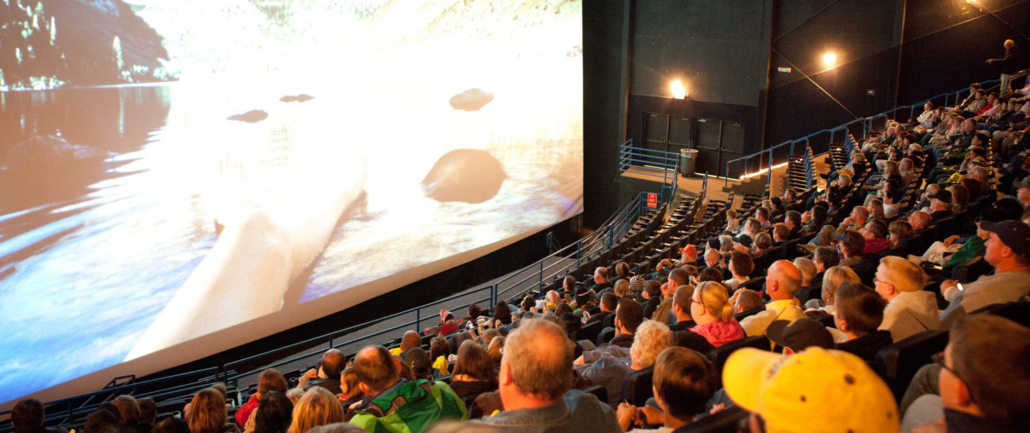
The theater screens the iconic Grand Canyon: Rivers of Time film on a massive six-story screen with wrap-around surround sound, delivering an immersive cinematic experience that no standard visitor center documentary can replicate. The format matters because the Grand Canyon is, above all else, a visual phenomenon. Scale is everything, and a six-story screen communicates geological scale in a way that a brochure or even a smartphone video simply cannot.
Tusayan itself is a strategically important location for visitors. Unlike lodging inside the park, which sells out months in advance and carries premium pricing, the Tusayan corridor offers a broader range of hotels, restaurants, and services while keeping guests within minutes of the park entrance. The Grand Canyon Visitor Center IMAX‘s position at the heart of this corridor means visitors can orient themselves, book tours, grab a meal, and catch the IMAX film all before they’ve set foot inside the national park boundary.
The Physical Theater Experience
The theater itself is designed around the large-format experience. Seating is stadium-style, with a steep rake that ensures unobstructed sightlines from virtually every seat in the house. The screen’s six-story height means that aerial footage of the canyon fills your entire field of vision, creating a sense of presence that standard cinema formats cannot achieve. Sound design is equally considered: the audio system reproduces the roar of the Colorado River, the wind across canyon walls, and the ambient silence of the inner gorge with remarkable fidelity.
For visitors with mobility considerations, the theater is fully accessible with designated seating areas, and restrooms and concessions are available on-site. Groups, including school parties and tour buses, are accommodated with advance coordination through the visitor center IMAX. The overall atmosphere is welcoming rather than formal, which is appropriate for a facility that receives a genuinely diverse cross-section of global visitors.
Rivers of Time: What the Film Actually Covers
The Grand Canyon IMAX Rivers of Time film is not a promotional video or a highlights reel. It is a substantive documentary that covers three interlocking narratives: the geological formation of the canyon over billions of years, the Colorado River’s role as the primary carving force, and the human history of the canyon from ancient Indigenous occupation through the modern conservation era.
Running approximately 37 minutes, the film is paced to hold the attention of children while delivering enough depth to genuinely educate adults. Industry observers who work in visitor experience design often note that effective orientation media needs to answer three questions for the viewer: What am I looking at? How did it get here? Why does it matter? Rivers of Time answers all three with clarity and visual impact.
The Geological Narrative
The geology section of the film is where large-format cinema earns its keep. Explaining that the canyon’s rock layers span nearly two billion years of Earth’s history is one thing; showing it on a six-story screen with aerial cinematography that tracks from rim to river is another experience entirely. The film uses animation alongside live footage to illustrate tectonic uplift, erosion cycles, and the specific conditions that allowed the Colorado River to cut so deeply through the Colorado Plateau.
For visitors who arrive without geological background, this segment provides the interpretive vocabulary they’ll use for the rest of their visit. Terms like “Kaibab Limestone,” “Vishnu Schist,” and “Great Unconformity” appear in park signage, ranger talks, and trail guides throughout the South Rim. Encountering them first in the context of a visually compelling film makes them stick in a way that reading a pamphlet at the trailhead does not.
The Human History Narrative
The cultural history portion of the film covers the canyon’s Indigenous heritage with appropriate depth and respect. The Havasupai, Hualapai, Navajo, Hopi, and other tribal nations have maintained connections to this landscape for millennia, and the film gives this dimension of the story meaningful screen time rather than treating it as a footnote to the geology.
This section is particularly valuable for international visitors, who may arrive with strong knowledge of the canyon’s natural features but limited context for the complex political and cultural history of the American Southwest. Understanding that this is an actively sacred and inhabited landscape, not simply a scenic backdrop, changes the experience of visiting in ways that are difficult to articulate but easy to observe in how visitors engage with park rangers and interpretive signage after watching the film.
The Conservation and Modern Era Narrative
The film’s final act covers the modern history of the canyon, including John Wesley Powell’s legendary 1869 river expedition, the establishment of the national park, and the ongoing conservation challenges facing the Colorado River ecosystem.
Grand Canyon IMAX Showtimes: What You Need to Know Before You Go
Grand Canyon IMAX showtimes run frequently throughout the day, making it easy to incorporate the film into almost any visit schedule. The theater operates year-round, which is a meaningful advantage given that certain park facilities and tours operate on reduced schedules during winter months.
Showtime frequency varies by season. During peak summer months, the schedule runs longer throughout the day. During fall and winter, a few showtimes are reduced to their are less morning and evening shows, so checking current schedules before arriving is advisable. The Grand Canyon Visitor Center IMAX’s website at explorethecanyon.com maintains current showtime listings and is the most reliable source for up-to-date scheduling information, particularly around holidays and special events.
How to Time Your Visit for Maximum Impact
The most common planning mistake visitors make is treating the IMAX theater as an afternoon activity after they’ve already spent hours at the rim. Experienced travel planners and park interpreters consistently recommend the opposite sequence: visit the theater first, then go to the canyon.
The reasoning is straightforward. The film provides interpretive context that makes everything you see at the rim more meaningful. Visitors who watch Rivers of Time before reaching the overlooks consistently report a richer experience at the canyon itself, because they arrive with questions already formed and a framework for understanding what they’re seeing. The geology makes sense. The river’s scale makes sense. The human history makes sense.
Practically speaking, arriving at the IMAX theater first also means you beat the mid-morning rush at the park entrance. South Rim visitor volumes peak between 10 AM and 2 PM on most days. Catching a morning IMAX showing positions you to arrive at the rim during the slightly quieter window that follows the opening rush, which improves parking availability, trail access, and the overall quality of the experience.
Seasonal Considerations for Showtimes
Winter visits to the South Rim have grown significantly in popularity as travelers seek to avoid summer crowds. The IMAX theater’s year-round operation makes it one of the most reliable visitor experiences regardless of season. Even when snow closes certain rim trails or reduces ranger program schedules, the theater runs its regular rotation.
For travelers planning fall and winter trips, the theater also serves as a warm, comfortable environment during weather transitions. Tusayan sits at approximately 6,600 feet elevation, and temperatures can drop sharply in the afternoon even on clear October or November days. A late-afternoon IMAX showing provides a natural and enjoyable way to round out a day that began with morning rim walks.
How the IMAX Experience Compares to Other Canyon Orientation Options
Visitors have several options for orienting themselves before or during a Grand Canyon visit, and it’s worth being direct about how they compare. The alternatives include the National Park Service’s own visitor center near Mather Point, ranger-led programs at various South Rim locations, audio tours available through the park’s app, and self-guided exploration with printed materials.
| Orientation Option | Duration | Visual Impact | Depth of Content | Year-Round Access | Best For |
|---|---|---|---|---|---|
| Grand Canyon IMAX Theater | ~37 minutes | ✅ Six-story screen, surround sound | ✅ Geology, culture, history, conservation | ✅ Yes | All visitors, especially first-timers and families |
| NPS Visitor Center (Mather Point) | Self-paced | ⚠️ Exhibits, standard video screens | ⚠️ Good but text-heavy for children | ✅ Yes (reduced hours off-season) | Detail-oriented visitors, repeat visitors |
| Ranger-Led Programs | 45–90 minutes | ✅ Live canyon views | ✅ Excellent, interactive | ⚠️ Seasonal, schedule-dependent | Visitors with flexible schedules |
| NPS Audio Tour App | Self-paced | ❌ No visual enhancement | ⚠️ Moderate, location-dependent | ✅ Yes | Solo travelers, tech-comfortable visitors |
| Self-Guided with Printed Materials | Self-paced | ❌ No visual enhancement | ❌ Limited without prior knowledge | ✅ Yes | Experienced hikers, repeat visitors |
The comparison reveals something that experienced canyon visitors already know: no single orientation method is superior in all dimensions, but the IMAX theater has a unique combination of accessibility, visual impact, and content depth that no other option matches. It is the only experience that delivers geological timescale, cultural history, and emotional resonance in a format that works equally well for a six-year-old and a sixty-year-old.
The IMAX Theater vs. Guided Tours: Complementary, Not Competing
A common misconception is that visitors must choose between the IMAX theater experience and a guided tour. In practice, the two experiences are designed to complement each other. The film provides the interpretive foundation; a guided tour such as those offered through Pink Jeep Tours provides the on-the-ground application of that knowledge. In fact, taking a Pink Jeep Tour you get the best of both as each touch comes with a complimentary IMAX ticket.
Visitors who do both consistently report a more satisfying overall experience than those who do either alone. The film answers “why does this place exist and why does it matter?” The guided tour answers “what am I standing in front of right now, and what can I do here?” Together, they cover the full spectrum of what first-time visitors need.
For those curious about the Tusayan shuttle options for getting around the area, the visitor center team can also provide current transportation logistics, which is particularly useful during peak season when private vehicle access to certain rim areas is restricted.
Who Benefits Most from the Grand Canyon IMAX Theater Experience
The Grand Canyon lIMAX Theater experience is designed for broad appeal, but certain visitor profiles benefit from it more than others. Understanding where you fall in this spectrum helps set realistic expectations and informs how you sequence the rest of your visit.
Families with Children
The IMAX format is arguably most transformative for families traveling with children. Canyon geology is abstract and difficult for young visitors to contextualize from a rim overlook alone. A child standing at Mather Point sees a large, colorful hole in the ground. A child who has just watched Rivers of Time on a six-story screen sees the bottom of a two-billion-year-old ocean, carved by a river over millions of years, inhabited by people for thousands of years. The difference in engagement is immediate and observable.
The film’s pacing is calibrated to hold younger attention spans without talking down to adults, which is a difficult balance to strike in interpretive media. Running just over 30 minutes, it sits comfortably within the attention window of most children aged six and older. For very young children, the surround sound can be startling at first, particularly during river sequences, so parents of toddlers should be prepared for that. Children under 5 are free to enter.
International Visitors
International tourists, who represent a substantial portion of Grand Canyon visitation, arrive with widely varying levels of background knowledge about American geology, Indigenous history, and national park culture. The film provides a culturally neutral entry point that doesn’t assume prior knowledge of American history or geography.
The visitor center also offers multilingual support resources, and the film’s visual storytelling transcends language barriers more effectively than text-heavy exhibits. For visitors whose first language is not English, the combination of large-format visuals and atmospheric audio communicates canyon scale and significance in a way that printed materials in any language cannot fully replicate.
Photography and Nature Enthusiasts
Photographers visiting the Grand Canyon for the first time often find the IMAX film useful as a scouting tool. The aerial cinematography covers sections of the canyon that most visitors never see from ground level, including stretches of the inner gorge, tributary canyons, and the river corridor itself. Seeing these locations on screen, with attention to light quality and time of day, gives photographers a mental map of what’s possible beyond the standard rim viewpoints.
Nature enthusiasts similarly benefit from the ecological content woven through the film, which addresses the canyon’s extraordinary biodiversity across its five life zones, from desert scrub at the river level to boreal forest at the North Rim. This context enriches wildlife watching throughout the visit.
Repeat Visitors and Canyon Regulars
Even visitors who have been to the Grand Canyon multiple times often find value in revisiting the IMAX film. The geological and cultural content is dense enough that different details resonate at different life stages. A visitor who saw the film as a child and returns as an adult frequently reports noticing entirely different elements, particularly in the Indigenous history and conservation sections.
For repeat visitors planning new activities, the visitor center surrounding the theater is also a practical resource for current conditions, trail updates, and tour availability. Much like the information available through wildlife watching tips and Grand Canyon facts, the staff at the center can provide on-the-ground intelligence that no website fully captures.
Planning Your Visit: Practical Logistics for the IMAX Theater in Tusayan
Logistics matter more than most travel articles acknowledge. A technically excellent visitor experience can be undermined by poor timing, parking confusion, or unexpected closures. The following section addresses the practical elements of planning an IMAX visit as part of a broader Grand Canyon itinerary.
Getting to Tusayan
Tusayan is located on Arizona State Route 64, approximately 60 miles north of Williams, Arizona, and about 80 miles south of the junction with U.S. Route 89 near Cameron. The most common approach routes are from Flagstaff via U.S. 180 and AZ-64 (approximately 80 miles), from Williams via I-40 and AZ-64 (approximately 60 miles), and from Las Vegas via U.S. 93 and AZ-64 (approximately 280 miles).
The Grand Canyon Visitor Center IMAX has dedicated parking and is easy to access without navigating the park entrance itself. This is a meaningful logistical advantage: visitors can park, visit the theater, book tours, purchase Grand Canyon park passes, and plan their day without paying the park entrance fee until they’re ready to proceed to the rim. For families or groups deciding on the fly whether to extend their visit, this flexibility has real value.
Combining the IMAX with Tour Bookings
The visitor center’s role as a tour coordination hub means that an IMAX visit and tour booking can happen in the same stop. Pink Jeep Tours, recognized as a Best Tour Operator, operates through the facility, offering guided jeep tours of the South Rim and surrounding areas that complement the film’s content perfectly. Visitors who watch Grand Canyon: Rivers of Time and then immediately book a rim tour are, in effect, designing an itinerary where every element builds on the previous one.
This sequencing approach is particularly effective for visitors with limited time, such as those on a single-day excursion from Las Vegas or Phoenix. Rather than spending the morning figuring out logistics at the rim, they arrive oriented, booked, and ready to engage with the canyon on a meaningful level.
What to Bring and How to Dress
The theater itself is climate-controlled, so standard comfortable clothing is appropriate regardless of outside weather. For the canyon visit that follows, layering is the universal recommendation for South Rim visits in any season. Tusayan sits above 6,600 feet, and temperatures can vary by 30 degrees or more between early morning and afternoon, especially in spring and fall.
Photography equipment, including camera bags and small backpacks, is generally accommodated in the theater seating area. Larger luggage or oversized packs should be left in vehicles, and the parking area at the visitor center is generally secure for this purpose.
The Tusayan Context: Why Location Matters for the IMAX Experience
Understanding why the Grand Canyon Visitor Center IMAX chose Tusayan as its location requires thinking about visitor flow patterns. The South Rim entrance is a single-point bottleneck: every vehicle approaching from the south must pass through the same entrance station on AZ-64. Tusayan sits immediately before that bottleneck, making it the last logical stop before the park.
This positioning is not accidental. From an urban planning perspective, gateway communities serve a critical role in national park visitor management. They absorb commercial activity, including lodging, dining, and retail, that would otherwise pressure park infrastructure. They also provide a transition zone where visitors shift from highway-travel mode to park-visit mode, and the IMAX theater is one of the most effective tools available for facilitating that psychological transition.
Visitors who enter the park having already watched Grand Canyon: Rivers of Time behave differently at overlooks and trailheads. They ask better questions of rangers. They read interpretive signage more carefully. They tend to stay longer at individual viewpoints rather than treating the rim as a drive-through checklist. The film changes not just what people know but how they engage with the landscape, and that shift has observable effects on visitor satisfaction.
Tusayan’s Year-Round Operational Advantage
One of the less-discussed advantages of the Tusayan visitor center is its year-round operational reliability. During winter months, certain rim facilities operate on reduced schedules, some trails close due to ice and snow, and shuttle services adjust their routes. The IMAX theater, by contrast, maintains consistent showtimes regardless of season.
For the growing segment of visitors choosing off-peak travel, particularly couples and solo travelers seeking a quieter canyon experience, this consistency is genuinely valuable. A November or January visit to the South Rim can be extraordinarily beautiful, with snow on the canyon walls and far fewer crowds at popular overlooks. The IMAX theater provides a warm, engaging start to a winter canyon day that no other facility in the immediate area can replicate.
The Broader Value of IMAX Cinema in Natural Heritage Interpretation
The Grand Canyon IMAX Theater exists within a broader tradition of using large-format cinema to interpret natural heritage sites, and it’s worth understanding why this tradition persists in the age of streaming video and virtual reality.
The core insight is that scale matters intrinsically when the subject is inherently large-scale. The Grand Canyon is, in measurable terms, one of the largest geological features on Earth’s surface. A screen that approximates the visual field of human perception when viewing the canyon from the rim communicates something that a laptop screen, a phone screen, or even a standard cinema screen cannot. The IMAX format was developed precisely to address this limitation, and natural heritage subjects remain among its most appropriate applications.
Research into visitor experience design consistently supports the value of immersive orientation media in improving comprehension, emotional engagement, and long-term memory retention of heritage site information. Visitors who experience large-format orientation films at natural heritage sites report higher satisfaction scores, greater understanding of conservation issues, and stronger intention to support park protection measures. These outcomes are not trivial: they represent the difference between a visitor who takes a selfie and leaves and one who becomes a long-term advocate for the park’s preservation.
IMAX vs. Virtual Reality Canyon Experiences
Virtual reality Grand Canyon experiences have emerged as a category in recent years, and it’s worth addressing how they compare to the IMAX theater format. VR experiences offer genuine interactivity and a sense of presence that even large-format cinema cannot match in certain respects. For visitors who cannot physically access the canyon due to mobility limitations, VR experiences have real value.
However, for most visitors, the communal dimension of the IMAX theater experience provides something VR cannot. Watching Grand Canyon: Rivers of Time in a shared space, surrounded by other visitors from around the world, creates a collective emotional experience that is itself part of the meaning-making process. The gasps, the quiet, the shared attention when the Colorado River fills a six-story screen: these are social experiences that shape how people talk about and remember their visit. VR, by its nature, is solitary. The IMAX theater is not.
| Feature | IMAX Theater (GRAND CANYON: Rivers of TIME) | Standard Cinema Documentary | VR Canyon Experience | Online Streaming (4K) |
|---|---|---|---|---|
| Screen Scale | ✅ Six-story | ⚠️ Standard cinema size | ✅ Immersive (360°) | ❌ Home screen |
| Sound Quality | ✅ Surround, theatrical | ⚠️ Standard surround | ⚠️ Headphone-dependent | ❌ Device-dependent |
| Communal Experience | ✅ Shared viewing | ✅ Shared viewing | ❌ Solitary | ❌ Solitary |
| Content Depth | ✅ Geology, culture, conservation | ⚠️ Varies by film | ⚠️ Usually scenic only | ⚠️ Varies widely |
| Child-Appropriate | ✅ Yes (6+) | ⚠️ Depends on content | ⚠️ Varies, can be disorienting | ⚠️ Depends on content |
| Trip Planning Integration | ✅ On-site tour booking, info | ❌ None | ❌ None | ❌ None |
| Accessibility | ✅ ADA-compliant | ✅ Standard cinema access | ⚠️ Mobility-dependent | ✅ Home-accessible |
Visitor Decision Framework: Which Orientation Option Is Right for You?
Different visitor profiles genuinely benefit from different combinations of orientation experiences. Rather than offering a one-size recommendation, the following framework maps visitor characteristics to optimal orientation strategies.
The First-Timer Framework
If this is your first visit to the Grand Canyon, the optimal sequence is: IMAX film first, then rim walk or overlook visit, then guided tour if time and budget allow. This sequence maximizes interpretive depth, emotional engagement, and practical logistics. The IMAX film takes approximately 34 minutes and costs a modest admission fee. The return on that investment, in terms of how much richer your canyon experience becomes, is exceptionally high.
The Repeat Visitor Framework
For visitors who have seen the canyon before and are returning with new companions (such as bringing children or international guests for the first time), the IMAX film remains valuable because the people you’re with are experiencing it for the first time. Watching a first-timer encounter the six-story screen view of the canyon is itself a meaningful experience, and the film provides a shared reference point for conversation throughout the visit.
The Limited-Time Visitor Framework
Visitors with only four to six hours for their entire Grand Canyon experience face the most challenging planning problem. The recommendation here is unambiguous: start with the IMAX film. Thirty-four minutes of orientation produces a disproportionate return in a compressed visit, because it eliminates the confusion and disorientation that consumes so much time for unprepared first-timers. Visitors who skip the film and go straight to the rim often spend their first hour simply trying to understand what they’re looking at, then leave before they’ve had a chance to actually feel the place.
The Educational Group Framework
School groups and educational travel organizers should prioritize the IMAX theater as the first stop on any South Rim itinerary. The film’s curriculum alignment with earth science, history, and environmental science standards makes it a legitimate educational activity, not merely an entertainment option. Pre- and post-film discussion materials are available through the visitor center, and the content maps well onto National Park Service Junior Ranger program requirements.
| Visitor Type | Recommended First Stop | Ideal IMAX Timing | Complement With |
|---|---|---|---|
| First-time family visit | ✅ IMAX Theater | Morning, before rim visit | Guided jeep tour, rim walk |
| International tourist | ✅ IMAX Theater | Upon arrival in Tusayan | Ranger program, Hermit Road |
| Day-tripper from Las Vegas | ✅ IMAX Theater | First activity on arrival | Mather Point, Bright Angel Trail |
| Repeat visitor, returning with family | ✅ IMAX Theater | Morning or afternoon | New overlooks, longer trails |
| Photography enthusiast | ⚠️ Optional pre-dawn rim access first | Mid-morning between light sessions | Desert View, Point Imperial |
| School/educational group | ✅ IMAX Theater | First activity, morning | Ranger program, Junior Ranger |
| Winter/off-peak visitor | ✅ IMAX Theater | Early or late in day as weather anchor | South Rim trail walk, sunset view |
Frequently Asked Questions About the Grand Canyon IMAX Theater
What film is currently showing at the Grand Canyon IMAX theater?
The Grand Canyon IMAX theater screens the Grand Canyon: Rivers of Time film on its six-story large-format screen. Rivers of Time has been the centerpiece film at this theater for many years and covers the geological, cultural, and conservation history of the canyon. For current programming and any seasonal additions, check the official schedule at explorethecanyon.com.
How long is the Grand Canyon: Rivers of Time film?
The Rivers of Time film runs approximately 37 minutes. This makes it a practical addition to any itinerary without consuming a significant portion of your canyon day.
What are the Grand Canyon IMAX showtimes?
Grand Canyon IMAX showtimes run throughout the day at regular intervals. Peak summer months feature more showings; fall and winter schedules are somewhat less losing shows early morning and late evening. Current showtimes are listed on the visitor center IMAX website.
Is the IMAX theater open year-round?
Yes. The Grand Canyon Visitor Center and IMAX theater in Tusayan operates year-round, which distinguishes it from certain park facilities that reduce hours or close seasonally. This makes it a reliable resource for winter and off-peak visitors.
Is the IMAX experience worth it for visitors who have already been to the Grand Canyon?
For most repeat visitors, yes, particularly if they are bringing first-time guests. The film’s content is dense enough that different elements resonate at different life stages, and serving as a guide for a first-timer’s IMAX experience is itself a meaningful part of the visit.
Can I book tours at the IMAX visitor center?
Yes. The Grand Canyon Visitor Center IMAX operates as a comprehensive trip-planning hub where visitors can book guided tours, including Pink Jeep Tours. Combining an IMAX visit with tour booking in a single stop is one of the most efficient ways to structure a Grand Canyon day.
Is the theater accessible for visitors with mobility limitations?
The theater is ADA-compliant with accessible seating areas, accessible restrooms, and step-free entry paths. Visitors with specific accessibility needs are encouraged to contact the visitor center in advance to confirm current accommodations.
How much does the Grand Canyon IMAX theater cost?
Admission pricing is available on the official website. Ticket prices are typically structured for adults, children, and seniors, with group rates available for school parties and tour groups booking in advance. Best to buy tickets online in advance to save up to 20%. Best price available at explorethecanyon.com.
Should I visit the IMAX theater before or after going to the canyon?
Before is strongly recommended. The film provides interpretive context that makes your rim experience significantly more meaningful. Visitors who watch Rivers of Time before reaching the overlooks consistently report richer engagement with what they see at the canyon.
Is the IMAX theater appropriate for young children?
Yes, generally for children aged six and older. The film’s pacing and content are calibrated for broad audiences. Parents of very young children should be aware that the surround sound system is powerful and can be startling during river sequences.
Where exactly is the Grand Canyon IMAX theater located?
The theater is located in Tusayan, Arizona, on AZ-64, approximately one mile south of the Grand Canyon National Park South Rim entrance. It is part of the Grand Canyon Visitor Center IMAX complex, which is visible from the main highway and has dedicated parking.
Does watching the IMAX film replace needing a park guide or ranger program?
No, but it complements them effectively. The film provides geological and historical context; ranger programs and guided tours provide interactive, location-specific interpretation. The two are designed to work together, and visitors who experience both consistently report higher satisfaction than those who experience either alone.
Key Takeaways
- Sequence matters: Visiting the Grand Canyon IMAX theater before reaching the rim produces measurably richer visitor experiences. The film provides the interpretive framework that makes every subsequent rim viewpoint more meaningful.
- The Rivers of Time film is substantive: At approximately 37 minutes and covering geology, Indigenous history, and conservation, it delivers more educational depth than any other 37-minute activity available to South Rim visitors.
- The large-format theater format is not optional for impact: Scale is intrinsic to the canyon’s significance, and the six-story screen communicates geological scale in a way that standard cinema formats and streaming video cannot replicate.
- Year-round operation is a genuine differentiator: Unlike many park facilities, the IMAX theater operates consistently across seasons, making it a reliable anchor for both summer and off-peak itineraries.
- The visitor center adds value beyond the film: Tour booking, park condition updates, dining, and multilingual support resources make the facility a comprehensive first stop rather than a single-purpose cinema.
- Different visitors need different combinations: The framework above provides clear guidance for families, international tourists, day-trippers, educational groups, and repeat visitors to find the optimal orientation sequence for their specific situation.
- The IMAX experience and guided tours are complementary: Visitors who combine the film with a guided tour consistently report the highest overall satisfaction with their Grand Canyon visit.
Make the IMAX Theater Your Grand Canyon Starting Point
The Grand Canyon is one of the few places on Earth that reliably exceeds expectations, but only for visitors who arrive prepared to understand what they’re seeing. The Grand Canyon IMAX theater in Tusayan exists precisely to solve that preparation problem, and it does so more effectively than any other single experience available to South Rim visitors.
Thirty-four minutes on a six-story screen won’t teach you everything about the canyon. But it will give you the geological vocabulary, the cultural context, and the emotional orientation to make every minute at the rim significantly more meaningful. For families, international visitors, day-trippers, and educational groups, that return on a 34-minute investment is extraordinarily high.
Plan your visit, check current Grand Canyon IMAX showtimes, and book tours through the Grand Canyon Visitor Center at explorethecanyon.com. Make the theater your first stop, the canyon your second, and you’ll leave with an understanding of this place that most visitors spend years trying to piece together on their own.
About the author
Explore The Canyon Editorial Team
See The Canyon


