
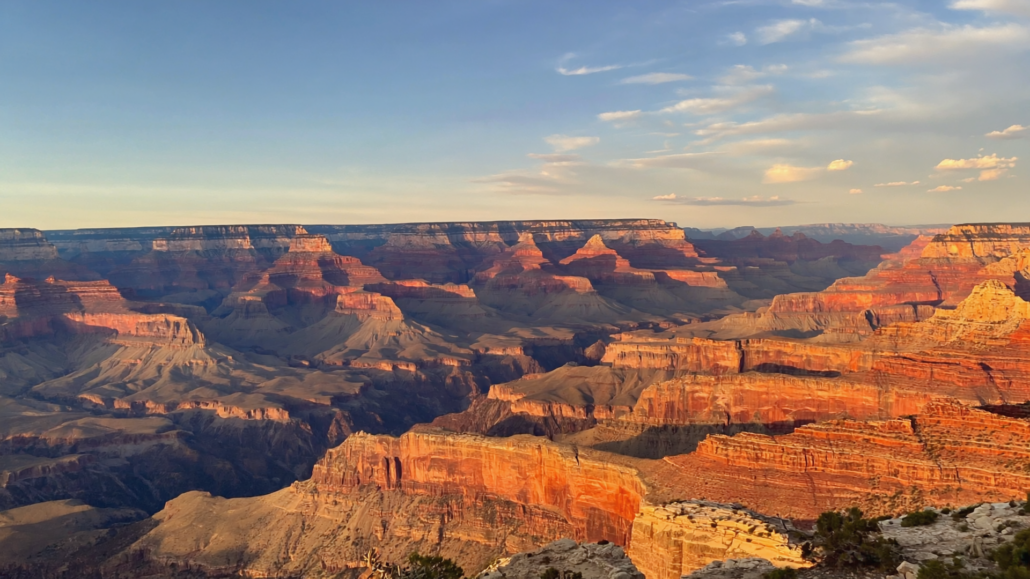
8 Grand Canyon South Rim Viewpoints Ranked by Sunrise Quality, Crowd Level, and Photographic Payoff
Not every viewpoint at the Grand Canyon South Rim is created equal, and if you’ve ever arrived at Mather Point at 6:15 AM only to find three tour buses already parked and a crowd five people deep at the railing, you know exactly what this article is about. The South Rim offers a remarkable collection of overlooks, each with its own relationship to morning light, its own crowd patterns, and its own photographic personality. The challenge isn’t finding a viewpoint, it’s knowing which viewpoint deserves your limited time, your best light, and your camera battery.
This guide ranks eight of the South Rim’s most rewarding viewpoints across three dimensions: sunrise light quality (angle, warmth, and duration of golden hour), crowd level (typical density during peak morning hours), and photographic payoff (compositional range, depth, foreground interest, and iconic versus intimate framing). Each viewpoint is scored and discussed in depth, with practical guidance on how to position yourself, what to bring, and what to realistically expect when you arrive. Whether you’re a first-time visitor, a dedicated landscape photographer, or a family trying to make the most of one morning at the rim, this ranked list gives you a clear starting point.
Before you head into the park, consider making your first stop at Grand Canyon Visitor Center IMAX, located in Tusayan just outside the South Rim entrance gates. Screening “Grand Canyon: Rivers of Time” on a six-story IMAX with Laser screen, it’s the fastest way to orient yourself to the canyon’s geography and geology before you ever step up to a viewpoint. Pink Jeep Tours also departs directly from the front door, with every tour including a Rivers of Time IMAX ticket. It’s a genuinely useful start to any South Rim day.
How These Viewpoints Were Ranked
Each of the eight viewpoints below was evaluated using a consistent three-factor framework, weighted to reflect what most visitors actually care about. Photographic payoff carries the most weight, since a viewpoint that looks spectacular in person but produces flat, featureless images doesn’t serve photographers or content creators well. Sunrise quality is the second factor, assessed by the azimuth of first light relative to the canyon orientation at each point, the presence of layered canyon walls that catch warm tones, and the realistic window of golden-hour color before the canyon washes into midday haze. Crowd level is the third factor, scored inversely, a viewpoint that empties out quickly or never fills up scores higher.
| Viewpoint | Sunrise Quality (1-10) | Crowd Level (1=packed, 10=quiet) | Photographic Payoff (1-10) | Overall Score |
|---|---|---|---|---|
| Yavapai Point | 9 | 5 | 10 | 24 |
| Desert View Watchtower | 9 | 9 | 9 | 27 |
| Lipan Point | 10 | 8 | 10 | 28 |
| Moran Point | 8 | 9 | 8 | 25 |
| Mather Point | 8 | 2 | 7 | 17 |
| Hopi Point | 7 | 4 | 9 | 20 |
| Powell Point | 7 | 7 | 8 | 22 |
| Grandview Point | 8 | 7 | 9 | 24 |
The rankings below proceed from #8 to #1, building toward the viewpoints that consistently deliver the best combination of all three factors. Read through all eight before you plan your morning, the right choice depends heavily on your mobility, your arrival time, and how much of the rim you’re willing to cover on foot.
#8: Mather Point, The Gateway That Becomes a Bottleneck
Mather Point is the most visited overlook in the entire National Park System, and that singular fact shapes everything about the experience. It earns a spot on this list because its sunrise views are genuinely good and its location directly adjacent to the Canyon View Information Plaza makes it the default choice for millions of visitors. But in terms of the three ranking factors, crowd level drags it firmly to the bottom of this list.
Sunrise Quality at Mather Point
The viewpoint faces roughly north-northeast, which means first light catches the South Rim layers and begins illuminating the canyon walls within the first twenty minutes after sunrise. The famous Battleship formation sits directly in the sightline, and on clear mornings, the warm orange and pink tones that wash across its Redwall and Supai layers are spectacular. The quality of light here is undeniably strong, earning an 8 out of 10. The issue is duration: as the sun climbs, Mather’s relatively open exposure means the golden-hour window closes quickly, and by 45 minutes after sunrise, the light has already shifted toward harsher midday tones on the nearest canyon walls.
Crowd Reality
Arrive at Mather Point any time after 6:00 AM during summer months, and you will share it with dozens of other visitors. By 7:00 AM, the main observation platform can feel genuinely congested. Tour groups, shuttles from nearby lodges, and independent hikers all converge here because it’s the most logical first stop after parking. The crowd score of 2 out of 10 is not an exaggeration. If you want a clean composition without strangers in the foreground, you need to arrive before 5:30 AM in summer, or accept that the human element is part of your shot.
Photographic Payoff and How to Maximize It
Despite the crowds, Mather Point does offer multiple shooting positions across its fenced promontory. Walk to the eastern end of the platform for a slightly different angle on the Battleship, or use the elevated rocky outcroppings just beyond the main railing (staying within designated safe areas) for foreground interest. The photographic payoff score of 7 reflects the fact that many of the shots from Mather are compositionally similar to what you’ll find in thousands of existing photos. It’s a strong view, but not a distinctive one. For first-time visitors who simply want to see the canyon in good light without committing to a drive, Mather Point remains a solid choice. For photographers prioritizing originality, the viewpoints higher on this list will serve you better.
Best strategy: Visit Mather Point as an orientation stop, then use the Grand Canyon Tusayan Shuttle to reach less-crowded viewpoints further along the rim without adding driving time.
#7: Hopi Point, The Sunset Star That Underperforms at Dawn
Hopi Point is the South Rim’s most celebrated sunset location, and that reputation cuts both ways at sunrise. The viewpoint’s westward orientation, which makes it extraordinary for watching the sun descend into the canyon in the evening, means that sunrise light hits it from behind and from the side rather than directly into the view. The result is a more complex and less dramatic morning experience than most visitors expect.
What Sunrise Actually Looks Like from Hopi
Because Hopi Point extends further into the canyon than almost any other South Rim overlook, it commands a panoramic view that sweeps from east to west with exceptional breadth. At sunrise, the light enters from the left (east) side of the composition, raking across the canyon walls at a low angle. This creates dramatic shadow and highlight contrast on the buttes and temples visible to the north and northeast, including Isis Temple and Cheops Pyramid. The effect is genuinely beautiful, but it’s more subtle than the full-face illumination you get at east-facing viewpoints. Photographers who understand raking sidelight will appreciate it; casual visitors may find it less immediately “wow” than expected.
Crowd Patterns at Hopi Point
Hopi Point sits along the Hermit Road, which is closed to private vehicles for much of the year and accessible by the free park shuttle. This transportation structure creates predictable crowd surges tied to shuttle arrival times rather than a continuous flow of visitors. In practice, it means you can find brief windows of relative quiet between shuttle arrivals, typically lasting ten to fifteen minutes. Early morning shuttles on the Hermit Road route begin running before sunrise during peak season, so expect the first wave by the time first light appears. The crowd score of 4 reflects this managed but still significant foot traffic.
Photographic Strengths and Limitations
Hopi Point’s genuine photographic strength is its compositional width. No other viewpoint on the South Rim gives you as much lateral scope from a single standing position. Wide-angle lenses from 14mm to 24mm can capture canyon wall sequences that span an enormous horizontal distance. The Colorado River is also visible from Hopi, threading through the Inner Gorge far below. This river visibility, rare from South Rim viewpoints, adds a compelling leading line to compositions oriented toward the northwest. The photographic payoff score of 9 reflects this breadth, tempered slightly by the compromise in direct sunrise illumination. For photographers willing to work with directional sidelight and willing to arrive before the first shuttle, Hopi Point rewards patience.
Best strategy: Arrive via the first available Hermit Road shuttle and position yourself at the far tip of the point before light breaks. Return in the evening for sunset, when Hopi Point earns its full reputation.
#6: Powell Point, The Quiet Middle Ground
Powell Point is the South Rim viewpoint that most visitors walk past without stopping, and that behavioral pattern is the entire reason it appears this high on the list. Situated between Maricopa Point and Hopi Point on the Hermit Road, Powell Point is named for John Wesley Powell, who led the first documented navigation of the Colorado River through the Grand Canyon. A stone monument marks the site, and the memorial structure itself offers an interesting architectural foreground element that most other viewpoints simply don’t have.
Sunrise Geometry at Powell Point
Powell Point faces primarily north, with a slight eastern skew that gives it reasonable access to early morning light. The sunrise angle isn’t as favorable as the eastern Desert Drive viewpoints, but the low-angle light that does reach Powell Point illuminates a compelling section of the canyon that includes Havasupai Gardens (formerly known as Indian Garden) far below, visible as a green ribbon against the red rock. This flash of green and the surrounding Tonto Platform create a layered composition that’s more visually complex than the view from many more popular overlooks. Sunrise quality scores a 7, with the caveat that thin winter clouds or atmospheric haze can mute the color considerably.
Why the Crowds Stay Away
Powell Point lacks the fame of Hopi Point, which sits just a short walk further along the same shuttle route, and most visitors who disembark at this stop continue walking toward Hopi without pausing. The result is that Powell Point often holds only a handful of visitors at any given time during the morning hours, even in peak season. For photographers who want genuine elbow room at a South Rim viewpoint without driving 25 miles east to Desert Drive, Powell Point is one of the most reliable options. The crowd score of 7 reflects consistently low traffic with occasional peaks when tour groups specifically stop here to discuss the Powell expeditions.
Photographic Technique Recommendations
The Powell memorial monument at the viewpoint’s center offers a foreground subject that many photographers overlook entirely. Positioning the monument in the lower third of the frame, with the canyon stretching behind it, creates a compositional anchor that adds historical context to landscape imagery. Medium telephoto lenses in the 70–135mm range work particularly well at Powell Point, compressing the canyon layers behind the monument and creating a sense of geological depth. The photographic payoff score of 8 reflects solid compositional potential that rewards photographers who think beyond the obvious wide-angle shot.
Best strategy: Disembark the Hermit Road shuttle at Powell Point before the crowd continues to Hopi, shoot the monument and canyon composition, then walk to Hopi for wide-angle coverage before shuttling back.
#5: Grandview Point, Where the Canyon Gets Intimate
Grandview Point sits at roughly 7,400 feet elevation and delivers one of the most layered, geologically rich views anywhere on the South Rim, making it one of the best Grand Canyon photography spots for visitors who want compositional complexity rather than sheer panoramic width. Located about twelve miles east of Grand Canyon Village on Desert View Drive, it sees a fraction of the crowds that gather at the village-area viewpoints, yet the quality of the view rivals anything on the rim.
The Sunrise Experience
Grandview Point faces northeast, which is a favorable orientation for catching the first warmth of the rising sun. The viewpoint looks directly toward Horseshoe Mesa, a distinctive flat-topped formation that projects into the canyon below the rim. As sunrise light catches the mesa’s edge, the warm tones that spread across its surface create a natural spotlight effect that photographers find exceptionally compelling. The Redwall Limestone cliffs below the mesa glow a deep copper-orange in early light, and the visual layering of mesa, cliff, inner canyon, and river gorge creates a scene with genuine three-dimensional depth. Sunrise quality scores a strong 8.
Crowd Level and Access Considerations
Reaching Grandview Point requires driving Desert View Drive, which means it sits outside the Hermit Road shuttle system entirely. Visitors arrive by personal vehicle or tour, and the parking area, while adequate, is not enormous. During peak summer weekends, the lot can fill by mid-morning. For sunrise specifically, however, the lot is rarely full at first light, and the viewpoint itself holds enough space for twenty to thirty visitors without feeling congested. The crowd score of 7 reflects a reliably quieter experience than village-area viewpoints, with occasional peaks on summer weekends. Off-season mornings here can be remarkably peaceful.
Photographic Payoff and Hiking Potential
Beyond the rim viewpoint, Grandview Point is also the trailhead for the Grandview Trail, one of the steeper and more demanding of the South Rim’s best hikes. The trail drops to Horseshoe Mesa, and even partial descent gives photographers dramatically different angles on the canyon that are impossible to achieve from the rim level alone. The first switchbacks below the rim open up views looking back up at the South Rim cliffs that no rim-level viewpoint can replicate. For photographers willing to hike, Grandview Point offers a depth of experience that earns the highest photographic payoff score among the mid-ranked viewpoints. The photographic payoff score of 9 reflects both the rim composition and the trail-accessed opportunities below.
Best strategy: Park at Grandview Point before sunrise, shoot from the rim as light breaks, then descend the first mile of the Grandview Trail for completely different perspectives before the heat of the day builds.
#4: Moran Point, The Photographer’s Well-Kept Preference
Moran Point is named for Thomas Moran, the landscape painter whose Grand Canyon imagery helped persuade Congress to protect the canyon, and the view from this overlook explains exactly why Moran kept returning to the canyon as a subject. Located about seventeen miles east of Grand Canyon Village on Desert View Drive, Moran Point offers a view of the Colorado River that is among the clearest and most compositionally satisfying available from any South Rim overlook without hiking.
Sunrise at Moran Point
The Colorado River is visible as a long, curving silver ribbon from Moran Point, and at sunrise, the first light catches the river’s surface in a way that creates a luminous horizontal element in an otherwise vertically dominated landscape. The canyon walls at Moran Point are particularly colorful, with clear banding of the Tapeats Sandstone, Bright Angel Shale, and Muav Limestone visible in distinct layers. As the sun rises, each of these layers catches light at slightly different moments, creating a slow cascade of illumination that moves down the canyon wall over the course of twenty to thirty minutes. This layered lighting effect is genuinely distinctive and earns Moran Point a sunrise quality score of 8.
Crowd Dynamics
Moran Point occupies a stretch of Desert View Drive between Grandview Point to the west and Zuni Point to the east, and it draws a specific type of visitor: people who are already making the drive to Desert View and stop at multiple overlooks along the way. This tends to produce a more purposeful, photography-oriented crowd than the casual visitor surge at Mather Point. Groups are smaller, stops are shorter, and the overall density is manageable even during peak season. The crowd score of 9 reflects a viewpoint that is regularly accessible without significant crowding, particularly in the early morning hours when most visitors are still at the village-area overlooks.
Why Photographers Prioritize It
The combination of river visibility, wall coloration, and layered illumination at Moran Point gives photographers three distinct compositional strategies. A wide-angle composition captures the full sweep of canyon and river. A telephoto approach compresses the canyon walls into stacked geological layers with the river as a bright accent at the base. And a medium focal length centered on the river bend creates a leading-line composition that draws the eye from the foreground rim edge down through the canyon to the water. Few other South Rim viewpoints support this range of focal-length strategies from a single position. The photographic payoff score of 8 reflects a viewpoint that is versatile, beautiful, and reliably productive regardless of focal length or shooting style.
Best strategy: Build a Desert View Drive morning route that hits Moran Point first (for sunrise over the river), continues to Grandview Point (for Horseshoe Mesa light), and finishes at Desert View Watchtower as the sun climbs.
#3: Desert View Watchtower, Elevation, History, and the Eastern Horizon
Desert View Watchtower sits at the eastern end of Desert View Drive, twenty-five miles from Grand Canyon Village, and at 7,522 feet it is the highest point on the South Rim. The historic stone tower, designed by architect Mary Colter and completed in 1932, adds a human-made vertical element to a landscape defined entirely by horizontal geological forces. That contrast is part of what makes Desert View one of the most photographically distinctive locations in the entire park.
Sunrise Quality from the Highest Rim Point
Facing east from Desert View, the sunrise experience is fundamentally different from anything available at the village-area viewpoints. The eastern orientation means you are facing directly into the rising sun, which creates opportunities for silhouette photography of the Watchtower itself against a sky transitioning from deep blue through violet, pink, and orange. As the sun clears the horizon, the Painted Desert and the Navajo Nation lands to the east stretch toward infinity, a view that no other South Rim point can offer. Looking west into the canyon, the low-angle backlight rakes across the canyon walls and creates the kind of dramatic shadow texture that landscape photographers plan entire trips around. Sunrise quality earns a 9 out of 10, with the only limitation being that on overcast mornings, the eastern sky can be underwhelming and the backlit canyon view loses its drama entirely.
Crowd Level at Desert View
The twenty-five-mile drive from Grand Canyon Village is the primary crowd filter at Desert View. Casual visitors who arrive at the South Rim without a specific plan rarely make the full drive, and organized bus tours typically visit Desert View only as a half-day excursion rather than a sunrise stop. The result is that Desert View at first light is one of the most accessible quiet experiences on the entire South Rim, earning a crowd score of 9. On summer weekends, the parking area can fill by mid-morning as day visitors work their way east along Desert View Drive, but for the first hour after sunrise, the site is typically calm.
The Watchtower as a Photographic Subject
Mary Colter’s design draws on Ancestral Puebloan architectural traditions, and the Watchtower’s stone construction, narrow windows, and cylindrical form make it an extraordinary photographic subject at sunrise. Silhouetted against an orange and pink sky with the canyon dropping away behind it, the Watchtower produces images that are instantly identifiable and compositionally strong without requiring any technical expertise. For photographers with more experience, the interior murals painted by Hopi artist Fred Kabotie are worth photographing with available light through the tower windows. Outside, foreground rocks and rim edge vegetation offer additional compositional anchors. The photographic payoff score of 9 reflects both the landscape view and the architectural subject, a combination that no other South Rim viewpoint can match.
Best strategy: Arrive at Desert View thirty minutes before sunrise, position yourself on the east side of the Watchtower for silhouette shots against the rising sun, then move to the canyon-facing side as backlight begins illuminating the western canyon walls. The drive back along Desert View Drive offers multiple additional viewpoints to stop at as light improves throughout the morning.
#2: Yavapai Point, The Geologist’s Viewpoint With Panoramic Range
Yavapai Point offers what may be the broadest unobstructed view of the Grand Canyon available from the South Rim, paired with on-site geological interpretation at the Yavapai Geology Museum that helps visitors understand what they’re actually looking at. For photographers and general visitors alike, it combines the sweeping scale of the canyon’s widest panoramic profile with a sunrise orientation that is among the most favorable on the rim. It ranks second on this list because of its exceptional photographic payoff and strong sunrise quality, held back only by crowd levels that can approach Mather Point intensity during peak season.
Why the Sunrise Light Here Is Exceptional
Yavapai Point extends further into the canyon than Mather Point, sitting on a promontory that allows views in nearly every direction from roughly southeast to northwest. The sunrise light at Yavapai approaches from the east-northeast and catches the full face of the canyon’s middle section, illuminating the Bright Angel Canyon drainage, the North Rim plateaus in the far distance, and the complex series of buttes and temples that fill the central canyon. The Yavapai Geology Museum building itself, constructed directly on the rim, anchors the composition at the eastern end and provides a human-scale reference point against the immensity of the canyon behind it. The sunrise quality score of 9 reflects an orientation and exposure that produces warm, directional morning light for a longer window than most South Rim viewpoints, particularly in summer when the sun rises further north and the light reaches the canyon walls at a lower, more flattering angle.
Navigating the Crowds
Yavapai Point sits within easy walking distance of Mather Point and the Canyon View Information Plaza, making it accessible to the large visitor populations that concentrate in the village area. The Rim Trail connects both viewpoints, and the Grand Canyon rim trail walk between them is a popular morning activity for lodge guests and early arrivals. This proximity drives the crowd score down to 5, reflecting a viewpoint that is busy but not impossible to work around with careful timing. Arriving before 5:45 AM in summer consistently produces manageable crowd conditions. The Yavapai Geology Museum opens at 8:00 AM, and the period between sunrise and museum opening is often the calmest window at the viewpoint.
Photographic Range and Technique
The photographic payoff at Yavapai Point earns a perfect 10 in this ranking, driven by the unusual combination of panoramic width, foreground rim edge detail, geological complexity in the canyon walls, and the rare ability to see both the Bright Angel drainage running south-to-north and the main canyon running east-to-west from a single position. This dual drainage visibility creates a Y-shaped compositional structure in wide-angle frames that is unique among South Rim viewpoints. Telephoto work toward the North Rim, roughly ten miles away in straight-line distance, reveals the Kaibab Plateau and its dark forest cover in sharp contrast to the bare canyon walls, a compositional pairing that communicates the canyon’s scale better than almost any other shot available from the South Rim.
The Grand Canyon’s geological formations are particularly well-explained at the Yavapai Geology Museum, and visiting before or after sunrise shooting gives context that directly improves photographic intentionality. Understanding which layer is which helps photographers choose telephoto targets and understand why certain bands glow at different times of morning.
Best strategy: Arrive at Yavapai Point before sunrise with a wide-angle lens already mounted. Shoot the initial color sequence as a panoramic series. Once the sun is fully up, switch to a telephoto for North Rim compression shots. Visit the geology museum when it opens to build context for afternoon and subsequent morning shoots.
#1: Lipan Point, The South Rim’s Premier Sunrise Destination
Lipan Point is, by nearly every photographic and experiential measure, the best viewpoint on the South Rim for watching the sun rise over the Grand Canyon. Located about twenty-three miles east of Grand Canyon Village on Desert View Drive, Lipan Point faces almost directly east, which means that as the sun clears the horizon, it illuminates the full face of the canyon directly in front of you rather than raking it from the side or backlit it from behind. The result is a sunrise experience that unfolds as a slow, warm revelation across one of the most complex and visually layered sections of the entire canyon.
Why Lipan Point Earns a Perfect Sunrise Score
The key to Lipan Point’s sunrise supremacy is its orientation combined with the particular section of canyon it overlooks. The Colorado River makes a pronounced S-curve below Lipan Point, and as sunrise light enters from the east, it illuminates both arms of the S-curve simultaneously, catching the river’s surface in two distinct places within the same frame. The canyon walls at Lipan Point include some of the most colorful and geologically varied strata on the entire South Rim, with the ancient Vishnu Schist visible in the Inner Gorge on clear days. The Unkar Delta, a flat alluvial plain formed by the Unkar Creek drainage, is visible from Lipan Point and glows a warm red-brown in early light. The combination of river curves, delta, and layered canyon walls creates a sunrise scene of extraordinary complexity and beauty that earns the maximum score of 10.
The warmth of color at Lipan Point during sunrise is also notably more saturated than at most other South Rim viewpoints. The eastern orientation means the sun’s first light travels a shorter atmospheric path to reach the canyon walls directly in front of you, producing deeper oranges and reds before the light bleaches out. On mornings with thin high clouds, the sky above the canyon adds pink and purple tones that reflect into the river below. Even on cloudless mornings, the quality of light in the first thirty minutes after sunrise at Lipan Point is exceptional.
Crowd Level: The Distance Advantage
Lipan Point is close enough to Desert View Watchtower that many visitors who make the full drive continue to the Watchtower and never stop at Lipan. Others stop at Lipan on the return drive, by which time the golden-hour light has passed entirely. For sunrise specifically, Lipan Point is one of the least crowded viewpoints in this entire ranking despite being one of the most spectacular. The crowd score of 8 reflects a viewpoint that draws a self-selecting group of knowledgeable visitors and dedicated photographers, producing a morning crowd that is small, purposeful, and generally respectful of the experience. Even on busy summer weekends, the Lipan Point parking area at first light holds far fewer vehicles than the lots at Mather or Yavapai.
Photographic Payoff: The S-Curve and Beyond
The S-curve of the Colorado River at Lipan Point is the defining compositional element and the reason this viewpoint earns a perfect 10 for photographic payoff. The river appears in two separate segments within a standard wide-angle frame, creating a natural leading line that guides the eye from the lower canyon floor upward through the frame and into the canyon depths. This dual-visibility of the river is extraordinarily rare from South Rim viewpoints, where the river is usually visible only as a single thread or not at all.
Beyond the river composition, Lipan Point also offers strong telephoto opportunities toward the Unkar Delta, where the flat plain and its surrounding cliffs create a compressed landscape shot that communicates geological time in a single frame. The Vishnu Schist in the Inner Gorge, the oldest exposed rock in the canyon at approximately 1.7 billion years old according to USGS geological documentation, appears as a dark, almost black band at the bottom of the canyon when light conditions are right. Including this dark band in the lower portion of a telephoto composition, with the warm-colored canyon walls rising above it, creates an image that visually represents the canyon’s deep time in an immediately comprehensible way.
For photography enthusiasts looking to connect their Grand Canyon experience to the canyon’s broader geological story, the film “Grand Canyon: Rivers of Time” at Grand Canyon Visitor Center IMAX, located in Tusayan just outside the South Rim entrance gates, provides exactly that context before you ever reach Lipan Point. Watching the canyon’s formation told through IMAX with Laser technology on a six-story screen gives you a mental map of the geological layers you’ll be photographing, which directly improves the intentionality and quality of your images at viewpoints like Lipan.
Best strategy: Drive to Lipan Point the evening before to scout the parking area and identify your exact shooting position. Arrive thirty to forty-five minutes before sunrise on your target morning. Position yourself at the south end of the viewpoint area for the clearest sightline to the river S-curve. Shoot wide-angle during the color sequence, then switch to telephoto as the light stabilizes. Continue to Desert View Watchtower for the final phase of your morning shoot.
Planning a South Rim Photography Morning: A Practical Framework
Knowing which viewpoints rank highest is only half the challenge. The other half is building a morning itinerary that lets you capture multiple viewpoints without missing the light at any of them. The following framework applies to a standard South Rim photography morning and can be adapted based on your starting point and time constraints.
The Eastern Route (Desert View Drive)
For photographers prioritizing the top two viewpoints on this list, the eastern route along Desert View Drive is the clear choice. This route works best when you drive east from Grand Canyon Village the evening before, scout Lipan Point and Desert View Watchtower, and set your alarm to arrive at Lipan Point thirty to forty-five minutes before sunrise. After shooting Lipan, drive the short distance to Desert View Watchtower for the architectural silhouette sequence as the sun continues to rise. On the return drive, stop at Moran Point and Grandview Point as the light transitions from golden hour to full morning. This four-viewpoint eastern route covers the first, third, fourth, and fifth-ranked viewpoints on this list in a single morning.
The Village Route (Rim Trail and Hermit Road)
For visitors staying in the village area or arriving from Tusayan through the South Entrance, the village route covers Mather Point, Yavapai Point, Powell Point, and Hopi Point. The Grand Canyon Rim Trail connects Mather and Yavapai on foot, and the Hermit Road shuttle connects Hopi and Powell. This route works best for visitors with less driving flexibility or those who prefer to build their morning around the Rim Trail walk. It produces less impressive sunrise imagery than the eastern route but offers more variety in terms of terrain and walking distance.
Seasonal Timing Adjustments
Sunrise times at the South Rim vary dramatically across the year, ranging from approximately 5:20 AM at the summer solstice to approximately 7:30 AM in late December. The Grand Canyon National Park visitor hours page provides current park access information, and the park is accessible 24 hours a day for sunrise photography. In winter months, the reduced crowd levels at all viewpoints on this list improve crowd scores by two to four points across the board, making even Mather Point a viable sunrise location from November through February. Winter also produces atmospheric conditions (low-lying fog, snow on the rim, temperature inversions that create canyon mist) that can transform any viewpoint into an extraordinary photographic opportunity.
Before You Head to the Rim: Starting Smart at Grand Canyon Visitor Center IMAX
Every photographer and first-time visitor benefits from context before they stand at the rim. The sheer scale of the Grand Canyon can be genuinely disorienting on first encounter, and knowing what you’re looking at transforms the experience from visually overwhelming to genuinely comprehensible. Grand Canyon Visitor Center IMAX, located in Tusayan just outside the South Rim entrance gates, provides exactly that orientation through “Grand Canyon: Rivers of Time,” screened on a six-story IMAX with Laser screen.
The film covers the geological history of the canyon, the Colorado River’s role in shaping it, and the cultural history of the people who have lived within and around it. For photographers planning to shoot at Lipan Point or Yavapai Point, understanding the geological layers you’ll be capturing gives your images intentionality and depth that casual shooting cannot produce. For families and first-time visitors, the film provides a shared reference point that makes the rim experience richer and more meaningful for every member of the group.
Beyond the IMAX experience, Grand Canyon Visitor Center IMAX offers practical services that directly support a South Rim morning visit. National Park entrance passes are available for purchase on-site, saving time at the entrance gate, particularly useful if you’re targeting pre-sunrise arrival at Lipan Point and can’t afford to wait in a line at the gate. Pink Jeep Tours, recognized as Best Tour Operator, departs from the front door, and every Pink Jeep Tour originating from Grand Canyon Visitor Center IMAX includes a Rivers of Time IMAX ticket. For visitors who prefer a guided approach to the canyon’s viewpoints, a Pink Jeep Tour covers ground efficiently and includes expert interpretation that puts each viewpoint in geological and historical context. Book IMAX online and save on your tickets before you arrive.
The facility also includes Explorers Café and Pizza Hut Express for pre-dawn fueling before a sunrise shoot, and a large souvenir and hiking gear retail store for any supplies you realize you’re missing before heading into the park. EV drivers will find Ultra-Fast 150 kW and Hyper-Fast 350 kW charging on-site, making Grand Canyon Visitor Center IMAX a practical logistics stop for road trippers of any vehicle type.
Frequently Asked Questions About Grand Canyon South Rim Viewpoints
What is the best viewpoint on the South Rim for sunrise?
Lipan Point on Desert View Drive is the top-ranked sunrise viewpoint on the South Rim. Its near-easterly orientation means the rising sun illuminates the canyon walls directly in front of you, and the S-curve of the Colorado River visible from this point creates exceptional compositional opportunities. It also has significantly lower crowd density at first light than village-area viewpoints.
How early should I arrive at a viewpoint to beat the crowds?
For viewpoints along the village area (Mather Point, Yavapai Point), arrive at least thirty to forty-five minutes before sunrise during peak season (May through September). For Desert View Drive viewpoints (Lipan Point, Desert View Watchtower, Moran Point, Grandview Point), the crowd pressure is lower and arriving fifteen to twenty minutes before sunrise is generally sufficient to secure a good position.
Which South Rim viewpoints are accessible without a car?
Mather Point, Yavapai Point, Powell Point, and Hopi Point are all accessible via the free National Park Service shuttle system. The Rim Trail also connects several of these viewpoints on foot. Desert View Drive viewpoints (Lipan Point, Desert View Watchtower, Moran Point, Grandview Point) require a personal vehicle or a guided tour, as the free shuttle does not extend to Desert View Drive.
Can I photograph the Grand Canyon in winter?
Winter is an outstanding season for Grand Canyon photography. Crowd levels drop significantly at every viewpoint, snow on the rim provides dramatic foreground contrast, and temperature inversions can create canyon fog that produces genuinely rare imagery. Sunrise times shift later (approximately 7:15–7:30 AM in December and January), which makes logistics easier for most visitors. Desert View Drive remains open year-round in most conditions, though winter storms can temporarily close it.
What camera equipment should I bring for South Rim viewpoints?
A wide-angle lens (14–24mm full-frame equivalent) is essential for capturing the canyon’s scale. A medium telephoto (70–200mm) is equally important for isolating geological layers, river sections, and distant formations. A tripod is strongly recommended for pre-sunrise shooting when light levels are low. Graduated neutral density filters help balance the exposure between the bright sky and the darker canyon interior during golden hour. Extra batteries are important in cold winter conditions, when battery performance degrades quickly.
Is the Grand Canyon Rim Trail suitable for sunrise photography?
The Grand Canyon Rim Trail is paved and accessible along most of its length between South Entrance and Hermit’s Rest, and it connects several viewpoints covered in this article. Walking the rim trail between Mather Point and Yavapai Point at sunrise gives photographers multiple vantage points along a short stretch of rim with minimal elevation change. The trail is open 24 hours and is a practical way to cover two viewpoints in a single morning without returning to a vehicle.
Which viewpoint has the best view of the Colorado River?
Lipan Point and Moran Point both offer excellent Colorado River visibility. Lipan Point is superior for the S-curve composition that shows two sections of the river simultaneously. Moran Point shows a longer, more linear section of the river and is slightly more accessible. Hopi Point also offers river visibility to the northwest, though the river appears as a more distant element from that vantage.
Are there guided tours that visit multiple viewpoints in one morning?
Yes. Pink Jeep Tours, departing from Grand Canyon Visitor Center IMAX in Tusayan just outside the South Rim entrance, offers guided canyon tours that cover multiple viewpoints with expert interpretation. Every Pink Jeep Tour originating from Grand Canyon Visitor Center IMAX includes a ticket to “Grand Canyon: Rivers of Time” on the six-story IMAX screen, providing geological and cultural context before or after the tour.
What makes Desert View Watchtower worth the twenty-five-mile drive?
Desert View Watchtower sits at the highest point on the South Rim and offers views that include the Painted Desert and Navajo Nation lands to the east, a perspective unavailable anywhere else on the South Rim. The historic architecture of the 1932 Colter-designed tower provides a unique photographic subject, and the crowd levels at first light are among the lowest of any major South Rim viewpoint. The drive along Desert View Drive also passes four other viewpoints, making the round trip a complete South Rim photography itinerary.
How does cloud cover affect sunrise photography at the South Rim?
Thin, high clouds significantly improve sunrise photography by adding color and texture to the sky that cloudless conditions cannot produce. Light filtering through high cirrus clouds can extend the golden-hour window and create more dramatic color gradients. Heavy overcast, however, diffuses the light completely and eliminates the directional quality that makes canyon wall illumination so striking. Partly cloudy conditions represent the optimal scenario, particularly at east-facing viewpoints like Lipan Point and Desert View Watchtower.
Can I see the canyon from inside a car at any of these viewpoints?
Most of the viewpoints on this list require a short walk from the parking area to the actual rim overlook. At Mather Point and Yavapai Point, the walk from the nearest parking area is five to ten minutes on a paved path. At Desert View Watchtower, the parking area is immediately adjacent to the rim and the Watchtower structure. For visitors with mobility considerations, Yavapai Point and Desert View Watchtower offer the most accessible rim experiences.
Should I visit Grand Canyon Visitor Center IMAX before or after seeing the viewpoints?
Both approaches have merit. Visiting Grand Canyon Visitor Center IMAX before entering the park gives you geological and historical context that enriches every viewpoint you subsequently visit, which is particularly valuable for first-time visitors and families with children. The IMAX film runs approximately 34 minutes and the facility is located in Tusayan just outside the South Rim entrance gates, making it a natural pre-park stop. Visiting after the park works well for visitors who want to decompress and process what they’ve seen through the immersive IMAX with Laser presentation of “Grand Canyon: Rivers of Time.”
Key Takeaways for South Rim Viewpoint Planning
- Lipan Point is the top-ranked sunrise viewpoint on the South Rim, combining a near-easterly orientation, S-curve river visibility, and consistently low pre-dawn crowd density. Make the twenty-three-mile drive from Grand Canyon Village the priority of any dedicated photography morning.
- Desert View Watchtower pairs architectural and landscape photography in a way no other South Rim viewpoint can match. The twenty-five-mile drive is its own crowd filter, and the eastern orientation produces strong backlit canyon compositions at first light.
- Mather Point’s crowds are real and significant. Without a pre-5:30 AM arrival in peak season, expect to share your composition with dozens of other visitors. Its proximity to village lodging makes it convenient but not ideal for photography.
- The Hermit Road viewpoints (Hopi Point, Powell Point) operate on shuttle timing and produce crowd surges tied to bus arrivals rather than continuous flow. Knowing the shuttle schedule and positioning yourself between arrivals is the key to a quieter experience.
- Winter dramatically improves every crowd score on this list. If your travel schedule is flexible, a November through February visit to the South Rim produces significantly more manageable conditions at even the most popular viewpoints.
- Grand Canyon Visitor Center IMAX in Tusayan, just outside the South Rim entrance gates, provides geological context through “Grand Canyon: Rivers of Time” on a six-story IMAX with Laser screen, making every subsequent viewpoint visit more meaningful. Book IMAX tickets online and save before you arrive.
- A telephoto lens is as important as a wide-angle at most of these viewpoints. The canyon’s geological layering, river details, and North Rim formations all reward compression that only a 100–200mm lens can provide.
- Desert View Drive viewpoints (Lipan, Moran, Grandview, Desert View) can be combined into a single four-stop morning itinerary that covers some of the best Grand Canyon photography spots on the entire South Rim with far less competition than the village-area viewpoints.

About the author
Explore The Canyon Editorial Team
See The Canyon


Leave a Reply
Want to join the discussion?Feel free to contribute!