
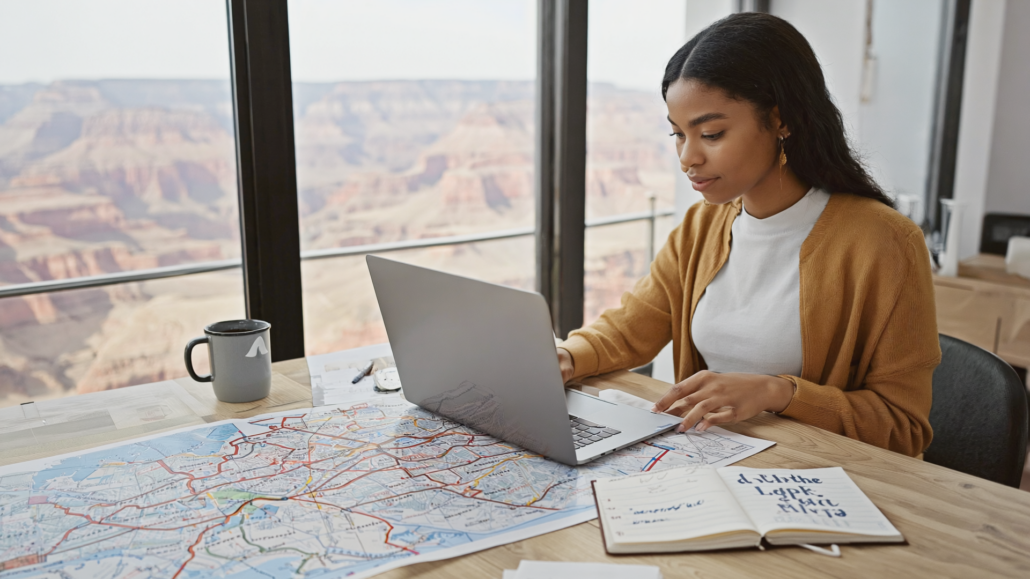
How to Plan a Grand Canyon Vacation Step-by-Step: From First Search to South Rim Arrival
Most people spend more time researching a laptop purchase than they do planning a trip to one of the most extraordinary places on Earth. The Grand Canyon rewards preparation, and punishes the lack of it. Visitors who show up without permits, reservations, or a basic understanding of the terrain regularly find themselves watching the canyon from a crowded parking lot rim, wondering why they drove twelve hours for this. The ones who do it right stand on the edge of something that genuinely defies language.
This guide walks through every step of planning a Grand Canyon vacation from the moment you open a browser to the moment you’re standing on the South Rim. It covers permits, fees, lodging, packing, tours, and what to do in those first hours after arrival. Whether you have one day or one week, the process is the same, the depth just changes.
Step 1: Choose Your Rim and Your Season Before You Book Anything
The single most consequential planning decision is which rim to visit and when to go. Most travelers default to the South Rim without realizing there are four distinct rim experiences: South Rim, North Rim, West Rim, and the inner canyon. Each has different access points, amenities, and seasonal windows. Getting this wrong means spending money on the wrong flights or driving hundreds of miles out of your way.
The South Rim is the most accessible, most developed, and most visited section of Grand Canyon National Park. It sits at roughly 7,000 feet in elevation, stays open year-round, and offers the broadest range of trails, lodging, and tours. For the vast majority of first-time visitors, the South Rim is the right choice, full stop.
The North Rim sits about 1,000 feet higher and closes from mid-October through mid-May due to snow. It offers dramatically fewer crowds and a more rugged experience, but it requires an additional 215-mile drive from the South Rim if you’re combining both. First-time visitors with limited time are rarely well-served by the North Rim, though it rewards those who seek it out.
The West Rim is on Hualapai tribal land and is not part of Grand Canyon National Park. It is home to the Grand Canyon Skywalk glass bridge and requires separate admission fees. It’s located about 70 miles east of Las Vegas, making it a common day-trip option for visitors flying into Nevada.
Seasonal Timing: The Hidden Variable
South Rim visitation follows a predictable bell curve. Spring and fall deliver the best combination of manageable Grand Canyon weather with temperatures and reasonable crowd levels. Summer (June through August) is the peak season with extreme inner-canyon heat that regularly exceeds 110°F at the canyon floor, combined with the largest crowds of the year. Winter brings snow, thinner crowds, and genuinely stunning photography conditions, though some inner-canyon trails become icy and hazardous.
| Season | Avg South Rim Temp | Inner Canyon Temp | Crowd Level | Best For |
|---|---|---|---|---|
| Spring (Mar–May) | 50–70°F | 70–90°F | ⚠️ Moderate–High | ✅ Hiking, photography, families |
| Summer (Jun–Aug) | 65–85°F | 95–115°F | ❌ Peak crowds | ⚠️ Rim walks only; avoid inner canyon midday |
| Fall (Sep–Nov) | 45–70°F | 65–90°F | ✅ Low–Moderate | ✅ Best overall; ideal for most visitors |
| Winter (Dec–Feb) | 20–45°F | 35–55°F | ✅ Lowest crowds | ✅ Photography, solitude; pack warm layers |
Pro tip: If you’re traveling with children under 12 or adults over 60, fall and spring are not just preferable, they are significantly safer for any trail activity beyond the rim viewpoints.
Step 2: Understand Park Entry Fees and Pass Options
Entry fees catch a surprising number of first-time visitors off guard. Many travelers assume national parks are free, or they arrive expecting to pay at a simple tollbooth only to discover the process is more involved than anticipated. Knowing your options in advance saves both time and money.
The standard vehicle entry fee for Grand Canyon National Park covers the vehicle and all passengers for seven consecutive days. If you’re planning to visit multiple national parks during the same trip, the America the Beautiful annual pass covers entry to more than 2,000 federal recreation sites for a flat annual fee, making it a strong value for anyone visiting two or more parks in a single year. The Grand Canyon Visitor Center IMAX in Tusayan at the South Rim gates has passes and can explain all your options.
Several fee-free days are offered throughout the year by the National Park Service. These tend to fall around federal holidays and anniversary dates. They draw dramatically larger crowds, so unless you’re on a strict budget, the tradeoff in parking difficulty and trail congestion often outweighs the savings.
Fee-Free Access Programs Worth Knowing
- America the Beautiful Senior Pass: US residents age 62 or older qualify for a lifetime pass at a one-time fee, one of the best values in American public recreation.
- Access Pass: Free lifetime pass for US residents with permanent disabilities.
- 4th Grade Pass (Every Kid Outdoors): Free annual pass for fourth graders and their families, valid for one school year.
- Military Pass: Free annual passes for US military service members and their dependents.
Payment is accepted at the park entrance stations or at the Grand Canyon Visitor Center IMAX by credit card or cash. As of recent updates, the park has moved away from cash-only lanes at many entry points, so having a card ready speeds up the process considerably. Passes purchased online through the USGS store arrive by mail, so order in advance if you’re traveling soon.
Step 3: Book Lodging Early, Much Earlier Than You Think
Grand Canyon lodging operates on a different timeline than almost any other vacation destination in America. The lodges inside the park (operated by Delaware North on the South Rim) book out six months to a year in advance for peak season. If you’re reading this four weeks before a July Fourth trip hoping to stay at El Tovar Hotel, those rooms are gone. Full stop.
Understanding the full lodging landscape around the canyon changes your options significantly:
Inside the Park: South Rim Lodges
Six lodges operate on the South Rim, ranging from the historic El Tovar Hotel (built in 1905, perched directly on the canyon rim) to the more affordable Bright Angel Lodge and the family-oriented Thunderbird and Kachina Lodges. Phantom Ranch, located at the canyon bottom near the Colorado River, is the only lodging inside the canyon itself and requires a lottery reservation that opens 15 months in advance for mule-ride packages.
Tusayan: The Smart Alternative Base Camp
Tusayan, Arizona, the small gateway town located just one mile south of the park’s South Entrance, offers a practical and often underrated base of operations. Hotels in Tusayan are typically easier to book, more affordable than in-park options, and provide immediate access to key visitor resources including the Grand Canyon Visitor Center and IMAX theater. For families, couples, and group travelers who don’t want the stress of competing for in-park reservations, Tusayan is frequently the smarter choice.
The Tusayan shuttle service runs directly from the town into the park during peak season, eliminating the need to drive and park inside the park entirely. This alone reduces one of the biggest logistical headaches of a South Rim visit.
Flagstaff and Williams: Extended Radius Options
Flagstaff (80 miles south) and Williams (60 miles south) both offer substantially more hotel inventory, lower prices, and access to the Grand Canyon Railway, which runs a historic train service directly to the South Rim. These towns work well as bases for multi-day itineraries that combine the canyon with other Northern Arizona attractions.
Campgrounds
Mather Campground inside the park accepts reservations up to six months in advance through Recreation.gov and is the most popular in-park camping option. Desert View Campground operates on a first-come, first-served basis and often fills by mid-morning during peak season. For RV travelers, both in-park and Tusayan options exist, though hookups inside the park are limited.
Step 4: Decide Whether You Need a Guided Tour
One of the most common regrets reported by first-time Grand Canyon visitors is not booking a guided tour. The canyon is 277 miles long and more than a mile deep. Without context, many visitors stand at the rim, feel genuinely awed for about twenty minutes, and then wonder what they’re actually supposed to do next. A good guide transforms the experience from passive sightseeing into active discovery.
The guided tour question comes down to three factors: your available time, your physical comfort level, and what kind of experience you’re after.
Jeep Tours: The High-Value Option for Most Visitors
For visitors who want to see multiple viewpoints, learn the canyon’s geology and cultural history, and cover more ground than walking allows, guided jeep tours are consistently the most recommended option. Pink Jeep Tours, recognized as a best-in-class operator, runs tours departing from Tusayan that cover rim viewpoints and canyon overlooks while providing expert commentary that puts the landscape into meaningful context.
Jeep tours typically last between two and four hours and accommodate a range of fitness levels, making them accessible for families with young children, older travelers, and anyone not planning to hike into the canyon. Booking in advance is strongly recommended, particularly for weekend visits and holiday periods.
Helicopter and Airplane Tours
Aerial tours depart from Grand Canyon National Park Airport in Tusayan and offer a perspective that is genuinely impossible to replicate from the rim. The standard helicopter flight follows the canyon corridor for approximately 25–30 minutes. These tours book out weeks in advance during summer. They carry a significant price premium but are frequently cited as the single most memorable experience of a Grand Canyon visit.
Rim-to-River Mule Trips
The National Park Service operates mule trips that descend into the canyon via the Bright Angel Trail. Day trips go partway down; overnight trips reach Phantom Ranch. These require advance reservations through the park’s lottery system and have minimum age and weight requirements. They are not a spontaneous activity, but for those who plan ahead, they represent one of the most unique experiences in American national park travel.
Self-Guided vs. Guided: A Decision Framework
| Visitor Type | Recommended Approach | Why |
|---|---|---|
| First-time visitor, 1 day | ✅ Guided jeep or bus tour | Maximizes viewpoint coverage; expert context makes the experience richer |
| Return visitor, 2–3 days | ✅ Mix of self-guided hiking + one guided tour | Balances independence with deeper discovery |
| Family with children under 10 | ✅ Ranger programs + short guided tour | Kid-friendly pacing; Junior Ranger program keeps children engaged |
| Experienced hiker, 3+ days | ✅ Self-guided with backcountry permit | Full flexibility for trail access and camping |
| International visitor, limited English | ✅ Guided tour with multilingual options | Reduces navigation stress; many operators offer Spanish, German, and other languages |
Step 5: Secure Permits for Hiking and Backcountry Access
Day hiking on established trails like the Bright Angel and South Kaibab does not require a permit. However, any overnight stay below the rim, including camping at Bright Angel Campground or Cottonwood Campground, requires a backcountry permit from the Grand Canyon Backcountry Information Center. This is a critical distinction that surprises many hikers who assume a park pass covers everything.
The backcountry permit system operates on a lottery basis for the most popular corridors. Applications open four months before the intended travel month. Industry data suggests that popular dates during spring and fall see competition ratios that make planning well ahead essential. Walk-in cancellation permits are sometimes available at the Backcountry Information Center the morning of your intended departure, but this approach is unreliable and stressful.
Permit Application Process
- Download the Grand Canyon backcountry permit request form from the National Park Service website.
- Complete the form with your intended entry date, camp locations, and number of people in your party.
- Submit via fax, mail, or in person starting the first day of the month that is four months before your intended trip month.
- A non-refundable processing fee applies per application. An additional per-night per-person fee is charged if the permit is granted.
- You will receive a response by email or mail. If denied, you can request to be placed on a waiting list.
Common mistake: Many applicants submit vague itineraries or fail to list alternate campsites, which reduces their flexibility if first-choice sites are full. Listing two or three acceptable camp locations in order of preference significantly improves your odds of receiving a usable permit even when your top choice is unavailable.
River Permits
Whitewater rafting through the Grand Canyon on the Colorado River requires a separate commercial or private river permit. Commercial trips through licensed operators handle this automatically, but private trips enter a separate lottery system managed by the NPS. Wait times for private permits have historically been measured in years for the most popular launch dates, making commercial rafting the realistic option for most visitors.
Step 6: Pack Specifically for the Grand Canyon’s Unique Environment
The Grand Canyon’s inverted mountain structure creates packing challenges that catch even experienced hikers off guard. Unlike a conventional mountain hike where you ascend to the summit and descend to the trailhead, canyon hiking means descending first into increasing heat and ascending last when you are most fatigued. The trail down is easy. The trail back up is where emergencies happen.
Every year, park rangers conduct hundreds of search-and-rescue operations, the majority involving visitors who underestimated water needs or hiked deeper than their fitness level allowed. Preparation is not optional; it is the price of admission for anything below the rim.
Water: The Non-Negotiable Priority
The National Park Service recommends one liter of water per hour of hiking in warm conditions. For a 4-hour round trip to a popular inner-canyon turnaround point, that means 4 liters minimum per person. Most trail-side water stations are seasonal and should not be relied upon without checking current status before departure. Carry more than you think you need.
Electrolyte replacement is equally important. Drinking large quantities of plain water without replacing salt lost through sweat can cause hyponatremia (dangerously low blood sodium), which has caused fatalities in the canyon. Salty snacks and electrolyte tablets or powder are standard canyon hiking kit.
The Grand Canyon Packing List by Category
- Hydration: 3–4 liter water capacity (hydration reservoir or multiple bottles), electrolyte packets, water filter or purification tablets as backup
- Sun protection: SPF 50+ sunscreen, UV-blocking sunglasses, wide-brim hat, UPF-rated shirt for summer visits
- Footwear: Broken-in trail shoes or hiking boots with ankle support; sandals and flip-flops are strongly discouraged below the rim
- Clothing layers: Lightweight moisture-wicking base layer, insulating mid-layer for rim temperatures (especially in shoulder seasons), waterproof shell for afternoon monsoon storms in summer
- Navigation: Downloaded offline map (Google Maps, AllTrails, or Gaia GPS), printed trail map from the park visitor center
- Emergency kit: Basic first aid supplies, emergency whistle, space blanket, headlamp with spare batteries
- Food: High-calorie, lightweight snacks (trail mix, energy bars, jerky); salty options are particularly important
- Permits and documents: Park pass, backcountry permit (if applicable), photo ID, emergency contact info
What to Leave Behind
Heavy camera gear beyond what you will actively use on the trail, glass bottles (prohibited in many canyon areas), and cotton clothing (which retains moisture and causes chafing and chilling) should all be left at the car. A surprising number of visitors also bring far too much food, which adds unnecessary weight. Calorie-dense, lightweight options outperform bulky items every time.
Step 7: Plan Your First Day Itinerary Around Your Available Time
The most common planning failure for Grand Canyon visitors is trying to do too much in a single day without a structured sequence. The South Rim offers more than 33 miles of developed rim trail and more than a dozen distinct viewpoints, each requiring travel time between stops. Without a deliberate plan, visitors end up rushing from viewpoint to viewpoint, spending twenty minutes at each, and leaving without the kind of sustained, immersive experience that makes a Grand Canyon trip genuinely memorable.
A well-structured Grand Canyon one day itinerary builds on three principles: start early, anchor around one or two deep experiences rather than many surface-level stops, and leave the canyon before afternoon heat peaks if you’re hiking.
The Grand Canyon One-Day Framework
6:00–7:00 AM: Arrive and orient at the South Rim Visitor Center. The Grand Canyon Visitor Center (not to be confused with the Grand Canyon Visitor Center and IMAX in Tusayan) opens early and provides free maps, current trail conditions, and ranger briefings. Arriving at this hour gives you access to the most popular viewpoints before crowds arrive. Mather Point, just a short walk from the main visitor plaza, delivers one of the most photographed views in the park and is best experienced in the first light of morning.
7:30–10:00 AM: Hike the first segment of Bright Angel Trail or South Kaibab Trail. This is the prime window for below-rim hiking in warmer months. The rule of thumb used by park rangers is to hike down for no more than half the time you have available before turning back, and to turn around by 10:00 AM in summer regardless of how you feel. A common turnaround target for day hikers on the Bright Angel Trail is the 1.5-mile resthouse, which provides shade and (seasonally) water.
10:00 AM–12:00 PM: Rim Trail walk from Mather Point toward Bright Angel viewpoint. The paved section of the Rim Trail between Mather Point and Bright Angel Lodge is flat, accessible, and offers continuous canyon views. This stretch works for all fitness levels and provides excellent photography opportunities as the morning light moves across the canyon walls.
12:00–1:00 PM: Lunch and rest. Several dining options exist both inside the park (Bright Angel Restaurant, Yavapai Tavern) and in Tusayan. Midday is also a good time to visit the on-site IMAX theater at the Grand Canyon Visitor Center in Tusayan, where the “Grand Canyon: Rivers of Time” film provides a 34-minute cinematic deep-dive into the canyon’s geological and human history, a genuinely excellent way to contextualize what you’ve already seen on the rim.
1:00–3:30 PM: Guided jeep tour or Desert View Drive. The afternoon is well-suited to vehicle-based exploration. Desert View Drive, the 25-mile road running east from Grand Canyon Village to Desert View, passes six distinct overlooks including the iconic Lipan Point and the Desert View Watchtower, a historic stone tower designed by architect Mary Colter. A guided jeep tour during this window covers more ground with expert commentary and handles the logistical complexity of navigating between stops.
3:30–5:30 PM: Yavapai Point for sunset viewing. Yavapai Point and Yavapai Geology Museum sit on a prominent promontory that offers one of the widest canyon views on the South Rim. The geology museum is free, staffed by rangers, and provides detailed explanations of the rock layers visible from the overlook. Sunset light on the canyon walls is a different experience from morning light, warmer in color temperature and more dramatic on the inner canyon formations.
Alternate afternoon option: Return to Tusayan for an aerial tour. For visitors willing to invest in a helicopter flight, the 3:00–5:00 PM window often sees favorable late-afternoon light conditions for aerial photography. The Grand Canyon National Park Airport in Tusayan serves as the departure point for multiple helicopter operators.
Grand Canyon One Day Itinerary at a Glance
| Time | Activity | Location | Notes |
|---|---|---|---|
| 6:00–7:00 AM | Mather Point sunrise + Visitor Center orientation | Grand Canyon Village | Arrive before 7 AM for best parking |
| 7:30–10:00 AM | Bright Angel or South Kaibab trail hike | Below the rim | Turn back by 10 AM in summer |
| 10:00 AM–12:00 PM | Rim Trail walk | Mather Point to Bright Angel Lodge | Flat, paved, all fitness levels |
| 12:00–1:00 PM | Lunch + IMAX film | Tusayan | Check showtimes in advance |
| 1:00–3:30 PM | Guided jeep tour or Desert View Drive | East Rim corridor | Book jeep tour in advance |
| 3:30–5:30 PM | Yavapai Point sunset viewing | Yavapai Point | Geology museum free admission |
Step 8: Navigate Transportation and Parking Without the Frustration
Parking inside Grand Canyon National Park is one of the most reliably frustrating experiences in American travel. The main parking areas near Grand Canyon Village fill before 9:00 AM on peak summer days, and visitors who arrive later often find themselves circling for 30–45 minutes or parking at the South Entrance and walking considerable distances. Having a transportation strategy in place before you arrive is genuinely one of the highest-value planning decisions you can make.
The Free Park Shuttle System
The National Park Service operates a free shuttle bus system with four routes covering the most popular South Rim destinations. The Blue Route (Village Route) connects the main visitor area. The Orange Route (Kaibab/Rim Route) runs along the East Rim between Yavapai Point and the South Kaibab Trailhead. The Red Route (Hermit Road Route) provides access to the western viewpoints on Hermit Road, which is closed to private vehicles March through November. The Purple Route connects to the Canyon View Information Plaza from parking areas.
Shuttles run from approximately one hour before sunrise until after dark during peak season. They are free, frequent, and significantly more efficient than driving between stops during busy periods. International visitors and first-time visitors often discover the shuttle system late into their visit, which is a missed opportunity.
Tusayan as a Parking and Transit Hub
Staying in or parking in Tusayan and taking the Tusayan Route shuttle into the park (available during peak season) completely sidesteps the in-park parking challenge. The Tusayan shuttle stops at the IMAX Visitor Center in town and connects to the main visitor plaza inside the park. For visitors making a single-day trip, this approach reduces stress substantially and allows you to spend more time experiencing the canyon rather than hunting for a parking space.
Driving Your Own Vehicle
If you prefer to drive, the South Rim’s main parking areas are located at Grand Canyon Visitor Center (the largest), Market Plaza, and near Bright Angel Lodge. Arriving before 8:00 AM virtually guarantees a space. After 10:00 AM on summer weekends, expect to wait. Desert View, located 25 miles east of the village, consistently has available parking throughout the day and makes a good alternative starting point for visitors who arrive late.
Step 9: Start Your Visit at the Grand Canyon Visitor Center in Tusayan
Before driving into the park, the smartest first stop for most visitors is the Grand Canyon Visitor Center and IMAX theater in Tusayan. This single stop accomplishes more trip orientation in less time than any other starting point on the South Rim approach.
The visitor center functions as a comprehensive planning hub. Staff provide current trail conditions, weather forecasts, and road status updates, information that can meaningfully change your plan for the day. The center also serves as a booking point for guided tours, including jeep tours, helicopter flights, and river experiences, which means you can confirm or adjust reservations on the day of your visit rather than scrambling inside the park where cell service can be inconsistent.
The IMAX Theater: More Than Entertainment
The “Grand Canyon: Rivers of Time” IMAX film shown at the Grand Canyon Visitor Center in Tusayan is a 34-minute large-format cinematic experience covering the canyon’s 2-billion-year geological history, the Indigenous cultures that have called the canyon home, and the modern conservation story of the Colorado River. For visitors without deep knowledge of the canyon’s background, watching this film before walking the rim transforms a passive sightseeing experience into an active one. You recognize rock layer names, understand the scale of geological time, and appreciate the human history embedded in the landscape.
Showtimes run throughout the day. Checking the schedule before you arrive and planning your first-day itinerary around a specific showtime prevents the common problem of arriving at the theater to find the next available showing is two hours away.
The center also offers dining, retail, and comfortable facilities, making it a sensible place to regroup, refuel, and recalibrate mid-day, especially for families with young children who need a break from the sun and wind.
Step 10: Know What to Do When You Arrive at the South Rim
Arrival at the South Rim is where careful planning either pays off or falls apart. Visitors who arrive with a confirmed plan, a park pass already in hand, and a first stop already identified move through the entrance station efficiently and get to the canyon quickly. Visitors who arrive uncertain of where to go first, without a pass, and without a parking strategy often spend the first hour of their visit managing logistics rather than experiencing the canyon.
The Arrival Sequence That Works
- Stop at the Tusayan Visitor Center first. Confirm trail conditions, check tour reservations, and (if you haven’t already seen it) consider catching the IMAX film before entering the park.
- Have your park pass or payment ready at the entrance station. The South Entrance station is the busiest. Passes can be shown digitally on the America the Beautiful app, which speeds entry.
- Go directly to your first planned viewpoint. Do not drive to the main visitor plaza first if your plan is to start at a specific trailhead or viewpoint. Many visitors waste 20–30 minutes navigating the village before realizing their intended starting point is in a different direction.
- Download the NPS Grand Canyon app before you lose cell service. The app contains trail maps, shuttle routes, and emergency information that functions offline. Cell service inside the park is patchy and unreliable.
- Read the trail safety signs at every trailhead. These are not generic warnings. They contain current conditions, recent rescue information, and specific advisories for that day. Rangers update them regularly.
Wildlife and Safety Awareness on Arrival
California condors, mule deer, elk, and rock squirrels are all common at the South Rim. The squirrels in particular are aggressively food-conditioned and will approach hikers boldly. Feeding any wildlife is illegal and carries fines, but more importantly, squirrels on the rim have tested positive for plague in recent years, making bites a genuine medical concern. Maintain distance and secure all food in your pack.
Lightning is a serious hazard during afternoon monsoon storms (July through September). If clouds are building over the canyon by midday, adjust your afternoon plan to stay away from exposed rim areas and elevated structures. The canyon creates its own weather patterns, and conditions can change from clear to active thunderstorm in under an hour.
Frequently Asked Questions About Grand Canyon Trip Planning
How far in advance should I book Grand Canyon lodging?
For in-park South Rim lodges during peak season (spring and summer), reservations open six months in advance and popular properties fill within hours of availability opening. For Tusayan and Flagstaff hotels, two to three months of lead time is generally sufficient, though holiday weekends warrant earlier booking.
Do I need a permit for day hiking at the Grand Canyon?
No permit is required for day hiking on established trails including Bright Angel, South Kaibab, and the Rim Trail. Backcountry permits are required only for overnight camping below the rim. The permit application process opens four months before your intended travel month.
What is the best viewpoint for first-time visitors?
Mather Point is the most accessible and widely recommended first viewpoint for new visitors. Yavapai Point, a short walk from Mather, adds geological context through the adjacent museum. For a less crowded alternative with equally impressive views, Lipan Point on Desert View Drive is outstanding and sees significantly fewer visitors.
Is the Grand Canyon accessible for visitors with mobility limitations?
The South Rim offers extensive accessible options. The Rim Trail is paved and flat between Mather Point and Bright Angel Lodge. The free shuttle system has accessible vehicles. The Visitor Center and most rim viewpoints are wheelchair accessible. Inner canyon trails are not accessible for most mobility devices due to steep grades and rough terrain.
How do I get to the Grand Canyon without a car?
Several options exist for car-free visitors. The Grand Canyon Railway runs daily from Williams, Arizona to the South Rim. Arizona Shuttle and Groome Transportation offer van service from Flagstaff. From Las Vegas, multiple tour operators offer day-trip and overnight packages to the South Rim. Amtrak does not serve the canyon directly, but the Southwest Chief stops in Williams, where the railway connection begins.
What is the Grand Canyon IMAX film and is it worth seeing?
The “Rivers of Time” IMAX film at the Grand Canyon Visitor Center in Tusayan is a 34-minute large-format experience covering the canyon’s geological history, cultural heritage, and Colorado River story. It is consistently rated as one of the best orientation experiences available before entering the park, particularly for children and first-time visitors. Admission is separate from the park entry fee.
Can I visit the Grand Canyon in one day?
Yes, a well-planned one-day visit can cover a meaningful range of South Rim experiences including rim trail walking, a short below-rim hike, multiple viewpoints, and a guided tour. The key is starting early (arriving before 7:00 AM) and having a structured itinerary rather than improvising. A Grand Canyon one day itinerary is achievable and genuinely rewarding with the right preparation.
What are the most common Grand Canyon visitor mistakes?
Industry observation and park service data consistently point to the same patterns: hiking too far into the canyon without adequate water, underestimating the return climb, arriving without reservations for lodging or tours, ignoring afternoon weather changes, and feeding wildlife. Each of these is preventable with basic preparation.
Is the West Rim or South Rim better for a first visit?
For most first-time visitors, the South Rim offers a substantially richer experience. It provides access to far more trails, viewpoints, and lodging options, and it sits within Grand Canyon National Park, which carries the full ranger presence and infrastructure of the federal park system. The West Rim (Hualapai land) is best suited for visitors specifically seeking the Skywalk experience or those based in Las Vegas for whom the South Rim is too far.
How long does it take to drive from Las Vegas to the Grand Canyon South Rim?
The drive from Las Vegas to the South Rim’s South Entrance is approximately 280 miles and takes roughly four to four-and-a-half hours under normal traffic conditions via US-93 South and I-40 East through Williams. Allow extra time for rest stops and the approach through Tusayan, particularly on summer weekends when the South Entrance queue can add 20–40 minutes.
What should I do if there is a wildfire or trail closure when I arrive?
Check current conditions at the Grand Canyon Visitor Center in Tusayan before entering the park. Staff there maintain up-to-date information on trail closures, fire activity, and road access issues. The NPS Grand Canyon website and app also post current advisories. In the event of a partial closure, staff can redirect you to open sections and suggest alternative activities that remain safe and accessible.
Are pets allowed at the Grand Canyon?
Pets are permitted on the South Rim above the canyon on paved trails and in developed areas, but they are not permitted on most inner canyon trails, including the Bright Angel and South Kaibab Trails below the rim. Pets must be on a leash no longer than six feet at all times. Boarding facilities are not available inside the park, so visitors with pets who want to hike below the rim need to arrange alternative care for the day.
Key Takeaways for Your Grand Canyon Vacation Planning
- Choose your rim deliberately. The South Rim is the right choice for most first-time visitors. North Rim and West Rim serve different purposes and require additional planning.
- Book early and book specifically. In-park lodges fill six to twelve months in advance. Tusayan and Flagstaff provide accessible alternatives without the same lead time pressure.
- Backcountry permits require a four-month advance application. Day hiking on established trails needs no permit, but overnight canyon camping requires a permit obtained through the NPS lottery system.
- Start every canyon day early. The best hiking window, the least crowded viewpoints, and the most favorable light all occur before 10:00 AM.
- Water is not optional. One liter per hour of hiking in warm conditions is the NPS guideline. Add electrolytes. Carry more than you think you need.
- A guided tour adds genuine value for first-time visitors. Jeep tours cover more ground and provide expert context that transforms the experience from sightseeing to discovery.
- The Tusayan Visitor Center and IMAX theater is the smartest first stop. It handles orientation, tour booking, and cinematic context before you even enter the park.
- Use the free park shuttle system. It eliminates parking stress and is the most efficient way to move between viewpoints on busy days.
- A Grand Canyon one day itinerary is achievable and rewarding when built around early arrival, one or two anchor experiences, and deliberate sequencing rather than trying to see everything.
- Check conditions on arrival. Trail closures, fire activity, and weather can change daily. The Tusayan Visitor Center and the NPS app are the most reliable sources of current information.

About the author
Explore The Canyon Editorial Team
See The Canyon

