
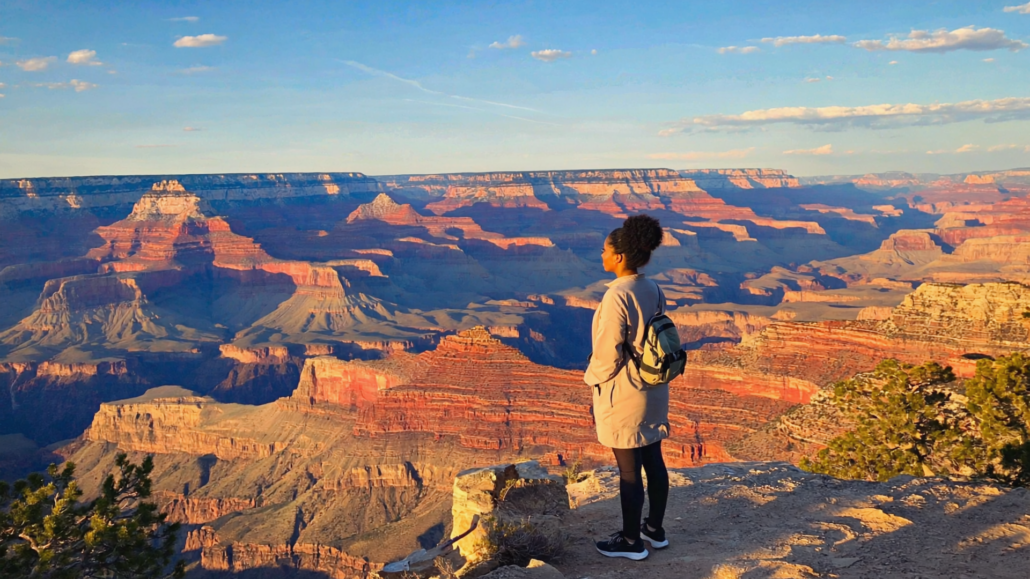
9 Things That Surprise First-Time International Visitors at Grand Canyon South Rim — and How to Prepare for Each
Every year, millions of travelers arrive at Grand Canyon South Rim from countries across the world, many of them having dreamed about this trip for decades. They’ve studied photos, planned routes, and packed carefully. And yet, within the first hour of arrival, a surprising number run into friction they didn’t anticipate: payment systems that don’t behave as expected, physical conditions that hit harder than anticipated, trail rules that differ from national parks back home, and logistical gaps that a quick internet search didn’t fully prepare them for.
None of these surprises ruin a trip. But they slow it down, create stress, and occasionally push visitors into decisions that cost them time or money. This guide exists to eliminate those friction points before they happen. Each of the nine items below covers a real pattern that catches international visitors off guard at the South Rim, followed by a direct, practical solution for each one.
1. The Entrance Fee Is Not Optional, and Passes Work Differently Than Expected
Grand Canyon National Park charges an entrance fee for all visitors, regardless of nationality, and the fee structure operates through a pass system that many international visitors aren’t familiar with. This is one of the first practical surprises visitors encounter, particularly those arriving from countries where national parks are either free or use a flat-rate ticketing model at the gate.
The standard vehicle entrance fee covers everyone in a single private vehicle for seven consecutive days, which surprises travelers who assumed they’d pay per person. This is actually a favorable arrangement for families and groups, but it confuses visitors who arrive ready to pay individually. Solo travelers and those arriving by bus or shuttle pay a separate per-person fee rather than the vehicle rate.
The more significant surprise is the America the Beautiful Annual Pass, which grants access to more than 2,000 federal recreation sites for a flat annual fee. For international visitors spending two weeks or more touring the American Southwest, this pass often pays for itself within two or three stops. It covers entry at Grand Canyon, Zion, Bryce Canyon, Joshua Tree, and dozens of other parks on the classic Southwest road trip circuit.
Here’s what most visitors don’t know until they’re standing at the gate: you don’t have to purchase your entrance pass inside the park. Grand Canyon Visitor Center IMAX, located in Tusayan just outside the South Rim entrance gates, sells various National Park entrance passes on-site. Stopping there before you reach the entry station means you arrive at the gate with your pass already in hand, avoiding the bottleneck that forms during peak hours. This is a genuinely useful stop that international travelers tend to discover only after they’ve already queued at the entrance.
One additional note specific to the Grand Canyon fee for international visitors: the fee applies equally to US citizens and foreign nationals. There is no discounted international tourist rate. Budget accordingly before you arrive.
| Pass Type | Who It Suits Best | Duration | Covers Grand Canyon? |
|---|---|---|---|
| Vehicle Day Pass | One-time visitors arriving by car | 7 consecutive days | ✅ |
| Individual/Motorcycle Pass | Solo travelers, cyclists, shuttle riders | 7 consecutive days | ✅ |
| America the Beautiful Annual Pass | Multi-park road trippers | 12 months | ✅ |
| Senior Pass (US citizens/permanent residents 62+) | Qualifying US residents only | Annual or lifetime | ✅ |
| Access Pass (US citizens with permanent disabilities) | Qualifying US residents only | Annual or lifetime | ✅ |
2. The Scale of the Canyon Makes Navigation Harder Than It Looks on a Map
The Grand Canyon South Rim stretches roughly 33 miles from end to end, and the viewpoints visitors see in photographs are not clustered together the way a standard tourist district would be. First-time international visitors frequently arrive expecting a compact attraction where they can walk between the most famous spots in an hour. The reality is that without a vehicle strategy or shuttle plan, it’s easy to spend an entire morning moving between just two or three viewpoints.
The most visited area, Grand Canyon Village, sits near the South Entrance and contains the historic El Tovar Hotel, Bright Angel Trailhead, and Mather Point. From there, Hermit Road stretches 7 miles west and is closed to private vehicles for most of the year, serviced instead by the free park shuttle. Desert View Drive extends 25 miles east to the Desert View Watchtower. Both directions offer stunning scenery, but visitors who don’t account for travel time often commit to one direction and run out of daylight before reaching the spots they most wanted to see.
The practical solution is to treat the South Rim the way you’d treat a linear national park with distinct zones, not a single landmark. Before entering, decide whether your day prioritizes the western corridor (Hermit Road), the eastern corridor (Desert View Drive), or the Village area itself. You cannot comfortably do all three in a single day without a vehicle.
For visitors who arrive without a car or don’t want to manage driving and parking, Pink Jeep Tours, operating out of Grand Canyon Visitor Center IMAX in Tusayan, depart directly from the front door and handle all of the logistics for you. The guided format means you spend your time looking at the canyon rather than reading trail maps and checking shuttle schedules. Every Pink Jeep Tour originating from Grand Canyon Visitor Center IMAX includes a ticket to “Grand Canyon: Rivers of Time” on the six-story IMAX screen, which itself provides a useful orientation to the canyon’s geography before you set foot on the rim.
3. The Altitude and Aridity Affect the Body More Quickly Than Visitors Expect
The South Rim sits at approximately 7,000 feet above sea level, and the combination of high altitude, low humidity, and intense sun creates physiological conditions that most international visitors have never experienced simultaneously. Travelers arriving from coastal Europe, Southeast Asia, or other low-elevation regions often feel the effects within the first hour, sometimes before they reach the rim itself.
Symptoms of mild altitude adjustment include shortness of breath during light activity, a faster-than-normal heart rate, and a slight headache. These are normal responses and typically resolve within a day or two. The more serious risk is dehydration, which progresses faster at altitude than at sea level because the body loses moisture through respiration at a higher rate. Dry canyon air accelerates this further, and visitors who feel fine standing at the rim may find themselves struggling on even a short descent into the canyon.
The National Park Service’s heat and hydration guidance for Grand Canyon is explicit: hiking down into the canyon and back up in a single day is not recommended for most visitors. The descent is deceptively easy because it’s downhill. The ascent back to the rim, in full midday heat with an already-fatigued body, is where visitors get into trouble. The NPS uses the phrase “killer hike” in official materials to describe the Bright Angel and South Kaibab trails when attempted in full during summer months.
The preparation here is simple but requires advance commitment. Carry more water than you think you need, with a minimum of one liter per hour of hiking activity. Start any trail hike before 10:00 AM. Wear a hat with a brim. Apply sunscreen generously, including on ears and the back of the neck. If you’ve arrived from a low-altitude country, plan a shorter first day to allow your body to begin adjusting before any serious exertion.
4. Credit Cards Work Differently, and Cash Is Less Useful Than Visitors Assume
Many international visitors arrive in the United States assuming that cash is the most universally accepted form of payment, only to discover that the American system is more card-dependent than almost any other developed country. At the same time, certain card features that are standard in Europe and parts of Asia, particularly chip-and-PIN verification, behave differently with American point-of-sale systems, which still frequently prompt for a signature rather than a PIN.
At the South Rim, most transactions are cashless or card-preferred. The park entry fee can be paid by card. NPS shuttle systems don’t require payment at all (they’re free). Dining and retail locations within the park accept major credit cards. Visitors from countries with tap-to-pay infrastructure will find contactless payments widely accepted at private businesses, though some older NPS-operated terminals may not support them.
The friction points tend to emerge with international card fees and foreign transaction charges. Many banks charge a percentage on every transaction made outside the cardholder’s home country. A week-long Southwest road trip through multiple parks, hotels, and restaurants can generate meaningful fees. Visitors from the UK, Australia, Europe, and Canada are often better served by requesting a travel-specific card from their bank before departure, many of which waive foreign transaction fees entirely.
ATMs are available in Tusayan and within the park at Grand Canyon Village, but withdrawal limits and international ATM fees can add up. The practical approach is to carry a modest amount of US cash for small purchases and tips, and rely on card for everything else. Tipping culture in the US is also a practical surprise for many international visitors. At full-service restaurants, 18–20% is the standard expectation, not an optional courtesy. This applies at dining options throughout the Tusayan area as well.
5. The Rim Trail Is Not the Only Option, and Trail Etiquette Has Clear Rules
International visitors sometimes arrive with hiking habits from their home countries that don’t align with American national park trail etiquette, and the Grand Canyon’s trail system has specific right-of-way and behavior conventions that are worth knowing before you start walking. These aren’t arbitrary rules; most of them exist because narrow canyon trails create real safety challenges when hikers, mule trains, and ascending hikers share the same path.
The most important rule: mule trains have the right of way on all trails. When you hear a mule string approaching, step to the uphill side of the trail, stand still, and wait for the wrangler’s instruction. Do not make sudden movements or loud noises. Mule trips operate on the Bright Angel Trail and carry visitors on multi-day canyon trips. Ignoring right-of-way for mule trains is not just rude; it’s genuinely dangerous.
The second convention surprises many visitors from cultures where trail passing is informal: ascending hikers have the right of way over descending hikers on narrow trails. If you’re coming down and encounter someone climbing up, step aside and let them pass. This rule exists because uphill hiking is physically harder, and losing momentum mid-climb is more taxing than pausing on the descent.
Beyond these specific rules, the Rim Trail itself is a paved, largely flat path that runs for 13 miles along the canyon edge and is accessible to most fitness levels. It connects major viewpoints and is ideal for visitors who want to experience the canyon without committing to a descent. The Bright Angel Trail descends 9.5 miles to the Colorado River and requires serious preparation. The South Kaibab Trail, at 6.4 miles to the river, is shorter but steeper and has no water sources. Day hikers should realistically target the first mile or two of either trail rather than attempting a full descent.
For a broader look at some of the more unconventional things that happen at this canyon, including the adventurous spirit it inspires, the story of Will Smith’s bungee jump for charity over the Grand Canyon captures just how dramatic this landscape can be as a backdrop for human endeavor.
6. Wildlife Encounters Follow Different Rules Than Most International Visitors Expect
Grand Canyon National Park hosts a diverse range of wildlife, and the rules governing human-wildlife interaction in US national parks are more strictly enforced than in many other countries’ protected areas. The most common mistake international visitors make is approaching or feeding animals, which is illegal under federal law and carries real penalties.
The animals visitors are most likely to encounter at the South Rim are California condors, mule deer, Kaibab squirrels, and ravens. Condors are immediately recognizable by their enormous wingspan (up to 9.5 feet) and are among the rarest birds in North America. Visitors frequently attempt to approach them for photographs, particularly when condors land near rim overlooks. The legal requirement is to maintain a distance of at least 50 feet from all wildlife. This is not a suggestion.
Ravens are the trickiest wildlife encounter. They are intelligent, bold, and entirely unafraid of humans. They will steal unattended food from picnic tables, backpacks, and even hands with remarkable efficiency. Visitors who leave snacks unattended while photographing a viewpoint regularly return to find them gone. Keep food secured in your pack or in your hands. Do not set food down on rim walls or benches.
Mule deer are frequently spotted near Grand Canyon Village and along the Rim Trail, particularly in the early morning and evening. They appear calm and approachable, which is precisely what makes them potentially dangerous. A deer that feels cornered or threatened will kick with considerable force. The 50-foot distance rule applies here as well.
For visitors wanting more context on wildlife viewing best practices before their visit, the Grand Canyon wildlife watching tips guide covers the most common encounters and how to handle them safely.
7. Cell Service and Connectivity Are Unreliable, Plan for Offline Navigation
International visitors who rely on their smartphones for navigation, translation, and real-time information often discover that cell coverage inside Grand Canyon National Park is sporadic at best and nonexistent at worst. This creates genuine problems for travelers who haven’t downloaded offline maps and resources before arrival.
Coverage varies by carrier. In the village area and near major viewpoints, some signals are available, but they’re often slow and drop out unpredictably. On the Hermit Road corridor, along the South Kaibab Trail, and in the eastern Desert View area, connectivity is unreliable. Inside the canyon on any trail, assume you will have no signal at all.
International visitors face an additional layer of complexity: their home SIM cards may not have US roaming enabled, or the roaming charges may be prohibitively expensive. Options include purchasing a temporary US SIM card, activating an international roaming plan before departure, or using an eSIM service that allows a US data plan to run alongside a home plan on the same device.
The practical preparation steps are straightforward. Before leaving your lodging in Tusayan or Flagstaff:
- Download offline maps of the South Rim area through Google Maps or a dedicated hiking app like AllTrails or Gaia GPS.
- Screenshot or save key information: trail distances, shuttle stop locations, campsite details, and emergency contact numbers.
- Download the NPS Grand Canyon app, which offers offline functionality for maps and trail information.
- Note the location of the nearest ranger station and emergency services relative to your planned routes.
The Grand Canyon Visitor Center IMAX, located in Tusayan before you enter the park, has reliable connectivity and is an ideal last stop to confirm downloads, check weather conditions, and ensure your navigation is ready before you drive through the entrance gates.
8. The Grand Canyon Visitor Center Inside the Park Is Different From What’s Available in Tusayan
One of the most consistent points of confusion for international visitors is the distinction between the NPS-operated Grand Canyon Visitor Center inside the park at Grand Canyon Village and the privately operated Grand Canyon Visitor Center IMAX located in Tusayan just outside the South Rim entrance. These are two separate facilities with different purposes, different services, and different physical locations.
The official NPS Visitor Center inside the park, known as the Grand Canyon Visitor Center at Grand Canyon Village, is the primary orientation hub once you’re inside the national park. It offers ranger programs, exhibits on geology and natural history, trip planning assistance, and the free shuttle hub at Canyon View Information Plaza. It does not sell IMAX tickets, does not offer Pink Jeep Tours, and does not have EV charging or a hotel concierge function. It’s an NPS educational facility, not a commercial services hub.
Grand Canyon Visitor Center IMAX, by contrast, sits in Tusayan, minutes from the South Entrance gates but outside the park boundary. It’s privately operated and serves a different function: orienting visitors before they enter the park through the “Grand Canyon: Rivers of Time” IMAX film on a six-story screen with IMAX with Laser technology, offering practical services like National Park entrance pass sales, Pink Jeep Tour booking, dining at Pizza Hut Express and Explorers Café, retail with hiking gear and souvenirs, and ultra-fast EV charging (150 kW and 350 kW) for road trip travelers.
For international visitors, the sequence that makes the most sense is: stop at Grand Canyon Visitor Center IMAX in Tusayan first, watch the film to understand what you’re about to see, purchase your entrance pass if needed, grab food, charge your EV if applicable, and then drive into the park with context and supplies already handled. The NPS Visitor Center inside the park becomes your next stop for ranger programs and in-park orientation.
The Tusayan shuttle also connects to the park’s free transit system during peak season. Visitors who use the Grand Canyon Tusayan shuttle can skip the parking challenges inside the park entirely, which during summer months can add 30–45 minutes to a visit just for finding a space.
9. The IMAX Film Is Not a Tourist Gimmick, It’s a Legitimate Orientation Tool
Visitors unfamiliar with IMAX cinema sometimes dismiss the Grand Canyon IMAX Theater as a commercial attraction targeted at children, only to discover after watching “Grand Canyon: Rivers of Time” that it provides the kind of geological, cultural, and geographic context that transforms a rim walk from a series of pretty views into a genuinely understood landscape.
The Grand Canyon is 277 miles long, up to 18 miles wide, and more than a mile deep. Its rock layers represent nearly two billion years of Earth’s geological history. Without some orientation, most first-time visitors stand at the rim and experience a visual sense of awe without the intellectual framework that makes the experience last. They leave knowing it was big and beautiful, but not why it exists, how it formed, what they were actually looking at in those layers of red, orange, and gray rock, or what the river at the bottom has done over geological time.
“Grand Canyon: Rivers of Time” addresses all of this in a format that takes full advantage of the six-story screen and IMAX with Laser technology. Aerial sequences filmed within the canyon provide spatial perspective that photographs and even standing at the rim can’t fully replicate. The film covers the canyon’s geological formation, the Colorado River, the indigenous cultures that have called this landscape home for thousands of years, and the ecological systems that make it one of the most biologically diverse environments in North America.
For international visitors specifically, the film provides something particularly valuable: English-language narration of content that most foreign-language guidebooks summarize in a paragraph or two. The visual format transcends language barriers in a way that reading-based orientation doesn’t. Visitors who watch the film before entering the park consistently report a richer experience at the rim because they know what they’re looking at when they arrive.
Booking IMAX tickets online in advance saves 20% compared to at-door pricing, and the film’s runtime means you can watch it, handle practical logistics, and still be inside the park before 10:00 AM on a typical morning visit. Every Pink Jeep Tour departing from Grand Canyon Visitor Center IMAX includes a “Rivers of Time” ticket as part of the package, making it a natural entry point for visitors who want a guided experience from start to finish.
The Tusayan location also matters for the broader trip context. The town sits at roughly the same elevation as the South Rim, so arriving the evening before and staying overnight in Tusayan gives your body a night of altitude adjustment before you start hiking. The IMAX visit in the morning slots naturally into that pattern: arrive, rest, watch the film, enter the park informed and physically ready.
Frequently Asked Questions: Grand Canyon South Rim for International Visitors
Do international visitors pay a different entrance fee at Grand Canyon?
No. The Grand Canyon fee for international visitors is the same as for domestic visitors. There is no separate international tourist rate. All visitors pay the standard vehicle or individual entrance fee, or may purchase the America the Beautiful Annual Pass, which covers entry to more than 2,000 federal recreation sites across the US.
Where can I buy a National Park pass before entering Grand Canyon?
Grand Canyon Visitor Center IMAX, located in Tusayan just outside the South Rim entrance, sells various National Park entrance passes on-site. Stopping there before you reach the entrance station means you arrive at the gate with your pass ready, which can save significant time during busy periods.
Is it safe to hike into the Grand Canyon without a guide?
Solo hiking on the upper portions of established trails like Bright Angel and South Kaibab is common and generally safe if visitors are well-prepared. However, attempting to hike to the Colorado River and back in a single day is strongly discouraged by the National Park Service. The descent is easy; the return ascent in midday heat is where serious medical emergencies occur. For first-time visitors and international travelers unfamiliar with high-altitude desert hiking, a guided tour with Pink Jeep Tours provides a structured, safe introduction to the canyon environment.
What is the Grand Canyon Visitor Center IMAX, and is it inside the park?
Grand Canyon Visitor Center IMAX is a privately operated facility located in Tusayan, Arizona, outside the South Rim entrance gates. It is not affiliated with or operated by the National Park Service. The facility includes the Grand Canyon IMAX Theater (showing “Grand Canyon: Rivers of Time” on a six-story IMAX with Laser screen), Pink Jeep Tours, Pizza Hut Express, Explorers Café, a retail store with hiking gear and souvenirs, National Park pass sales, and EV charging stations. It is distinct from the NPS-operated Grand Canyon Visitor Center inside the park at Grand Canyon Village.
Do I need a reservation to visit Grand Canyon South Rim?
Currently, Grand Canyon South Rim does not require advance reservations for day visits (unlike some other national parks that have implemented timed-entry permits). However, in-park lodging, camping, and rafting permits do require advance booking, often many months ahead. Check the official NPS Grand Canyon planning page for current reservation requirements, as policies can change seasonally.
What cell service is available at the South Rim?
Cell coverage inside Grand Canyon National Park is limited and unreliable. Signal is strongest near Grand Canyon Village but degrades quickly along Hermit Road, the Desert View corridor, and all trails into the canyon. International visitors should download offline maps before arrival and confirm their roaming plan or local SIM situation before entering the park.
Can I use contactless payment at Grand Canyon?
Most private businesses in Tusayan and inside the park accept major credit cards and contactless payment. Some older NPS-operated terminals may not support tap-to-pay. Carry a backup card and a modest amount of US cash. Be aware that international cards may incur foreign transaction fees; a travel card that waives these fees is worth arranging before your trip.
What language resources are available for non-English speakers at the South Rim?
The NPS provides some multilingual materials at the official Grand Canyon Visitor Center inside the park, and ranger programs are generally conducted in English. The “Grand Canyon: Rivers of Time” IMAX film at Grand Canyon Visitor Center IMAX uses a visual storytelling format that communicates effectively regardless of English proficiency, making it a particularly valuable orientation stop for non-English-speaking visitors.
How early should I arrive at Grand Canyon South Rim?
During spring and summer, arriving before 9:00 AM gives you the best chance of finding parking, cooler temperatures for hiking, and less crowded viewpoints. The South Rim sees its peak visitation from late spring through early fall, with Mather Point and Bright Angel Trailhead becoming very crowded by midmorning. Sunrise visits offer exceptional light conditions for photography and significantly fewer crowds. Staying in Tusayan the night before allows for an early start without a long drive.
Is the Tusayan shuttle free, and how does it connect to the park?
The Tusayan shuttle, which operates seasonally, connects the Tusayan area (including Grand Canyon Visitor Center IMAX) to the park’s free internal shuttle system. Using this service eliminates parking stress inside the park during peak season. Check the NPS website for current shuttle schedules and operating periods, as seasonal availability varies.
What should I do if I feel unwell at the South Rim?
Mild symptoms like slight headache, shortness of breath during light activity, or fatigue are common responses to altitude adjustment and usually resolve with rest, hydration, and reduced exertion. If symptoms are severe, including confusion, persistent vomiting, chest pain, or significant difficulty breathing, seek ranger assistance immediately. The park maintains emergency services, and rangers are trained in wilderness first response. Descending to lower elevation is the fastest remedy for altitude-related illness.
Are there dining options near the South Rim for international visitors?
Tusayan has several dining options ranging from casual to sit-down restaurants. Grand Canyon Visitor Center IMAX offers Pizza Hut Express and Explorers Café for visitors stopping before or after the park. Inside the park, Grand Canyon Village has multiple dining options at varying price points, from the historic El Tovar dining room to Bright Angel Bicycles Café and the Maswik Food Court. Reservations for the El Tovar are recommended during peak season.
Key Takeaways for First-Time International Visitors at Grand Canyon South Rim
- Purchase your National Park entrance pass before reaching the gate. Grand Canyon Visitor Center IMAX in Tusayan sells passes on-site, saving you queue time at the entrance station.
- The America the Beautiful Annual Pass pays for itself quickly if you’re visiting two or more national parks on your trip, which most Southwest itineraries include.
- The South Rim is 33 miles long. Choose your primary corridor (west toward Hermit Road or east toward Desert View) before you arrive, and don’t try to cover both in a single day without a clear plan.
- Altitude and dehydration are the most common reasons visitors need medical assistance. Carry water, start hiking early, and take the first day at a moderate pace.
- Download offline maps before entering the park. Cell coverage is unreliable throughout the South Rim and nonexistent on canyon trails.
- Wildlife encounters follow strict federal rules. Maintain 50 feet of distance from all wildlife, and never feed any animal, including the ravens who will actively try to steal your lunch.
- Grand Canyon Visitor Center IMAX is not inside the park. It’s a privately operated facility in Tusayan that handles orientation, pass sales, tours, dining, and EV charging before you enter the national park.
- The IMAX film “Grand Canyon: Rivers of Time” provides genuine geological and cultural context that enriches everything you’ll see at the rim. Book online to save 20% on tickets.
- Trail etiquette has clear right-of-way rules. Mule trains have priority over everyone. Ascending hikers have priority over descending hikers on narrow trails. Learn these before your first trail.
The Grand Canyon rewards preparation. Visitors who arrive with a plan, physical readiness, and some contextual knowledge of what they’re looking at consistently describe the experience as one of the most meaningful of their lives. The nine surprises outlined here are all solvable with a bit of advance planning, and none of them require anything more than awareness and a few practical decisions made before you reach the rim. Start your Grand Canyon adventure with IMAX at Grand Canyon Visitor Center IMAX in Tusayan, handle the logistics early, and save every minute of your time at the canyon for the canyon itself.

About the author
Explore The Canyon Editorial Team
See The Canyon
Learn more →


Leave a Reply
Want to join the discussion?Feel free to contribute!