
Grand Canyon in Fall vs. Spring: An Honest Shoulder Season Comparison for Weather, Crowds, and Trail Access
Most Grand Canyon trip-planning advice comes down to one blunt recommendation: avoid summer. But that guidance leaves a gap. If summer is out, which shoulder season actually wins? Fall and spring each make a compelling case, and the honest answer is that they are not interchangeable experiences. They differ in temperature curves, trail conditions, crowd compositions, wildlife behavior, and even the quality of light that photographers chase across the rim. Choosing the wrong one for your travel style is the most common planning mistake families and solo travelers make when booking a South Rim trip.
This comparison digs into both seasons without the usual hedging. By the end, you will know which window fits your goals, your fitness level, your family’s needs, and your tolerance for unpredictable weather. Whether you are weighing Grand Canyon fall travel against a spring alternative, or simply trying to identify the best time to visit the Grand Canyon outside of peak summer crowds, this guide delivers the side-by-side clarity that most travel sites do not.
Why Shoulder Seasons Demand More Planning Than Peak Season
Shoulder seasons at the Grand Canyon are genuinely rewarding, but they are not beginner-friendly by default. The park’s infrastructure, trail conditions, and visitor services shift meaningfully between summer and the off-months, and visitors who arrive expecting a summer-lite experience often encounter surprises. Understanding this dynamic is the first step to planning a trip that delivers what you came for.
Grand Canyon National Park covers over 1.2 million acres, with the South Rim sitting at an elevation of approximately 6,800 feet above sea level, according to the National Park Service’s South Rim planning page. That elevation means weather does not behave the way visitors from lower altitudes expect. A warm October day in Phoenix bears no resemblance to an October afternoon on the rim, where temperatures can drop sharply after sunset and afternoon cloud cover can arrive without much warning.
Spring and fall each have their own version of this unpredictability. Spring brings the possibility of snowstorms well into May. Fall can deliver stunning warm stretches that last through October, followed by sudden early freezes in November. The core planning challenge is that neither season is monolithic. A trip in early October feels entirely different from a trip in late November. A visit in late March differs dramatically from one in early May.
The visitors who get the most out of shoulder season travel are those who treat these conditions as features rather than inconveniences. Thinner crowds, softer light, and quieter trails are the payoff for tolerating a little more weather uncertainty. But you need accurate expectations to get there.
Grand Canyon Fall Travel: What September Through November Actually Looks Like
Fall at the Grand Canyon runs from early September through late November, and it covers three meaningfully different sub-windows. Each requires its own planning approach.
Early Fall (September to Mid-October): The Sweet Spot Most Visitors Miss
Early fall is arguably the most underrated window in the entire Grand Canyon calendar. Daytime temperatures on the South Rim in September typically range from the mid-60s to the low 80s Fahrenheit, with nights dropping into the 40s. The summer monsoon season, which runs roughly from July through mid-September, is winding down during early September. This creates a specific atmospheric phenomenon that photographers specifically plan around: dramatic post-storm cloud formations that produce some of the most visually dynamic canyon light of the entire year.
Crowds are meaningfully lower than July and August, but the park has not yet hit its autumn quiet period. Labor Day weekend remains busy, and early October can see elevated visitation as families take advantage of fall break schedules. The practical upside is that inner canyon trails, particularly the Bright Angel Trail and the South Kaibab Trail, are no longer under the heat restrictions that the National Park Service issues during summer months. Hikers who want to descend below the rim can do so in September and October without the 10 a.m. turnaround advisories that govern summer hiking.
Inner canyon temperatures in September still reach the 90s and above at the Colorado River level, so hydration and early starts remain non-negotiable. But the window for safe inner canyon travel is meaningfully wider than it is in July or August.
Peak Fall (Mid-October to Early November): The Crowd-and-Color Window
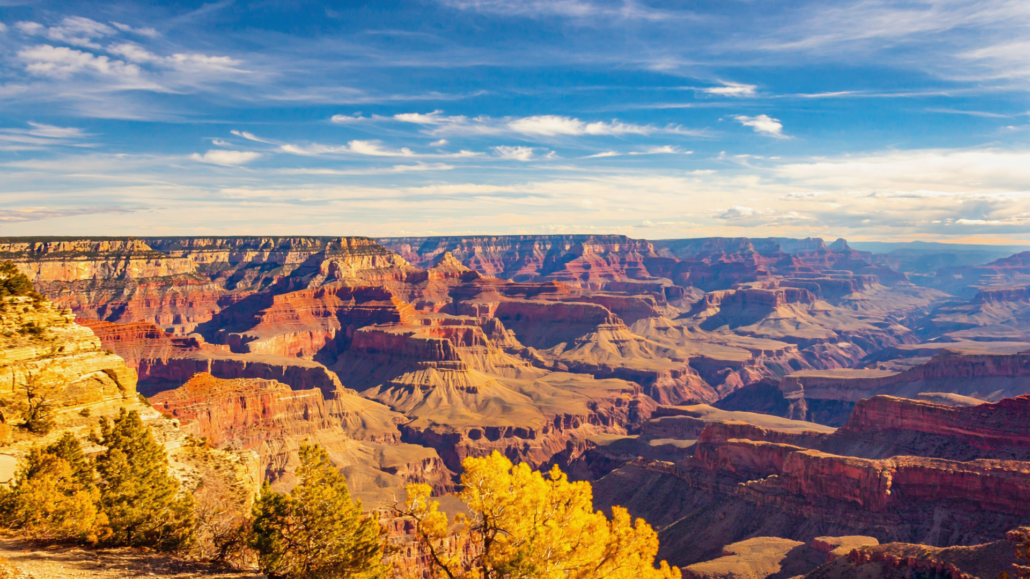
Mid-October through the first week of November is when fall foliage arrives at the South Rim. The canyon’s Gambel oak, bigtooth maple, and Utah serviceberry species shift to amber and gold during this period, adding a visual layer to the rim that most visitors do not associate with desert landscapes. This window attracts photography enthusiasts and nature travelers specifically for this reason.
Rim temperatures in this window typically run from the low 50s to the mid-60s during the day, with nights dropping into the 30s. Layering is essential. The cooler temperatures make rim walks, including the Rim Trail’s full 13-mile stretch, genuinely comfortable for extended outings without the heat fatigue that characterizes summer visits.
Crowd levels during peak fall are moderate by summer standards but can spike significantly on weekends. Mather Point, Yavapai Point, and Grandview Point all see concentrated traffic during clear weekend mornings. Visitors seeking solitude should plan rim walks for weekday mornings or late afternoons.
Late Fall (November to Thanksgiving): The Quiet Season Arrives
By mid-November, the South Rim begins its transition into the park’s quietest extended period. Temperatures drop into the 40s during the day and can fall below freezing overnight. Snow is possible from November onward, with accumulations on the rim creating a dramatically different visual environment. The canyon walls contrast sharply with snow-dusted rim vegetation, producing views that look nothing like the photographs most visitors associate with the Grand Canyon.
Crowds thin noticeably during this window. Parking at popular overlooks becomes manageable without the shuttle-dependent logistics of summer. The trade-off is that some seasonal facilities and park programs reduce their operating hours, and inner canyon camping and hiking carry cold-weather risks that require proper gear and preparation.
For travelers who prioritize solitude, late November outside of the Thanksgiving holiday window is one of the genuinely uncrowded periods at the South Rim. For those seeking a festive or energetic park atmosphere, it is not the right match.
Grand Canyon Spring Travel: What March Through May Actually Looks Like
Spring at the Grand Canyon spans from early March through late May, and it is equally varied across its three sub-windows. The key difference from fall is that spring trends warmer rather than colder as the season progresses, which inverts the planning logic.
Early Spring (March to Early April): Snow, Wildflowers, and Shoulder Season Crowds
March is simultaneously one of the most beautiful and most logistically uncertain months at the South Rim. Daytime temperatures typically range from the mid-40s to the low 60s, but late winter snowstorms remain a genuine possibility through early April. Road access to some secondary viewpoints can be temporarily affected after significant snowfall, though the main South Rim Road and park entry remain operational year-round.
The payoff for tolerating March’s weather variability is real. Wildflower blooms begin appearing at lower elevations within the canyon in late March and early April. The inner canyon, particularly along the Bright Angel Creek corridor, sees early spring wildflowers that are completely absent in summer. Seasonal waterfalls fed by snowmelt are active during this period, most notably Ribbon Falls, accessible via a spur from the North Kaibab Trail (though the North Rim itself does not open until mid-May).
Crowds in March are genuinely light outside of spring break windows, which vary by region but typically fall across the last two weeks of March and the first week of April. Those spring break windows can significantly compress parking and trail capacity, particularly at Mather Point and along the Bright Angel Trailhead. Visitors with schedule flexibility should specifically plan around spring break dates for their region.
Mid-Spring (April to Early May): The Grand Canyon at Its Most Accessible
Late April through early May is widely regarded among experienced South Rim visitors as the single best window for inner canyon hiking. Daytime rim temperatures settle into the 60s and low 70s. Inner canyon temperatures at the Colorado River level reach the 70s and 80s, warm enough for comfortable hiking but below the dangerous thresholds that restrict summer travel. The combination of accessible temperatures at all elevations, longer daylight hours, and trails in good post-winter condition makes this window uniquely suited to ambitious itineraries.
Overnight backpackers planning a Bright Angel or South Kaibab-to-Phantom Ranch trip find mid-spring ideal. Phantom Ranch reservations, managed through the National Park Service’s Recreation.gov reservation system, book out months in advance for this window, so planning lead time matters significantly.
Rim crowds during late April and early May are moderate. The park has not yet entered its peak summer mode, but visitation has increased meaningfully compared to March. Weekend mornings at the most popular overlooks require earlier arrival to secure parking without using the shuttle system.
Late Spring (Mid-May to Memorial Day): The Summer Surge Begins
By mid-May, the Grand Canyon is transitioning from shoulder season into the beginning of its peak period. Daytime rim temperatures climb into the mid-70s to low 80s. Inner canyon temperatures begin approaching the ranges that trigger heat advisories. Memorial Day weekend marks the practical beginning of summer crowd levels, with parking challenges, shuttle dependency, and trail congestion all returning to peak-season norms.
Late May retains some shoulder season advantages. The North Rim typically opens in mid-May, allowing rim-to-rim hikers and shuttle users to plan cross-canyon itineraries that are impossible in winter. For visitors specifically interested in the full canyon experience, late May is the earliest viable window for rim-to-rim access.
The honest assessment: late May is better than mid-July, but it is not the shoulder season experience that most travelers are seeking when they choose to avoid summer.
Head-to-Head: Fall vs. Spring Across the Metrics That Matter
Side-by-side comparisons are more useful than seasonal narratives when you are actually making a booking decision. The table below covers the metrics that most directly affect trip quality at the South Rim.
| Category | Fall (Sept–Nov) | Spring (Mar–May) |
|---|---|---|
| Rim Daytime Temps | 40s–80s°F (trending cooler) | 40s–75°F (trending warmer) |
| Inner Canyon Temps | 70s–90s°F (Sept–Oct); cold by Nov | 60s–85°F (Apr–May); ideal window |
| Crowd Levels | Moderate (Sept–Oct); Light (Nov) | Light (Mar); Moderate–Heavy (Apr–May) |
| Trail Conditions | Dry and firm; ice risk Nov onward | Variable (snow/mud Mar–Apr); excellent Apr–May |
| Wildflowers | ❌ Minimal | ✅ March–May (inner canyon) |
| Fall Foliage | ✅ Mid-Oct to early Nov | ❌ Not applicable |
| Monsoon Weather Risk | ⚠️ Early Sept (tapering) | ❌ Not a factor |
| Snow Risk | ⚠️ November onward | ⚠️ March to early April |
| Photography Light | ✅ Dramatic post-monsoon clouds; golden hour earlier | ✅ Clear skies; longer golden hour |
| North Rim Access | ✅ Open through mid-Oct; closed after | ⚠️ Opens mid-May only |
| Inner Canyon Backpacking | ✅ Excellent Sept–Oct; cold by Nov | ✅ Best overall window: Apr–May |
| Family-Friendly Conditions | ✅ Early fall; ⚠️ late fall requires extra gear | ✅ April–May ideal for families |
Trail Access and Hiking Conditions: The Deciding Factor for Active Visitors
Trail access is where the two seasons diverge most sharply for hikers and backpackers. The South Rim’s primary inner canyon trails, Bright Angel and South Kaibab, are open year-round, but conditions and safety considerations vary dramatically by season and by elevation zone.
Fall Hiking: Dry Trails, Cooling Temperatures, and a Narrowing Window
September and October offer trail conditions that many experienced Grand Canyon hikers consider optimal. The trails are dry and firm, summer heat restrictions have lifted, and the inner canyon cools to temperatures that allow longer and deeper descents than are advisable in summer. Hikers who deferred an ambitious canyon descent through the summer heat will find September and October their reward.
The Bright Angel Trail, which descends approximately 4,460 feet over 9.5 miles to the Colorado River, is fully accessible throughout fall. The Indian Garden Campground (now officially renamed Havasupai Gardens Campground by the National Park Service) serves as a practical turnaround or overnight stop at the 4.6-mile mark, sitting at approximately 3,840 feet elevation. Fall temperatures at this elevation are genuinely comfortable for camping from September through mid-October.
November changes the calculation. Ice can form on shaded sections of the Bright Angel and South Kaibab trails, particularly on north-facing switchbacks and in narrow canyon sections that receive limited direct sunlight. The National Park Service recommends traction devices such as microspikes for inner canyon trails when ice is present. Visitors planning November inner canyon trips should check current trail conditions through the NPS Grand Canyon trail conditions page before departing.
Spring Hiking: The Best Inner Canyon Window in the Entire Year
Late April through mid-May represents the best overall conditions for inner canyon hiking at the South Rim. Rim temperatures are mild, inner canyon temperatures are warm but not dangerous, and trail surfaces are firm and dry after spring mud season has passed. This window is specifically when experienced backpackers time Phantom Ranch stays, rim-to-rim attempts, and multi-day Tonto Trail traverses.
The trade-off is that March and early April trails can carry residual snow and mud, particularly on the upper sections of Bright Angel where north-facing segments hold moisture. The transition from mud to firm trail typically occurs in the third or fourth week of April, though this varies by year. Hikers planning March trips should anticipate some trail surface variability and pack accordingly.
One spring-specific advantage: the inner canyon’s Bright Angel Creek, which runs alongside much of the North Kaibab Trail corridor, runs at its highest and most visually dramatic flow during spring snowmelt. The waterway that is nearly a trickle by late summer becomes a genuine creek in spring, adding a riparian dimension to inner canyon hiking that summer visitors rarely experience.
Which Season Wins for Hikers?
For rim-only hikers and day visitors, fall wins on conditions. For inner canyon backpackers and anyone planning a Phantom Ranch stay, late April through early May is the single best window in the year. For families with children who are new to canyon hiking, late April and early May offer the most forgiving combination of mild temperatures at all elevations and dry, firm trail surfaces.
Crowd Patterns and Parking Reality
Managing crowds at the South Rim is largely a matter of managing timing within a season, not just choosing a season. Both fall and spring contain high-crowd windows that can rival summer in their logistical complexity, as well as genuinely quiet stretches that deliver the uncrowded experience most shoulder season travelers are seeking.
The South Rim’s most visited viewpoints, Mather Point, Yavapai Point, Desert View, and Grandview Point, all experience predictable congestion patterns. Arrival before 8 a.m. at any of these locations during fall or spring shoulder season allows visitors to secure parking and experience the overlooks at their quietest. After 10 a.m. on weekend days, parking at Mather Point becomes unreliable even in shoulder season.
Fall-specific crowd spikes occur around Labor Day weekend, Columbus Day/Indigenous Peoples’ Day weekend, and Thanksgiving. Spring-specific spikes occur during spring break windows (typically mid-March through early April) and Memorial Day weekend. Visitors with schedule flexibility who plan their trips between these dates will encounter noticeably lighter traffic at both the park entry gates and at popular viewpoints.
One practical consideration that applies to both seasons: the Grand Canyon Visitor Center IMAX, located in Tusayan just outside the South Rim entrance gates, serves as a logical first stop before entering the park. The facility sells various National Park entrance passes on-site, which can save time at the entry station during busy arrival windows. For visitors arriving from the south on Arizona Route 64, stopping at Grand Canyon Visitor Center IMAX before reaching the park gates is both convenient and genuinely useful for orientation purposes.
Travelers can also take advantage of the Grand Canyon Tusayan Shuttle, which helps visitors avoid the frustration of full parking lots during moderate-to-busy periods. Knowing this option exists before you arrive can meaningfully reduce stress on weekends.
Photography and Scenic Viewing: Which Season Produces Better Images?
Both fall and spring offer photography conditions that summer simply cannot match, but they produce fundamentally different types of images. Understanding which visual characteristics each season delivers helps photographers and casual visitors alike set accurate expectations for what they will see.
Fall Photography: Drama, Contrast, and Dynamic Skies
Early fall at the Grand Canyon produces the most dramatic skies of any season. The trailing edge of monsoon season in September brings cloud formations that interact with the canyon’s layered geology in ways that clear-sky conditions simply cannot replicate. Afternoon cumulus clouds, post-storm clearing light, and the occasional rainbow over the inner canyon are features of September that professional canyon photographers specifically plan around.
The canyon’s warm color palette, the Redwall Limestone, Coconino Sandstone, and Hermit Shale layers, photograph particularly well in fall’s lower sun angle. Golden hour in October begins earlier in the evening than in summer, giving photographers a longer runway for rim-side sunset shooting without requiring an extremely late schedule.
Fall foliage in mid-October adds a foreground element to rim-edge compositions that is absent in every other season. The Bright Angel Trail corridor and the wooded sections near Hermit’s Rest on the western rim trail both produce foliage color during this window.
Spring Photography: Wildflowers, Clear Skies, and Inner Canyon Water
Spring photography at the Grand Canyon tends toward clarity and color saturation rather than dramatic contrast. Clear spring skies without the dust haze of late summer produce crisp, deeply saturated images of the canyon’s geological layers. The longer daylight hours of April and May give photographers more time to work multiple rim locations within a single day.
Inner canyon photographers find spring uniquely rewarding. Wildflowers along the Bright Angel Trail and at Havasupai Gardens bloom from late March through May. The creek at full spring flow adds a water element to inner canyon compositions. Ribbon Falls, accessible on the North Kaibab Trail (which requires camping in the inner canyon to reach), reaches its most photogenic flow during spring snowmelt.
Snow on the rim during early spring creates a specific and relatively rare photographic opportunity. The contrast between rim snowfall and the sun-warmed red canyon walls below produces images that look unlike any other Grand Canyon photograph. This is an unpredictable and weather-dependent opportunity, but visitors who encounter it leave with images that are genuinely distinctive.
Guided Tours and Ranger Programs: Seasonal Availability
Ranger programs and guided tour availability at the South Rim shift with the seasons, and the differences are meaningful for visitors who rely on guided experiences as part of their trip.
The National Park Service operates an extensive ranger program at the South Rim that is most active from spring through fall. Junior Ranger programs, geology talks at Yavapai Geology Museum, and ranger-led rim walks are available throughout both shoulder seasons, though the schedule is somewhat reduced compared to peak summer programming. Current program schedules are posted on the NPS Grand Canyon ranger programs page.
Guided jeep tours are available year-round from Tusayan, with Pink Jeep Tours operating directly from Grand Canyon Visitor Center IMAX. Every Pink Jeep Tour originating from the Grand Canyon Visitor Center IMAX includes a ticket to “Grand Canyon: Rivers of Time” on the facility’s six-story IMAX screen using IMAX with Laser technology. This combination works particularly well as a shoulder season itinerary anchor: start with the IMAX film for geological and cultural context, then head out on the guided tour for ground-level canyon access. Fall and spring both offer genuinely comfortable guided tour conditions compared to summer’s midday heat.
Mule rides into the canyon, operated by the park’s concession partner, are available in both seasons. The shorter rim-level mule experience runs year-round, while inner canyon mule trips have seasonal scheduling. Reservations for popular fall and spring dates book well in advance.
Grand Canyon Shoulder Season Tips: Practical Planning for Both Seasons
The difference between a frustrating shoulder season visit and an exceptional one usually comes down to a handful of specific planning choices. These apply across both fall and spring, with seasonal variations noted.
Layer Aggressively and Pack for Both Ends of the Temperature Range
Both seasons produce significant temperature swings between morning, midday, and evening. A fall day that starts at 38°F on the rim at sunrise and reaches 65°F by noon requires the same layering approach as a spring day that starts at 42°F and climbs to 70°F. Visitors who arrive in a single jacket and jeans for either season regularly find themselves underdressed in the morning and overdressed by afternoon. Merino wool base layers, a packable insulating mid-layer, and a wind-resistant outer shell cover the full range of both shoulder seasons.
Book Phantom Ranch and Inner Canyon Permits Well in Advance
Phantom Ranch reservations through Recreation.gov use a lottery system that opens well before desired travel dates. The prime spring windows, late April through mid-May, are among the most competitive in the park’s reservation calendar. Fall inner canyon camping permits are also competitive for September and October. Visitors who arrive at the South Rim expecting walk-up inner canyon access during these windows are typically disappointed. Plan six months or more in advance for inner canyon travel during peak shoulder season periods.
Arrive at the Rim Before 8 A.M. on Weekends
This applies year-round but is particularly relevant during shoulder season, when visitors are more likely to be traveling independently by car rather than on organized tour buses. Both Mather Point and the South Kaibab Trailhead parking areas fill during weekend mornings. Arriving before 8 a.m. consistently avoids this issue. Alternatively, using the park’s free shuttle system from the Visitor Center parking area inside Grand Canyon Village eliminates the parking variable entirely.
Use Tusayan as Your Trip Orientation Hub
Stopping at Grand Canyon Visitor Center IMAX in Tusayan before entering the park serves a practical function beyond the IMAX experience. The facility sells various National Park entrance passes, meaning visitors can purchase their America the Beautiful annual pass or their single-visit entry without waiting at the park’s entry station. On busy shoulder season weekends, this can meaningfully reduce time spent at the gate. The on-site dining at Pizza Hut Express and Explorers Café also provides a fueling stop before a full day on the rim. Booking IMAX tickets online in advance saves 20% on admission, and the “Grand Canyon: Rivers of Time” film provides geological and cultural context that makes every subsequent hour in the park more meaningful.
Check Current Trail Conditions Before Inner Canyon Descents
In both seasons, inner canyon conditions can vary from the rim-level forecast. The NPS posts current trail conditions and any temporary closures or advisories on its website and at the trailheads. This is especially important in November (ice risk) and March (snow and mud risk). A five-minute check before beginning a descent is a standard practice among experienced canyon hikers that occasionally prevents serious situations for less experienced visitors.
The Honest Recommendation: Which Season Is Right for You?
The most useful answer to the fall-versus-spring question is conditional, not universal. Here is a direct, scenario-based breakdown of which season fits which traveler type.
| Your Priority | Best Season | Optimal Window |
|---|---|---|
| Inner canyon backpacking or Phantom Ranch | Spring | Late April to mid-May |
| Maximum solitude on the rim | Fall | Mid-November (avoid Thanksgiving week) |
| Dramatic photography and dynamic skies | Fall | Early to mid-September |
| Fall foliage and canyon color | Fall | Mid-October to early November |
| Family with young children (first visit) | Spring | Late April to early May |
| Wildflowers and inner canyon bloom | Spring | Late March to mid-April |
| North Rim access and rim-to-rim hiking | Fall (early) or Spring (late) | Sept–mid-Oct or mid-May |
| Day hiker (rim and partial descents) | Either | Oct or April (both excellent) |
| Budget travel (lower accommodation rates) | Fall | November (non-Thanksgiving) |
| Snow photography on the rim | Either (weather-dependent) | Nov–Feb or March |
If forced to choose a single winner for the broadest range of travelers, mid-to-late October edges out spring for one specific reason: it combines comfortable rim temperatures, accessible inner canyon conditions, fall foliage, low weekday crowds, and the dramatic canyon light that makes first-time South Rim visits genuinely memorable. The window is short, roughly two to three weeks, which is why it fills up. But for visitors who can time their trip around it, it consistently delivers the most complete Grand Canyon experience of any point in the shoulder season calendar.
For active hikers and backpackers specifically targeting inner canyon travel, late April to early May is the clear winner. No other window in the year combines comfortable temperatures at both rim and canyon floor levels with firm, dry trail conditions and full inner canyon facilities.
What to Do at Grand Canyon Visitor Center IMAX Before You Enter the Park
Regardless of which season you choose, the practical logistics of a South Rim trip benefit from treating Grand Canyon Visitor Center IMAX in Tusayan as your first stop rather than an afterthought. Located just outside the South Rim entrance gates, the facility is positioned to solve several common arrival-day friction points before they become problems.
The on-site sale of various National Park entrance passes means visitors do not need to choose between waiting in the entry line or arriving without a pass. This is particularly useful during fall foliage weekends in October and during spring break periods in March and April, when gate queues can extend significantly. Purchasing your pass at Grand Canyon Visitor Center IMAX before reaching the gate is a straightforward time-saver.
The IMAX experience itself, “Grand Canyon: Rivers of Time” on a six-story screen with IMAX with Laser technology, provides geological and cultural orientation that changes how visitors experience the canyon once they are on the rim. Visitors who have seen the film report a noticeably richer understanding of what they are looking at when they stand at Mather Point or descend the Bright Angel Trail. The 34-minute runtime fits into a morning arrival sequence without disrupting a full day’s itinerary. Book IMAX tickets online in advance to save 20% on admission.
Pink Jeep Tours departs directly from the front door of Grand Canyon Visitor Center IMAX, and every tour originating from the facility includes a “Rivers of Time” ticket. For visitors who want a guided introduction to the canyon’s terrain and geology, this combination packages the IMAX orientation with ground-level exploration in a single booking. Fall and spring are both excellent seasons for guided jeep tours, with temperatures that allow longer and more comfortable outdoor exposure than the peak summer heat permits.
EV drivers should note that the facility offers both Ultra-Fast 150 kW and Hyper-Fast 350 kW charging on-site, making it a practical stop for road-trip travelers arriving on Route 64 from Williams, Flagstaff, or the South. Charging while watching the film or having a meal at Pizza Hut Express or Explorers Café is an efficient use of what would otherwise be a waiting period.
The facility’s large souvenir and hiking gear retail store also provides a practical opportunity to pick up any gear items, sunscreen, trekking poles, or layering pieces, that you may have forgotten to pack. This is particularly useful for shoulder season visitors who underestimated the temperature swing between rim and inner canyon elevations.
Frequently Asked Questions About Grand Canyon Fall and Spring Travel
What is the best month to visit the Grand Canyon in fall?
October is generally the best single month for fall visits to the South Rim. Early to mid-October delivers comfortable daytime rim temperatures, accessible inner canyon conditions, and the beginning of fall foliage color. Crowds are lower than summer but the park remains fully operational. Weekdays in October are noticeably quieter than weekends.
Is spring or fall better for hiking the Grand Canyon?
For inner canyon hiking and backpacking, late April through mid-May (spring) is the best window in the year. For rim hiking and day trips, October (fall) matches spring closely. Both seasons are significantly safer and more comfortable than summer for any hiking that involves descending below the rim.
Does the Grand Canyon get crowded in fall?
Crowd levels in fall are moderate compared to summer, but specific windows remain busy. Labor Day weekend, Columbus Day/Indigenous Peoples’ Day weekend, and Thanksgiving week all see elevated visitation. Weekdays in October and mid-November outside of the Thanksgiving holiday are genuinely uncrowded by South Rim standards.
What is the weather like at the Grand Canyon in spring?
Spring weather at the South Rim is variable and trends warmer as the season progresses. March can bring snow and temperatures in the 40s. April typically settles into the 50s and 60s. May approaches the 70s and occasionally low 80s. Inner canyon temperatures are 20–30°F warmer than the rim at any given time, which requires planning adjustments for descents.
Can I hike below the rim in November at the Grand Canyon?
Yes, inner canyon trails are open in November, but conditions require additional preparation. Ice can form on shaded trail sections, particularly on north-facing switchbacks. The National Park Service recommends carrying traction devices such as microspikes for November inner canyon hiking. Temperatures in the inner canyon remain relatively mild in early November but can drop significantly by late month. Check current trail conditions on the NPS website before descending.
Are Grand Canyon tours available in fall and spring?
Guided tours, including Pink Jeep Tours departing from Grand Canyon Visitor Center IMAX in Tusayan, operate year-round. Fall and spring are excellent seasons for guided tours because temperatures are comfortable for extended outdoor exposure. Every Pink Jeep Tour originating from Grand Canyon Visitor Center IMAX includes a ticket to the “Grand Canyon: Rivers of Time” IMAX film.
Is the North Rim open in fall and spring?
The North Rim typically opens in mid-May and closes in mid-October. Spring visitors arriving before mid-May cannot access the North Rim. Fall visitors arriving before mid-October can access both rims, which makes early fall the only window for same-trip access to both the South and North rims. After mid-October, only the South Rim remains operational for general visitation.
What should I pack for a Grand Canyon trip in fall or spring?
Both seasons require a layering approach that covers a wide temperature range. Core items include a moisture-wicking base layer, an insulating mid-layer, a wind-resistant outer shell, sun protection (hat, sunglasses, sunscreen), hiking boots with ankle support, and at least two liters of water capacity for any trail descent. In November and March, add traction devices for icy trail sections. The retail store at Grand Canyon Visitor Center IMAX in Tusayan carries hiking gear and supplies if you need to fill gaps before entering the park.
Is Grand Canyon off season travel worth it?
Grand Canyon off season travel, particularly in November and early March, offers a genuinely different experience from peak season visits. Quieter trails, uncrowded overlooks, lower accommodation rates in Tusayan and nearby Williams, and unique seasonal visual conditions such as snow on the rim make off-season visits rewarding for visitors who are flexible on weather and prepared for cold temperatures. The trade-off is reduced ranger programming and the possibility of some seasonal service reductions.
Where should I stop before entering Grand Canyon National Park?
Grand Canyon Visitor Center IMAX in Tusayan, located just outside the South Rim entrance gates, is the most practical pre-entry stop for South Rim visitors. The facility sells various National Park entrance passes, offers the “Grand Canyon: Rivers of Time” IMAX film for geological and cultural orientation, and houses Pink Jeep Tours, dining at Pizza Hut Express and Explorers Café, and a hiking gear and souvenir store. It is not affiliated with the NPS and is distinct from the official National Park Service Visitor Center inside Grand Canyon Village.
What are the best viewpoints for fall foliage at the Grand Canyon?
Fall foliage at the South Rim is most visible along the forested rim corridors rather than within the canyon itself. The wooded approach to Hermit’s Rest along the Hermit Road shuttle route, the Bright Angel Trail’s upper sections, and the areas around Grand Canyon Village show the most concentrated foliage color. Gambel oak turns golden in mid-October; the effect is most pronounced on calm, clear days when the canyon’s red walls provide a dramatic backdrop.
How far in advance should I book a Grand Canyon trip in fall or spring?
In-park lodging and Phantom Ranch reservations should be booked six months or more in advance for prime fall and spring windows. Peak fall windows such as the Columbus Day/Indigenous Peoples’ Day weekend and peak spring windows during spring break fill quickly. Tusayan lodging outside the park typically has more availability with shorter lead times, but popular properties still book up for October weekends and April spring break periods. IMAX tickets at Grand Canyon Visitor Center IMAX can be booked online in advance with a 20% saving.
Key Takeaways for Grand Canyon Shoulder Season Planning
- Fall and spring are not interchangeable. They differ in temperature trends, trail conditions, wildlife activity, wildflower and foliage availability, and North Rim access. Match your season to your specific priorities.
- October is the best single fall month for a combination of comfortable temperatures, accessible trails, fall foliage, and manageable crowds on weekdays.
- Late April to mid-May is the best inner canyon window in the year, offering mild temperatures at both rim and canyon floor levels with firm, dry trails.
- Both seasons have crowd spikes around major holidays and spring break. Weekday travel between these dates delivers a noticeably quieter experience.
- Inner canyon travel in November requires cold-weather preparation, including traction devices for potential ice on shaded trail sections.
- March brings snow risk and spring break crowds but also wildflowers at lower elevations and a genuinely quiet park outside of break weeks.
- Grand Canyon Visitor Center IMAX in Tusayan, located just outside the South Rim entrance gates, serves as a practical first stop for pass purchases, IMAX orientation, dining, gear, and Pink Jeep Tour departures, regardless of which season you visit.
- Book IMAX tickets online in advance to save 20% and guarantee your preferred showtime, particularly during busy fall foliage and spring break windows.
- Grand Canyon shoulder season tips consistently point to one universal truth: arriving at rim viewpoints before 8 a.m. on weekends transforms the experience in both seasons.
- The Grand Canyon’s wildlife activity is also more visible during shoulder season cooler mornings, adding an additional dimension to early rim walks in both fall and spring.

About the author
Explore The Canyon Editorial Team
See The Canyon
Learn more →


Leave a Reply
Want to join the discussion?Feel free to contribute!