
Grand Canyon in Fall and Winter: The Shoulder Season Travel Guide for Off-Peak Explorers
Most people who visit the Grand Canyon do so under a blazing summer sun, shoulder-to-shoulder with millions of other travelers, waiting in lines that stretch past every viewpoint and trailhead. They leave having seen the canyon, yes, but having experienced it through a scrim of heat, noise, and logistical exhaustion. There is a different version of this trip available to anyone willing to look at a calendar and rethink their assumptions. Fall and winter at the Grand Canyon South Rim offer something the peak season simply cannot: the canyon as it was meant to be encountered, at a pace that allows genuine awe to settle in.
This guide is written specifically for travelers considering a Grand Canyon winter visit or a fall trip during the shoulder months, and it makes a direct case for why those seasons are not a consolation prize but often the superior choice. You will find honest comparisons of conditions, crowd levels, trail accessibility, and visitor experience across fall and winter, along with practical planning tools to help you decide which season fits your goals, fitness level, and travel style.
Why Off-Peak Seasons Deserve a Serious Look
The case for Grand Canyon off season travel begins with a single, striking fact: Grand Canyon National Park receives roughly five to six million visitors per year, and a disproportionate share of those visits are concentrated between Memorial Day and Labor Day. Outside that window, visitor numbers drop substantially, and the experience of standing at the South Rim shifts from a crowded overlook moment to something far more personal.
What the Crowds Actually Cost You
During peak summer months, Mather Point can resemble a stadium concourse at halftime. Parking fills by 8:00 a.m. on busy days, shuttle buses run at standing-room capacity, and the most popular trailheads like Bright Angel are congested from sunrise onward. Ranger programs fill quickly, dining reservations become competitive, and even the simple act of finding a quiet spot to sit and absorb the view becomes a minor achievement.
The hidden cost of visiting during peak season is not just inconvenience. It is the loss of the contemplative quality that makes the Grand Canyon one of the most emotionally powerful places on Earth. Visitors who have made the trip in both peak and off-peak seasons consistently describe the fall and winter experiences as more profound, more personal, and more aligned with what they had imagined before arriving.
The Seasonal Transformation of the Landscape
Fall and winter do not simply deliver fewer people. They deliver a fundamentally different canyon. In October and November, the Kaibab Plateau’s aspen and oak trees transition into gold and amber, adding a layer of color to the rim that does not exist in summer. Morning light during the shorter days of autumn hits the canyon walls at lower angles, producing longer shadows and more dramatic photographic conditions. The air is crisp and clear, often offering visibility that summer haze (produced by heat and distant wildfire smoke) regularly obscures.
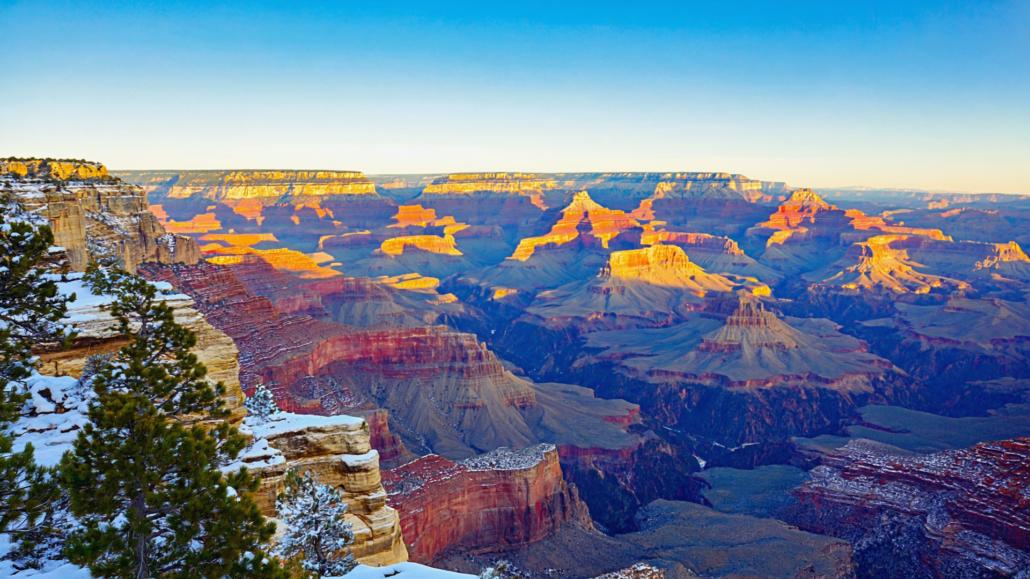
Winter brings its own extraordinary transformation. Snow along the South Rim, which sits at roughly 7,000 feet elevation, dusts the pinyon pines and accumulates along the canyon’s upper walls, creating a visual contrast between the white rim and the rust-red inner gorge that photographers and painters have sought for over a century. The canyon floor, by contrast, often remains snow-free, meaning the inner trails can still be hiked even when the rim is frosted. This creates a surreal experience available at no other time of year.
Fall at the Grand Canyon: A Month-by-Month Breakdown
Grand Canyon fall travel covers a wide range of conditions depending on exactly when you visit. September still carries the tail end of summer heat at the canyon bottom, while December edges into true winter territory. Understanding the arc of the fall season helps you match your visit to your specific priorities.
September: Transition Month with Residual Crowds
September sits in an interesting position. School has returned in most states, which immediately reduces the family travel segment and produces a noticeable drop in overall visitor numbers compared to July and August. However, temperatures at the canyon bottom (around Phantom Ranch and the Colorado River) remain extremely high, often exceeding 100 degrees Fahrenheit through mid-month. The South Rim temperatures are far more manageable, typically ranging from the mid-60s to the low 80s Fahrenheit during the day.
September is also historically the wettest month at the Grand Canyon due to the tail end of the North American monsoon season. Afternoon thunderstorms are common, and while they rarely last long, they can produce flash flooding in side canyons. Hikers heading below the rim should check conditions carefully. The upside: post-storm light on the canyon is extraordinary, and rainbow sightings are not uncommon.
For visitors who want reduced crowds but are not yet ready for cold-weather preparation, late September represents a useful middle ground. Lodging availability improves compared to summer, and the park’s most popular viewpoints begin to breathe again.
October: The Peak of Fall Shoulder Season
October is widely regarded by experienced Grand Canyon visitors and park rangers as one of the finest months of the year. Rim temperatures cool into the 50s and 60s Fahrenheit, making hiking both comfortable and safe at elevations that would punish a summer visitor. Below-rim temperatures drop to more tolerable ranges, making day hikes deeper into the canyon genuinely accessible for reasonably fit visitors for the first time since spring.
Crowds are noticeably reduced compared to summer, though popular holiday weekends (particularly Columbus Day weekend) can generate spikes. Reservations at Bright Angel Lodge and El Tovar are easier to secure but still worth booking in advance. The fall foliage along the North Rim, which closes to vehicle traffic in mid-October, peaks around this time, making a South Rim visit with a day trip view toward the North Rim particularly scenic.
Photography conditions in October are exceptional. The lower sun angle, cleaner air, and longer golden hours create lighting scenarios that serious landscape photographers specifically plan around. Sunrise and sunset at Mather Point or Yavapai Point in October produce colors and shadow play that summer visitors rarely witness.
November: Quiet Season Begins in Earnest
November marks a decisive shift in the visitor experience. Crowd levels drop significantly after the first week of the month, and by mid-November the South Rim takes on a genuinely quiet character that is almost jarring for those accustomed to its summer incarnation. Temperatures at the rim range from the 30s to the low 50s Fahrenheit, with overnight lows occasionally dipping below freezing. Snow is possible but not yet common.
Some seasonal services begin to scale back in November. Certain ranger programs reduce their frequency, and a few dining options operate on reduced hours. However, the core South Rim experience, including shuttle service, visitor center access, and the major viewpoints, remains fully operational. The Tusayan shuttle service continues to run, making parking and access logistics simpler than at any other time of year.
Thanksgiving week is worth noting as an exception to November’s general quiet. The holiday drives a temporary surge in visitors, and lodging rates may reflect this. Travelers who can visit the week before or after Thanksgiving will find conditions closer to what mid-November typically offers.
Winter at the Grand Canyon: What a Cold-Season Visit Actually Looks Like
A Grand Canyon winter visit carries misconceptions that discourage visitors who would, in reality, find the experience deeply rewarding. The most persistent myth is that winter makes the canyon inaccessible or dangerous. The truth is more nuanced, and for the prepared visitor, more encouraging.
December and January: Snow, Silence, and Dramatic Light
December and January represent the quietest period of the Grand Canyon’s visitor calendar. The South Rim receives measurable snowfall during these months, though accumulation is typically modest and roads are cleared promptly. The rim viewpoints remain open year-round, and the combination of snow-dusted ponderosa pines and the canyon’s red rock geology produces what many photographers describe as the canyon’s most visually dramatic conditions.
Rim temperatures in December and January average in the 20s to 40s Fahrenheit, with wind chill a significant factor on exposed viewpoints. Layering is essential. The canyon interior, however, sits at lower elevation and often remains several degrees warmer. Phantom Ranch, at the canyon bottom, averages temperatures in the 40s to 50s Fahrenheit during midwinter, making it a warmer destination than the rim.
Visitor facilities on the South Rim remain largely operational through winter. The Grand Canyon Visitor Center, Mather Point, Yavapai Geology Museum, Bright Angel Lodge, and El Tovar Hotel all operate year-round. The IMAX theater in Tusayan, which screens the iconic “Grand Canyon: The Hidden Secrets” film, provides an excellent orientation experience and a warm respite on cold days, particularly for families traveling with children who need a break from outdoor exposure.
Trail Conditions Below the Rim in Winter
This is where winter planning requires the most attention. The upper sections of Bright Angel Trail and South Kaibab Trail can become icy and treacherous following snowfall. Microspikes or crampons are strongly recommended for any below-rim hiking in December through February. The National Park Service regularly posts current trail conditions, and checking those before heading out is not optional, it is essential.
The significant upside: once you get below the icy upper sections (typically the first mile or two), conditions often improve dramatically. The Tonto Platform and the inner canyon trails see far less moisture and ice. Hikers who prepare properly for the upper trail sections frequently describe winter below-rim hiking as among the best experiences the canyon offers, with solitude, manageable temperatures, and extraordinary light quality.
For visitors interested in guided experiences rather than independent hiking, tour operators that specialize in the canyon can navigate these conditions expertly. Jeep tours operating along the rim and in surrounding areas offer a heated, expert-guided alternative that keeps visitors comfortable while delivering genuine canyon access regardless of trail conditions.
February and Early March: The Start of the Shoulder Season Recovery
February remains firmly in winter territory but begins to show signs of the approaching shoulder season. Days grow noticeably longer, temperatures on the rim begin their gradual climb, and a handful of early-season visitors start appearing. This is still an excellent time to visit for those who want near-winter solitude with slightly milder conditions than December and January.
Early March is a transitional moment. Snow becomes less frequent, temperatures on the rim rise into the 40s and 50s Fahrenheit with regularity, and the first spring wildflowers begin to appear at lower elevations inside the canyon. The National Park Service’s free entrance days, which have historically included a Presidents Day weekend day, can attract a surge of visitors, so checking the park’s fee schedule in advance is worthwhile. The park has offered free admission on Presidents Day in past years, which can meaningfully affect crowd levels that weekend.
Fall vs. Winter: A Direct Comparison for Decision-Making
Choosing between fall and winter for your Grand Canyon visit depends on several factors: your tolerance for cold, your hiking ambitions, your photography priorities, and your budget flexibility. The following table maps out the key variables across both seasons to help you make an informed decision.
| Factor | Early Fall (Sept–Oct) | Late Fall (Nov) | Winter (Dec–Feb) | Early Spring (Mar) |
|---|---|---|---|---|
| Rim Temps (Avg High) | 60–80°F | 45–55°F | 35–45°F | 50–65°F |
| Crowd Level | ⚠️ Moderate (Sept high, Oct lower) | ✅ Low (ex. Thanksgiving) | ✅ Very Low | ⚠️ Building |
| Below-Rim Hiking | ✅ Excellent (Oct), ⚠️ Hot (Sept) | ✅ Excellent | ⚠️ Requires microspikes on upper trail | ✅ Excellent |
| Photography Conditions | ✅ Very Good (fall foliage, clear air) | ✅ Excellent (low sun angle) | ✅ Exceptional (snow contrast) | ✅ Very Good |
| Lodging Availability | ⚠️ Book 2–3 months ahead | ✅ Good availability | ✅ Excellent availability | ⚠️ Book 1–2 months ahead |
| Wildlife Viewing | ✅ Excellent (elk rut in Oct) | ✅ Good | ✅ Good (condors, mule deer) | ✅ Very Good |
| Avg. Lodging Rates | Moderate–High | Moderate | Low–Moderate | Moderate |
| Gear Requirements | Standard hiking gear, sun protection | Warm layers, rain gear | Winter layers, microspikes, traction devices | Layers, rain readiness |
The Visitor Experience Decision Matrix: Which Season Matches Your Goals?
One of the most useful frameworks for Grand Canyon shoulder season tips planning is to start not with the calendar but with your primary goal. Different travel objectives map to different optimal windows, and being honest about what you want from the trip is the fastest path to choosing the right time to go.
If Your Priority Is Hiking
For serious hikers, October and November represent the undisputed optimal window. The below-rim temperatures during these months create what experienced canyon hikers call the “hiker’s sweet spot,” where exertion on the trail generates enough warmth that the cooler ambient temperatures feel exactly right rather than punishing. The combination of manageable heat, low humidity, and reduced trail traffic makes October the month most frequently cited by experienced canyon hikers as the single best time to visit.
Hikers targeting a Phantom Ranch overnight stay should note that reservations open fourteen months in advance and are released via a lottery system. Off-peak season actually makes little difference to Phantom Ranch availability since the lottery system is competitive year-round. However, last-minute cancellation slots are more likely to surface during November through February than during summer months.
Winter hikers who come prepared with microspikes and appropriate layering frequently describe the experience as transformative. The trail below the icy upper sections is often in excellent condition, the solitude is complete, and the canyon in winter light is unlike anything the summer crowds ever witness. For the adventurous and well-prepared, a winter below-rim hike ranks among the most memorable outdoor experiences available anywhere in the American Southwest.
If Your Priority Is Photography
Photographers operating at an advanced or professional level almost universally prefer fall and winter for Grand Canyon work. The reasons are technical as much as aesthetic. Summer’s high sun produces flat, harsh light for much of the day. Fall and winter’s lower sun angle extends the golden hours (the periods around sunrise and sunset when light is warm, directional, and shadow-rich) to a far larger share of the day’s shooting window.
November through February also delivers cleaner atmospheric conditions on most days. Summer heat haze and wildfire smoke, which have become an increasingly significant factor in recent years, regularly degrade visibility and color saturation in summer canyon photography. Winter air tends to be crisp and transparent, allowing the canyon’s full depth and color palette to register on a sensor without atmospheric interference.
Snow on the rim creates compositional opportunities that simply do not exist at any other time of year. The contrast between a snow-frosted ponderosa pine in the foreground and the canyon’s warm red walls in the background is one of the most distinctive and sought-after images in American landscape photography. For photographers willing to work in cold conditions, the reward-to-effort ratio in winter is exceptionally high.
If Your Priority Is Family Travel
Families with school-age children face the natural constraint of school calendars, but fall break windows (typically a week in mid-October in many districts) offer an excellent opportunity. The weather during fall break is almost universally described by family visitors as ideal: warm enough for comfortable outdoor time, cool enough to prevent heat exhaustion, and accompanied by far shorter lines than any summer equivalent.
Winter visits during holiday breaks (Christmas and New Year’s week) do see a spike in family traffic, but the canyon is large enough and visitor numbers low enough compared to summer that the experience remains significantly more relaxed. Children who visit in winter often have their most vivid canyon memories precisely because the snow, the crisp air, and the unusual lighting conditions make the experience feel more dramatic and memorable than a conventional summer trip.
The IMAX theater in Tusayan is particularly valuable for family visits during cold or inclement weather days. A large-format film presenting the canyon’s geological and human history provides both an educational foundation and a warm, engaging break from outdoor exposure, keeping younger visitors engaged and informed without requiring them to stand in cold wind at a viewpoint for extended periods. You can check current showtimes and plan your visit at the Grand Canyon Visitor Center website.
If Your Priority Is Budget
Off-peak travel delivers measurable financial advantages at the Grand Canyon. Lodging inside and immediately adjacent to the park drops noticeably outside of peak season, with winter rates at properties in Tusayan often representing the most significant discounts of the year. Guided tour pricing similarly reflects the reduced demand, with some operators offering more competitive rates during the quiet months.
The park entrance fee remains constant year-round ($35 per private vehicle at the time of writing, though fees can change and visitors should verify current rates on the National Park Service website), but the America the Beautiful annual pass becomes especially attractive for off-peak visitors who may want to take multiple day trips or split a multi-day visit across different entry points.
Flight and rental car pricing to Flagstaff or Las Vegas, the two primary gateway cities for Grand Canyon South Rim trips, also typically reflects off-peak discounts in November through February, meaning the total trip cost for a fall or winter visit can be meaningfully lower than an equivalent summer trip even before accounting for lodging savings.
What the South Rim Actually Offers Year-Round (and What Closes)
A persistent planning error among first-time off-peak visitors is assuming that the Grand Canyon “closes” or becomes significantly limited in fall and winter. The reality is that the South Rim is one of the most visitor-ready year-round destinations in the national park system, with a remarkably complete set of services operating through even the coldest months.
What Stays Open Through Fall and Winter
- All major South Rim viewpoints along Hermit Road and Desert View Drive remain accessible, though Hermit Road becomes vehicle-free (shuttle-only) in the shoulder and peak seasons and opens to private vehicles in the off-peak winter months, which is actually an advantage for self-guided exploration.
- The South Rim Visitor Center at Mather Point operates year-round with park rangers available for information, trail condition updates, and interpretive programming.
- Bright Angel Lodge, El Tovar Hotel, Kachina and Thunderbird Lodges all operate year-round on the South Rim.
- The Grand Canyon Visitor Center and IMAX theater in Tusayan operates year-round, providing a critical orientation and planning resource for visitors arriving from the south via Highway 64.
- Bright Angel Trail and South Kaibab Trail remain open year-round, though conditions on the upper sections in winter require appropriate traction gear.
- Mule rides continue to operate in fall and winter for rim rides, though the below-rim overnight mule trips to Phantom Ranch follow their own seasonal schedule.
- Ranger-led programs continue, though frequency may be reduced in the deepest winter months.
What Changes or Closes Seasonally
- The North Rim closes to vehicle access in mid-October and does not reopen until mid-May. If a North Rim visit is part of your itinerary, it must be completed before that closure date.
- Desert View Watchtower area services may operate on reduced hours in winter.
- Some dining and retail concessions on the South Rim reduce hours or temporarily close certain outlets during the quietest winter months.
- Phantom Ranch reservations remain available year-round but require planning far in advance regardless of season.
- Hermit Road transitions from shuttle-only to private vehicle access in winter months, which is a positive change for visitors who prefer driving their own vehicle to viewpoints.
Understanding this landscape of what remains available prevents the planning error of under-estimating the off-peak experience. The South Rim in November, December, or January is not a diminished version of the summer experience. In many respects, particularly in terms of access quality, pace, and emotional impact, it is a superior one.
Grand Canyon Shoulder Season Tips: Planning Strategies That Actually Work
The difference between a great off-peak Grand Canyon trip and a frustrating one often comes down to a handful of planning decisions made before departure. These are the strategies that experienced off-peak visitors consistently identify as most impactful.
Layering Is the Non-Negotiable Gear Principle
The Grand Canyon’s elevation creates temperature swings that routinely surprise visitors unfamiliar with high-desert conditions. The South Rim at 7,000 feet can be 20 to 30 degrees colder than the canyon bottom on the same day. A fall or winter visit can easily begin at 28 degrees Fahrenheit at the rim at dawn, warm to 55 degrees by midday, and drop again to the 30s by late afternoon. A visitor who dresses for the midday temperature will be miserable at both ends of the day.
The standard guidance from experienced canyon visitors is to pack three functional layers: a moisture-wicking base layer, an insulating mid-layer (fleece or down), and a wind and rain-resistant outer shell. In winter, add a warm hat, insulated gloves, and wool or synthetic-blend socks. This system allows you to adjust throughout the day as conditions change without being committed to a single outfit that works for only part of the day.
Arrive Early to Maximize Winter Light
In summer, arriving early at the rim is primarily a crowd-avoidance strategy. In fall and winter, it becomes a quality-of-experience strategy. The low-angle morning light in November and December produces canyon colors that are genuinely different from what midday sun delivers, and the cold temperatures that greet an early arrival often keep casual visitors in their hotels long enough for the dedicated visitor to have the viewpoints essentially to themselves.
Sunrise at Mather Point or Yavapai Point in October or November, with the canyon walls catching the first warm light of the day, is consistently described by those who have experienced it as one of the most moving natural spectacles available anywhere in the country. Getting there requires only a willingness to set an alarm.
Use the Tusayan Gateway Strategically
The town of Tusayan, located just two miles south of the South Rim entrance on Highway 64, serves as the primary service hub for Grand Canyon visitors and functions as an especially important base during the shoulder and winter seasons. The Grand Canyon Visitor Center and IMAX theater anchors the Tusayan experience, providing orientation, tour booking, and a warm indoor destination that is genuinely useful when weather conditions make extended outdoor time challenging.
Visitors who book guided jeep tours through Tusayan operators benefit from local expertise that is particularly valuable in off-peak conditions. Guides who run the canyon year-round understand the seasonal road conditions, the current wildlife patterns, and the viewpoints that deliver optimal results in fall and winter light. This kind of local knowledge is difficult to replicate through independent research and can meaningfully elevate the off-peak experience.
Tusayan lodging typically offers better availability and lower rates than on-rim properties during the shoulder months, and the proximity to the park entrance makes it a practical base for multi-day visits. Visitors traveling in RVs will find the corridor particularly useful, as it provides services and overnight options that work well for road-trip style itineraries.
Check Trail Conditions Before Every Hike
The National Park Service maintains current trail condition reports that are updated regularly during winter months. Checking these before heading to the trailhead is essential in November through March. Conditions can change rapidly following a snowfall, and the icy upper sections of Bright Angel and South Kaibab trails can be genuinely hazardous without traction devices. Rangers at the South Rim Visitor Center can provide real-time conditions and are an underutilized resource for visitors who take a few minutes to consult them before heading out.
Visitors who have questions about wildlife behavior during the off-peak months will also find the ranger staff valuable. October’s elk rut, for example, brings impressive elk activity near the rim that can be extraordinary to witness but requires appropriate distance and awareness. The park’s wildlife viewing guidelines are worth reviewing before any visit, and they apply as much in fall and winter as in peak season. The Grand Canyon wildlife viewing guide offers helpful context for observing animals safely and responsibly.
Build Flexibility Into Your Itinerary
Fall and winter weather at the Grand Canyon is more variable than summer. While most fall days are clear and pleasant, a November storm can arrive quickly and alter conditions significantly. Winter visits in particular benefit from an itinerary that has built-in flexibility rather than a rigid schedule of activities that cannot be adjusted if weather changes the plan.
The practical approach is to identify a primary plan and a backup plan for each day. If the rim trails are icy and visibility is low, the IMAX theater in Tusayan, the Yavapai Geology Museum (which provides extraordinary canyon views from an enclosed, heated room), or a drive along Desert View Drive (which often experiences different weather than the western rim) can substitute effectively. Having these alternatives pre-identified prevents the frustration of being caught without options on a difficult weather day.
The Unique Wildlife and Natural Events of Fall and Winter
One dimension of the off-peak Grand Canyon experience that receives insufficient attention in most travel coverage is the quality of wildlife and natural events that occur specifically during fall and winter. These are not consolation features available because the crowds are gone; they are genuine highlights that do not exist during the summer season.
The October Elk Rut
Every October, the elk population that lives along the South Rim enters its breeding season, producing some of the most dramatic wildlife behavior visible anywhere in the national park system. Bull elk can be seen and heard bugling near the rim viewpoints, in the meadows near Grand Canyon Village, and along the roads connecting the major visitor areas. The sight of a large bull elk at the canyon’s edge, with the gorge visible in the background, is one of those unexpected wildlife encounters that visitors describe for years afterward.
This is also a period that requires appropriate behavior. Bull elk in rut can be unpredictable and should be observed from a safe distance of at least 75 feet. The park provides guidance on appropriate wildlife distances, and rangers actively manage the visitor-elk interaction during the peak rut period. For wildlife enthusiasts, this alone makes October one of the most compelling months to visit.
California Condor Activity
California Condors, one of the most endangered bird species in North America and a flagship conservation success story, are visible at the Grand Canyon year-round but are particularly active and visible during the cooler months when the thermal currents that carry them above the rim are strongest. These birds, with wingspans exceeding nine feet, represent one of the most dramatic wildlife sightings available anywhere in the continental United States.
Winter visitors who spend time at exposed rim viewpoints, particularly Bright Angel Point on the rim or any of the Hermit Road overlooks, have excellent odds of witnessing condors in flight. The park’s condor program has grown the local population substantially from the small numbers that existed when the reintroduction program began in the 1990s, and sightings are now reliably frequent for visitors who spend meaningful time at the rim.
Rim-to-Rim Weather Inversions
One of the Grand Canyon’s most visually spectacular and scientifically interesting phenomena, temperature inversion events, occur most frequently in late fall and winter. During these events, cold air becomes trapped in the canyon below a warmer air mass above, and fog or clouds fill the canyon while the rim sits in clear sunlight. The result, which visitors who have witnessed it describe as the single most otherworldly thing they have ever seen in nature, is a canyon completely filled with white cloud, with only the highest buttes and temples of rock emerging above the fog layer.
These events cannot be predicted more than a day or two in advance and cannot be guaranteed on any given visit, but they occur with enough frequency during the November through February period that a multi-day winter visit carries a reasonable probability of catching one. Weather forecast services that specifically track canyon conditions can help visitors identify the conditions most likely to produce an inversion event. No photograph fully conveys what it looks like in person.
The Budget-Conscious Traveler’s Case for Off-Peak Visiting
For travelers where cost is a significant factor, the financial argument for a fall or winter visit to the Grand Canyon is substantial and specific. The savings are not marginal; they can represent a meaningful reduction in total trip cost that allows for experiences that would otherwise be out of reach.
| Expense Category | Peak Season (June–Aug) | Shoulder Season (Oct–Nov) | Winter (Dec–Feb) |
|---|---|---|---|
| South Rim Lodging (per night, approx.) | $200–$350+ | $150–$250 | $100–$180 |
| Tusayan Hotels (per night, approx.) | $180–$280+ | $120–$200 | $80–$140 |
| Parking Availability | ❌ Very Limited (by 8 a.m.) | ✅ Good | ✅ Excellent |
| Flight Costs to Flagstaff/Las Vegas | Peak pricing | Moderate discount | Best pricing of year |
| Tour Operator Availability | ⚠️ Book months ahead | ✅ Good same-week availability | ✅ Excellent availability |
| Restaurant Wait Times | ❌ Long (1–2 hours common) | ✅ Minimal | ✅ Walk-in usually possible |
Note that lodging rate ranges above are approximate and based on general market patterns. Always verify current rates directly with properties, as prices fluctuate based on specific dates, availability, and promotions.
Frequently Asked Questions About Fall and Winter Grand Canyon Visits
Is the Grand Canyon open in winter?
Yes. The South Rim of Grand Canyon National Park is open year-round, 24 hours a day, every day of the year including holidays. Major visitor facilities, all rim viewpoints, and the primary hiking trails remain accessible throughout the winter months. The North Rim closes to vehicles in mid-October and reopens in mid-May.
What is the best time to visit the Grand Canyon to avoid crowds?
The quietest periods for the South Rim are mid-November through mid-December and January through February. Visitor numbers during these windows are dramatically lower than peak summer levels, and the experience of the park is significantly more personal and unhurried. October is also much less crowded than summer while still offering excellent weather.
Does it snow at the Grand Canyon?
Yes, the South Rim receives snow, typically beginning in November and continuing through March. Snowfall amounts vary considerably from year to year, and accumulation on the rim is generally modest. Roads are cleared promptly, and the canyon interior often remains snow-free even when the rim has fresh snow. The combination of snow on the rim and red rock walls inside the canyon is one of the most visually dramatic experiences available at the park.
Can you hike the Grand Canyon in fall and winter?
Absolutely. Fall is arguably the best season for below-rim hiking, with October and November offering ideal temperatures and minimal trail congestion. Winter hiking is fully possible with appropriate preparation, including microspikes or crampons for the upper sections of rim trails that can become icy after snowfall. Below the icy upper sections, winter trail conditions are often excellent.
What should I wear for a fall or winter Grand Canyon visit?
Layering is the core principle. Bring a moisture-wicking base layer, a warm insulating mid-layer, and a wind and waterproof outer shell. Add a warm hat, gloves, and sturdy waterproof hiking boots for winter visits. Temperatures can swing 20 to 30 degrees Fahrenheit between early morning and midday, so a system you can add and remove throughout the day is essential.
Are guided tours available at the Grand Canyon in fall and winter?
Yes. Tour operators based in Tusayan, including jeep tour operators that specialize in canyon and rim experiences, operate year-round. Winter is actually an excellent time to book guided tours because availability is much better than peak season and guides can provide expert knowledge of current conditions, seasonal wildlife activity, and the best viewpoints for fall and winter light.
What is the Grand Canyon entrance fee, and does it change seasonally?
The entrance fee does not vary by season. A private vehicle pass grants access for seven days. The America the Beautiful Annual Pass, which covers entrance fees at all national parks, offers the best value for visitors planning multiple park visits or a multi-day trip. Verify current fee amounts on the National Park Service Grand Canyon fees page before your visit, as fees can change.
Is Phantom Ranch accessible in winter?
Phantom Ranch remains open year-round, and the trails leading to it (Bright Angel and South Kaibab) are accessible in winter with appropriate gear. The canyon bottom is actually warmer than the rim in winter, making an overnight at Phantom Ranch a unique cold-weather experience. Reservations are extremely competitive and must be secured far in advance through the lottery system regardless of season.
How does fall foliage look at the Grand Canyon?
The fall color display at the Grand Canyon is genuine but different from eastern deciduous forest displays. The Kaibab Plateau’s aspens and Gambel oak turn gold and orange in October, providing a warm foreground color against the canyon’s already vivid red and orange geology. The effect is particularly striking when morning or late afternoon light hits both the foliage and the canyon walls simultaneously.
Is the IMAX theater in Tusayan open year-round?
Yes. The Grand Canyon Visitor Center and IMAX theater in Tusayan operates year-round and is an especially valuable resource during fall and winter visits. The large-format film provides an excellent introduction to the canyon’s geology and history, and the warm indoor environment makes it a practical option on cold or inclement weather days. It also serves as a trip planning hub where visitors can get current park information and book tours.
What wildlife can I see at the Grand Canyon in fall and winter?
Fall offers the spectacular elk rut in October, with bull elk bugling and displaying near the rim and in the meadows around Grand Canyon Village. California Condors are visible year-round and are particularly active in cooler months. Mule deer, California ground squirrels (less active in winter), ravens, Steller’s jays, and various raptor species are reliably present across both seasons. Wildlife viewing in fall and winter often benefits from the quieter conditions that allow animals to move more naturally near visitor areas.
Should I drive or take a shuttle to the Grand Canyon in fall and winter?
In winter, Hermit Road (which provides access to the western viewpoints) opens to private vehicle traffic, making a self-guided drive a genuinely good option. In fall, the shuttle system is still the most practical approach for the western rim viewpoints. The Tusayan shuttle, which connects the town of Tusayan to the South Rim entrance, continues to operate through the shoulder season and simplifies parking logistics considerably.
Key Takeaways for Off-Peak Grand Canyon Planning
- October is the single best month for most visitors: combining comfortable below-rim temperatures, reduced crowds, fall foliage, the elk rut, and exceptional photography conditions into one remarkably complete package.
- November through February offers the deepest solitude and the lowest costs, with a genuinely different and often more emotionally powerful version of the canyon experience available to prepared visitors.
- Winter does not mean inaccessible: the South Rim is fully operational year-round, and below-rim hiking is possible with the right gear preparation.
- Photography conditions in fall and winter are objectively superior to summer for most subjects, due to lower sun angles, cleaner air, and the unique snow-on-red-rock visual opportunity that exists only in the cold months.
- Budget travelers save meaningfully in the off-peak period, with lower lodging rates, better tour availability, and reduced competition for every park resource.
- Tusayan serves as a critical gateway resource in every season, with the Grand Canyon Visitor Center and IMAX theater providing orientation, planning assistance, and a warm indoor destination that is particularly valuable in cold weather.
- The best Grand Canyon trip is not the one that happens in the most popular month; it is the one planned with honest attention to your own goals, fitness level, and tolerance for conditions. For a substantial majority of visitor types, fall or winter delivers a superior experience to the crowded summer peak.
The Grand Canyon does not become a lesser place when the summer crowds leave. It becomes, for many visitors, a more genuine one. The rim in November at sunrise, with frost on the ponderosa pines and the canyon catching its first light in total silence, is not a compromise version of the Grand Canyon experience. It is, by any honest measure, one of the finest natural encounters available on the continent. The travelers who discover this tend to come back the same season the following year, and they rarely return in July.

About the author
Explore The Canyon Editorial Team
See The Canyon

