
How to Choose the Best Grand Canyon Lodging Near the South Rim: An Honest Comparison
Picture this: you’ve spent months dreaming about standing at the rim of one of the world’s most extraordinary natural wonders. You’ve booked your flights, packed your hiking boots, and downloaded the trail maps. Then, three days before departure, you realize you never sorted out where to sleep. A frantic search reveals two very different universes of accommodation, historic lodges inside Grand Canyon National Park and a cluster of modern hotels in Tusayan, the small gateway town just outside the park entrance. Both promise proximity to the canyon. Both have passionate advocates. And the price gap between them can be staggering.
This is the moment where most Grand Canyon first-timers make a decision they later wish they’d thought through more carefully. The choice between lodging near Grand Canyon South Rim inside the park versus staying in Tusayan isn’t simply about budget or brand loyalty. It’s about how you want to experience the canyon, how early you’re willing to wake up, how much flexibility you need, and what trade-offs genuinely matter to your travel style. This guide cuts through the noise with an honest, category-by-category comparison so you can make the right call for your specific trip.
Why Your Lodging Location Changes Everything at the South Rim
The South Rim of Grand Canyon National Park is not a typical tourist destination where accommodation choice is a matter of preference. Where you sleep directly shapes what you can see, when you can see it, and how much effort separates you from the canyon’s most iconic moments. Understanding the geography before diving into specific properties is essential to making a smart lodging decision.
The South Rim’s developed visitor area stretches roughly 6 miles along the canyon’s edge, anchored by Grand Canyon Village near the park’s historic core. In-park lodges sit within this village complex, placing guests within walking distance of rim viewpoints, trailheads, and the free shuttle system. Tusayan, by contrast, sits approximately 7 miles south of the South Rim entrance on Highway 64, just outside the park boundary.
That 7-mile gap has real consequences. Driving into the park from Tusayan during peak season (roughly late spring through early fall) means joining vehicle queues at the south entrance station. The National Park Service recommends arriving before 9:00 AM or after 3:00 PM to avoid the worst congestion. Guests staying inside the park simply walk out their door and they’re already there. For sunrise chasers, this difference is enormous, catching first light at Mather Point from an in-park lodge requires a short walk, while Tusayan guests need to factor in drive time, parking, and potential shuttle waits.
That said, Tusayan has meaningful advantages of its own. The town offers more lodging inventory at competitive price points, better dining variety, and, critically, a year-round resource in the form of the Grand Canyon Tusayan Shuttle, which helps visitors skip the parking headaches entirely. For families who want a comfortable base without paying premium in-park rates, Tusayan is a genuinely smart choice rather than a consolation prize.
The decision framework, at its core, comes down to three questions: How important is immediate rim access at dawn or dusk? How price-sensitive is your group? And how much do you value the atmospheric experience of sleeping inside the park versus having modern hotel amenities? Keep those questions in mind as each option is examined below.
In-Park Lodging: What’s Actually Available Inside Grand Canyon National Park
Grand Canyon National Park’s South Rim offers six lodging properties, all managed by the park’s primary concessionaire, Xanterra Parks and Resorts. These range from the historic El Tovar Hotel, one of the most celebrated national park lodges in America, to the more rustic Bright Angel Lodge and a handful of mid-range motel-style properties. Availability is genuinely limited, and reservations for popular dates often book out many months in advance.

El Tovar Hotel
El Tovar is the crown jewel of in-park lodging, and its reputation is well earned. Built in 1905 and designed in a hybrid Craftsman-rustic style, the hotel sits literally on the rim’s edge, with some suites offering direct canyon views. The dining room serves the best food available anywhere near the South Rim, and the historic ambiance is unlike anything you’ll find in Tusayan. Prices reflect the premium, standard rooms regularly exceed $200–$300 per night during peak season, and rim-view suites command significantly more. Availability is extremely limited, especially for weekend and summer dates.

Bright Angel Lodge
Bright Angel Lodge is the budget-conscious traveler’s best option for sleeping inside the park. Historic cabins and motel-style rooms start at more accessible price points, though the most affordable rooms are very basic (shared bathrooms in some categories). The location is superb, it sits adjacent to the Bright Angel Trailhead, making it the most convenient base for hikers heading below the rim. The Bright Angel Restaurant offers reliable, casual dining that’s considerably more affordable than El Tovar.
Maswik Lodge, Yavapai Lodge, and Thunderbird/Kachina Lodges
These three properties represent the mid-tier of in-park accommodation. Maswik Lodge features motel-style rooms in a forested setting slightly set back from the rim, making it one of the more reliably available in-park options. Yavapai Lodge, located near the Market Plaza, is the largest property in the park and offers both standard and superior room categories. Thunderbird and Kachina Lodges sit between El Tovar and Bright Angel on the rim, offering modern amenities with an unbeatable location, though without the historic character of their neighbors.
The Phantom Ranch Factor
Phantom Ranch, located at the bottom of the canyon near the Colorado River, deserves a brief mention as a unique category of its own. Accessible only by foot, mule, or river, it’s the only lodging below the rim and operates via a lottery reservation system. It is not a practical option for most visitors but represents the ultimate immersive canyon experience for those willing to plan far ahead and commit to a significant physical journey.
| In-Park Property | Location | Price Range (Peak Season) | Best For | Canyon View Rooms |
|---|---|---|---|---|
| El Tovar Hotel | Rim-edge, Grand Canyon Village | $$$$ (premium) | Couples, special occasions, history lovers | ✅ Select suites |
| Bright Angel Lodge | Rim-adjacent, near trailhead | $$ – $$$ (varies by room type) | Hikers, budget-conscious in-park guests | ✅ Some cabins |
| Thunderbird / Kachina Lodges | Rim-adjacent, between El Tovar and Bright Angel | $$$ (moderate-premium) | Families wanting modern rooms + location | ✅ Second-floor rooms |
| Maswik Lodge | Set back from rim, forested | $$ – $$$ | Groups, families, moderate budget | ❌ |
| Yavapai Lodge | Near Market Plaza | $$ – $$$ | Visitors wanting largest in-park inventory | ❌ |
Tusayan Hotels: The Grand Canyon Gateway That Deserves More Credit
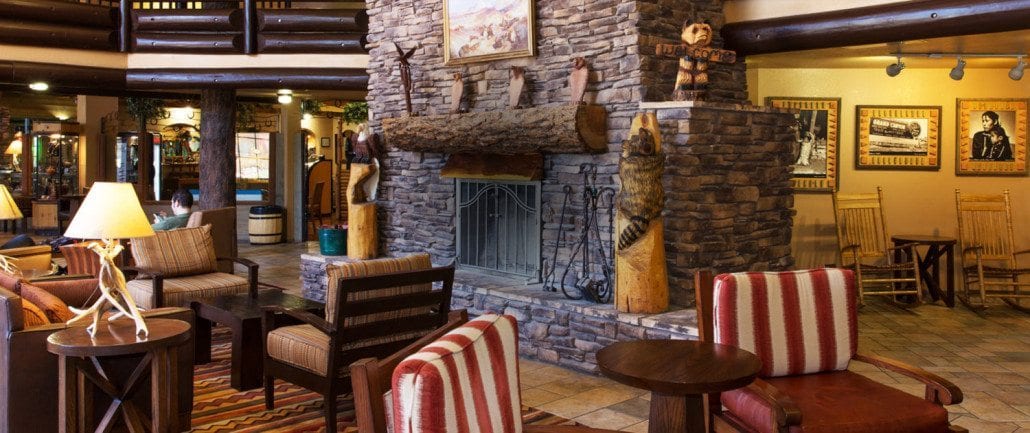
Tusayan hotels offer a compelling alternative to in-park lodging, combining modern amenities, competitive pricing, and genuine convenience for visitors who plan their canyon access thoughtfully. The town’s reputation as a “lesser” alternative to in-park stays is somewhat unfair, for many travel styles, Tusayan is actually the smarter base.
Located on Highway 64 just outside the national park’s south entrance, Tusayan is a purpose-built tourism town with a concentrated cluster of hotels, restaurants, and visitor services. The Grand Canyon Visitor Center and IMAX theater anchors the town’s identity as a trip-planning hub, offering travelers orientation films, tour bookings, and local expertise before they even set foot in the park. For first-time visitors especially, starting a morning with the IMAX “Rivers of Time” presentation before heading into the park creates a richer, more contextual experience of what they’re about to see.
Major Hotel Options in Tusayan
The Grand Hotel at the Grand Canyon is Tusayan’s flagship property, offering themed decor, a pool, a full-service restaurant and bar, and rooms that comfortably accommodate families. It regularly earns strong reviews for cleanliness and staff knowledge of the canyon. The Best Western Premier Grand Canyon Squire Inn is another well-regarded full-service option, featuring amenities that in-park lodges simply can’t match: a bowling alley, indoor pool, fitness center, and a salon. For travelers who want recognizable national brand consistency, several other major chain properties operate in Tusayan at various price points.
A key tactical advantage of Tusayan hotels: availability. While in-park lodges book out many months in advance for peak season, Tusayan properties typically have more inventory and more flexible last-minute availability. For spontaneous travelers or those who didn’t plan far enough ahead, Tusayan is often the only viable option for sleeping within striking distance of the South Rim.
The Shuttle Advantage
One of the strongest arguments for Tusayan lodging is the shuttle connection. The Tusayan Route shuttle service runs seasonally from Tusayan into the park, making it possible to reach the rim without driving or dealing with parking at all. For families traveling with young children or visitors who prefer not to navigate park roads, this service transforms the 7-mile gap from a liability into a non-issue.
Pricing Reality
During peak summer season, Tusayan hotels range broadly from roughly $150 per night for standard rooms at more basic properties to $250–$350 per night for premium rooms at the Grand Hotel or Squire Inn. These rates are generally competitive with mid-tier in-park options like Maswik or Yavapai Lodge, and significantly lower than El Tovar or the rim-adjacent Thunderbird and Kachina properties. During the shoulder seasons (spring and fall) and especially winter, Tusayan rates drop considerably, making it an outstanding value for off-peak travelers.
| Tusayan Property | Category | Approx. Price Range | Standout Amenities | Best For |
|---|---|---|---|---|
| Grand Hotel at the Grand Canyon | Full-service, themed | $$ – $$$ | Pool, restaurant/bar, family rooms | Families, first-timers |
| Best Western Premier Grand Canyon Squire Inn | Full-service resort-style | $$ – $$$ | Bowling alley, indoor pool, fitness center, salon | Extended stays, groups, amenity-seekers |
| Holiday Inn Express Tusayan | Mid-scale chain | $ – $$ | Free breakfast, consistent brand standards | Business travelers, loyalty point earners |
| Red Feather Lodge | Budget-friendly motel | $ | Affordable rates, outdoor pool (seasonal) | Budget travelers, road trippers |
Booking Windows: The Most Underestimated Factor in Grand Canyon Lodging
The single biggest mistake travelers make with Grand Canyon South Rim lodging is underestimating how far in advance reservations are required. This isn’t a destination where a two-week lead time is sufficient during peak season. In-park lodges, particularly El Tovar and the rim-adjacent properties, routinely book out six months to a full year ahead for summer weekends and holiday periods.
The National Park Service and Xanterra (the park’s concessionaire) release lodging reservations at a rolling 13-month advance window. Seasoned Grand Canyon travelers set calendar reminders to book on the exact day their desired dates open. This level of planning is unfamiliar to most leisure travelers, and the shock of discovering that the lodge you wanted is fully booked for July often forces a scramble to Tusayan options, or worse, to properties in Williams or Flagstaff, an hour or more from the park.
When to Book In-Park vs. Tusayan
For in-park lodging, a general rule of thumb is to start looking six months out for shoulder season dates, and to aim for 10–13 months out for any peak summer weekend or major holiday. If you’re targeting a specific property like El Tovar, treat it like booking a popular restaurant reservation, go in with backup options ready.
Tusayan hotels operate on a more forgiving booking timeline. Many properties maintain availability up to a few weeks before arrival even during busy summer months, though the best room categories fill faster. For fall and winter travel, last-minute Tusayan bookings are often available at significantly reduced rates, making spontaneous canyon trips a realistic option.
There’s also a category of availability that many visitors overlook: cancellations. Both in-park and Tusayan properties see regular cancellations, and checking reservation systems repeatedly in the weeks leading up to popular dates can yield unexpected availability at otherwise “full” properties. Xanterra’s reservation system allows direct booking at Grand Canyon Lodges, and setting up availability alerts through third-party booking platforms can help catch cancellations quickly.
Seasonal Availability Patterns
Not all in-park properties operate year-round. Some seasonal closures affect availability, particularly for certain room categories at Bright Angel and Maswik. Tusayan hotels, by contrast, generally operate year-round, making them the more reliable option for winter canyon visits. The Grand Canyon Visitor Center in Tusayan remains open year-round as well, providing a consistent planning resource regardless of season.
| Travel Season | Recommended Booking Lead Time (In-Park) | Recommended Booking Lead Time (Tusayan) | Notes |
|---|---|---|---|
| Summer (June–August) | 10–13 months | 2–4 months | Peak season; highest prices and crowds |
| Spring (March–May) | 6–10 months | 1–2 months | Wildflowers and mild temps; popular with hikers |
| Fall (September–November) | 4–6 months | 2–4 weeks | Excellent value window; highly recommended |
| Winter (December–February) | 1–3 months | Last-minute possible | Snow adds drama; some closures; lowest prices |
The Amenity Gap: What Each Option Delivers (and What It Doesn’t)
In-park lodges and Tusayan hotels serve fundamentally different amenity priorities, and understanding that gap honestly is essential before booking. Neither category is objectively superior, they’re optimized for different values. The mistake is expecting one to deliver what the other naturally provides.
What In-Park Lodges Do Better
The intangible experience of sleeping inside one of the world’s most famous national parks is genuinely hard to replicate. Waking before dawn and walking two minutes to watch the canyon emerge from darkness, without a drive, without parking stress, without checking the shuttle schedule, is a visceral experience that changes how you relate to the landscape. For many visitors, this atmospheric advantage alone justifies the premium and the booking complexity.
Beyond atmosphere, in-park dining options (particularly El Tovar and the Bright Angel Restaurant) are convenient and, in El Tovar’s case, genuinely excellent. Not having to drive or shuttle back to Tusayan after a long day of hiking has real practical value, especially for families with young children or older visitors managing fatigue.
The park’s free shuttle system also means that in-park guests can access virtually every developed viewpoint along the South Rim without moving their vehicle at all. During peak season when parking lots fill quickly, this is a significant quality-of-life advantage.
What Tusayan Hotels Do Better
Modern hotel amenities are where Tusayan pulls decisively ahead. Swimming pools, fitness centers, reliable high-speed WiFi, consistent climate control, and in-room coffee makers are standard at most Tusayan properties, features that in-park lodges, particularly the historic ones, deliver inconsistently or not at all. For travelers who want a comfortable retreat after a long day of outdoor activity, Tusayan hotels simply offer more physical comfort per dollar.
Tusayan’s dining scene also outperforms the in-park options in terms of variety. Multiple restaurants offering everything from casual American fare to Southwestern cuisine give visitors genuine choice at dinner, rather than the limited in-park options. The presence of the Grand Canyon Visitor Center and IMAX theater adds a unique entertainment and orientation layer that in-park lodging guests typically miss.
Pet policies also favor Tusayan. Most in-park lodges do not permit pets, while several Tusayan properties are pet-friendly, a decisive factor for travelers bringing dogs on a road trip through the American Southwest.
The WiFi and Connectivity Reality
Cell service and internet connectivity are genuinely limited inside Grand Canyon National Park. This is partly by design, the park experience benefits from disconnection, but for travelers who need to stay reachable for work, manage family logistics, or simply want to share photos in real time, in-park lodges can be frustrating. Tusayan hotels, being outside the park, generally offer stronger connectivity, though the remote location of northern Arizona means no Tusayan property offers urban-grade internet speeds.
Grand Canyon Overnight Accommodations: The Off-Peak Opportunity Most Visitors Miss
Fall and winter visits to the Grand Canyon South Rim represent one of the most underutilized travel opportunities in the American Southwest. The lodging calculus changes substantially in the off-peak months, and travelers willing to visit outside summer often find a canyon experience that is quieter, more atmospheric, and considerably more affordable than anything possible during peak season.
September through November delivers some of the canyon’s most dramatic light conditions. Cooler temperatures make rim walks and inner-canyon day hikes far more comfortable than summer’s dangerous heat. Crowds thin noticeably after Labor Day, and by October, viewpoints that require strategic planning in July can be enjoyed with room to breathe. Lodging availability improves across both in-park and Tusayan options, and prices soften meaningfully.
Winter visits offer an experience that surprises most first-timers: snow on the canyon rim creates a visual spectacle that summer visitors never see. The contrast of white snow against the canyon’s red and ochre walls is extraordinary, and photographers who make the trip in December or January often describe it as the most visually rewarding canyon experience of their lives. The South Rim remains open year-round, and Tusayan’s Grand Canyon overnight accommodations stay operational through the winter months, making the gateway town particularly valuable for cold-weather visits when some in-park seasonal facilities reduce their services.
The practical trade-off for off-peak visits is weather unpredictability. Winter storms can create road closures on Highway 64 and trail closures on inner-canyon routes. Checking the National Park Service’s current conditions page and the Grand Canyon Visitor Center’s regularly updated blog, which covers fire updates, construction advisories, and trail conditions, is essential planning practice for fall and winter trips.
One often-overlooked off-peak consideration: holiday weekends in winter (Thanksgiving, Christmas, New Year’s) can see spikes in both demand and pricing that rival shoulder-season rates. If your off-peak window includes a major holiday, apply peak-season booking urgency regardless of the calendar month.
Beyond the Bed: How Your Lodging Base Affects Your Whole Itinerary
The practical impact of your accommodation choice extends well beyond where you sleep, it shapes tour access, activity timing, dining options, and how efficiently you can use limited vacation days. This is the dimension of the lodging decision that most comparison guides underexplore.
Tour Departures and Guided Experiences
Many of the best guided experiences available near the South Rim depart from or connect through Tusayan. Jeep tours, helicopter flights, and guided hiking experiences often use Tusayan as their staging point. Staying in Tusayan puts you closer to tour operators and simplifies logistics for early-morning departures. The Grand Canyon Visitor Center coordinates with tour operators including Pink Jeep Tours, recognized as a top-rated operator in the region, making it a natural first stop for visitors wanting to build a full itinerary around their canyon visit.
In-park guests can absolutely access Tusayan-based tours, but doing so requires driving back out through the entrance gate (or arranging pickup), which adds logistical friction, particularly for early-morning tour departures. For visitors who want to combine rim exploration with guided canyon experiences, Tusayan lodging often creates a more efficient base.
The Day-Before Advantage
One strategic use of Tusayan lodging that experienced Grand Canyon visitors swear by: arriving the night before a planned early-morning park entry. By staying in Tusayan, you can reach the park entrance when it opens, securing parking and trail access before the crowds arrive. In-park guests have this advantage by definition, but for visitors who can’t secure in-park lodging, a Tusayan base with a disciplined early start replicates most of the practical benefit.
Multi-Day Itinerary Planning
For trips of two or more nights, a mixed strategy sometimes makes sense. Some travelers book one night in an in-park lodge, specifically to experience sunrise from the rim without logistical barriers, and spend remaining nights in Tusayan to enjoy the amenity difference at lower cost. This hybrid approach requires flexibility and advance planning, but it captures the best of both worlds for visitors who value both the immersive park experience and modern hotel comfort.
The Grand Canyon Gateway Tusayan Ecosystem: More Than Just Hotels
Tusayan functions as a complete travel ecosystem for Grand Canyon visitors, not merely an overflow parking lot for people who couldn’t get in-park reservations. Understanding what the gateway town offers beyond accommodation changes the calculus for many travelers.
The Grand Canyon Visitor Center and IMAX theater is genuinely worth anchoring a visit around. The “Rivers of Time” IMAX film offers a 34-minute cinematic introduction to the canyon’s geology, cultural history, and river system that most park-entry signage and trailhead kiosks simply can’t provide. Families with children who visit the IMAX before entering the park consistently report that their kids engage more deeply with what they’re seeing at the rim, because they have context. For adults, the film’s aerial and underwater photography reveals perspectives of the canyon that most ground-level visitors never access.
Tusayan’s restaurant scene gives visitors a place to decompress after long hiking days without driving far. Multiple dining options within walking distance of the major hotels mean that a tired family doesn’t need to navigate the park road system after sunset. The town also has a small general store and fuel station, critical amenities given that the nearest large grocery options are in Williams, nearly an hour south.
The Grand Canyon gateway Tusayan community also functions as the primary information hub for up-to-the-minute park conditions. The Visitor Center’s staff and the regularly updated online resources at explorethecanyon.com provide current trail status, entrance fee information, construction updates, and seasonal closure notices that are sometimes more immediately actionable than the National Park Service’s own communication channels during rapidly changing conditions like wildfires or snowstorms.
For visitors planning to explore the canyon’s less-traveled offerings, from wildlife watching along the rim to adventure activities, Tusayan’s position as a planning and orientation hub adds value that purely in-park lodging doesn’t replicate.
The Honest Recommendation: Matching Lodging to Your Travel Profile
There is no universally correct answer to the in-park versus Tusayan debate, but there is a correct answer for your specific trip. After an honest assessment of both options, here is a direct, profile-based recommendation framework.
Choose In-Park Lodging If:
- Sunrise and sunset at the rim are non-negotiable priorities and you don’t want to factor in drive time
- You’re celebrating a special occasion and the historic atmosphere of El Tovar is part of the experience you’re paying for
- You’re a serious hiker who wants immediate access to the Bright Angel or South Kaibab trailheads before dawn
- You’re comfortable booking 6–13 months in advance and have confirmed availability
- You prefer a car-free experience and want to use the park’s free shuttle exclusively
- You don’t have pets
Choose Tusayan If:
- You couldn’t secure in-park reservations or are booking within a few months of travel
- Modern amenities (pool, reliable WiFi, fitness center) matter to your comfort after active canyon days
- You’re traveling with a dog or other pet
- You want to use the IMAX theater and Visitor Center as a trip-planning and orientation hub
- You’re booking guided tours that depart from or stage in Tusayan
- Budget is a priority and you’re willing to plan your park entry timing around shuttle schedules or early arrival
- You’re visiting in fall or winter and want year-round operational certainty
Consider the Hybrid Approach If:
- You’re staying two or more nights and want to experience both the in-park atmosphere and Tusayan’s amenities
- You can secure one night at Bright Angel or El Tovar and spend remaining nights at a Tusayan property
- You’re flexible enough to split your stay across different accommodation categories
| Factor | In-Park Lodging | Tusayan Hotels | Winner |
|---|---|---|---|
| Rim proximity | Walking distance (some properties) | 7-mile drive or shuttle | ✅ In-park |
| Modern amenities | Limited, inconsistent | Full service at major properties | ✅ Tusayan |
| Booking availability | Very limited; books far ahead | More flexible availability | ✅ Tusayan |
| Price range | $$ – $$$$ (monopoly premium) | $ – $$$ (competitive market) | ✅ Tusayan |
| Dining variety | Limited, but convenient | Multiple options | ✅ Tusayan |
| Historic atmosphere | Exceptional (El Tovar especially) | Modern; no historic character | ✅ In-park |
| Pet-friendly options | Very limited | Several options available | ✅ Tusayan |
| Year-round reliability | Some seasonal closures | Generally year-round | ✅ Tusayan |
| WiFi/connectivity | Unreliable in many properties | Better, though still remote | ✅ Tusayan |
| Tour operator access | Park-based activities only | Direct access to tour hubs | ✅ Tusayan |
Frequently Asked Questions About Grand Canyon South Rim Lodging
How far in advance should I book lodging near the Grand Canyon South Rim?
For in-park lodges during peak summer season, booking 10–13 months in advance is strongly recommended. For Tusayan hotels, 2–4 months ahead is typically sufficient for summer, and much less for fall and winter visits. El Tovar in particular books out extremely quickly for any date from May through September.
Is staying in Tusayan worth it, or should I drive from Flagstaff?
For any trip where you want to catch sunrise or maximize early-morning canyon access, Tusayan is strongly preferable to Flagstaff. The 90-minute Flagstaff-to-rim drive means a pre-dawn departure that most travelers find unsustainable. Tusayan’s 7-mile proximity allows for a reasonable early start without extreme wake-up times. If Tusayan availability is limited and budget is a constraint, Williams (about 60 miles south) is a better middle-ground option than Flagstaff.
What is the Grand Canyon Tusayan shuttle and how does it work?
The Tusayan Route (Route 10) shuttle operates seasonally, generally from late spring through early fall, running between Tusayan and the Grand Canyon Visitor Center inside the park. It’s a free service for visitors with valid park passes and provides an effective way to avoid parking congestion. Check the National Park Service website for current operating dates and schedules, as the service does not run year-round.
Do any Grand Canyon hotels near the South Rim allow pets?
Most in-park lodges do not permit pets in guest rooms. Pets are allowed in vehicles and at developed campgrounds within the park, but in-park hotel stays with pets are extremely limited. Several Tusayan hotels are pet-friendly, making Tusayan the clear choice for travelers bringing animals. Always confirm current pet policies directly with the property before booking, as policies can change.
What is the IMAX theater in Tusayan and is it worth visiting?
The IMAX theater at the Grand Canyon Visitor Center in Tusayan screens “Rivers of Time,” a large-format film covering the canyon’s geological and cultural history. It’s a genuinely valuable orientation experience, particularly for first-time visitors and families with children. Many experienced Grand Canyon travelers recommend it as a pre-park visit activity that enriches the on-rim experience by providing context for what you’re seeing.
Are Grand Canyon in-park hotels significantly more expensive than Tusayan options?
It depends on which in-park property you’re comparing. El Tovar and rim-adjacent properties like Thunderbird and Kachina are generally more expensive than comparable Tusayan hotels. However, mid-tier in-park options like Maswik and Yavapai Lodge are often price-competitive with Tusayan’s mid-range properties during peak season. The in-park premium is most pronounced at the historic and rim-view properties, where you’re paying for location and atmosphere as much as accommodation quality.
What dining options are available for guests staying in-park versus in Tusayan?
In-park guests have access to El Tovar Dining Room (reservations recommended), the Bright Angel Restaurant, the Arizona Room at Bright Angel Lodge, and the Maswik Food Court. These options are convenient but limited. Tusayan offers multiple restaurants with more variety, generally more casual price points, and no reservation requirements for most venues. For visitors who prioritize dining variety, Tusayan has a clear edge.
Can I visit the Grand Canyon on a day trip without overnight accommodation?
Yes, many visitors experience the South Rim as a day trip, particularly those based in Las Vegas (about 4–5 hours) or Phoenix (about 3.5–4 hours). Day trips are feasible but limiting, you won’t experience sunrise or sunset from the rim, and the most rewarding canyon hikes require more time than a day allows. One or two nights of lodging, whether in-park or Tusayan, dramatically improves the quality of the experience.
Is there a Grand Canyon hotel directly on the South Rim with canyon views from the room?
Yes, El Tovar Hotel has suites with direct canyon views, and the Thunderbird and Kachina Lodges have second-floor rooms facing the rim. At Bright Angel Lodge, the historic rim cabins provide a similar experience. These view rooms command premium pricing and book out far in advance. Not all in-park lodges offer rim views; Maswik and Yavapai Lodge, for example, are set back from the rim in forested areas.
What are the best options for families with young children visiting the South Rim?
Families with young children often find Tusayan hotels more practical, larger rooms, pools, and reliable amenities matter more when traveling with kids. The Grand Hotel at the Grand Canyon is particularly family-friendly. If securing in-park lodging, Maswik or Yavapai Lodge offer the most family-friendly room configurations at more accessible price points than El Tovar. The Visitor Center IMAX in Tusayan is also excellent for children, providing engaging context before the canyon visit.
How does winter lodging near the Grand Canyon South Rim differ from summer?
Winter lodging is easier to book, generally less expensive, and more likely to be available on short notice. Some in-park seasonal facilities operate on reduced hours or close partially in winter, while Tusayan properties remain largely operational. Winter visitors should check road and trail conditions actively, snow can affect Highway 64 and certain park roads. The canyon in snow is spectacular, and the reduced crowds make winter a genuinely appealing season for experienced travelers.
Where should I start my Grand Canyon trip planning?
The Grand Canyon Visitor Center in Tusayan at explorethecanyon.com is one of the most current and practically useful planning resources available. The center’s blog covers real-time trail conditions, fee changes, seasonal closures, and tour options in a format that complements the National Park Service’s official resources. For booking in-park lodging, use grandcanyonlodges.com directly through Xanterra’s reservation system.
Key Takeaways for Choosing Grand Canyon South Rim Lodging
- In-park lodging wins on atmosphere and rim proximity, but demands booking up to a year in advance and accepts fewer amenities at higher prices for premium properties.
- Tusayan hotels win on availability, amenities, price flexibility, and year-round reliability, and are the practical default for most travelers who don’t plan far enough ahead for in-park options.
- The 7-mile gap between Tusayan and the rim is manageable with the seasonal shuttle, early arrival strategy, or careful timing around park congestion windows.
- Booking timing is the most underestimated variable in the entire lodging decision. Treating in-park reservations like a concert or sports event, where the best seats go instantly, is the right mental model.
- Off-peak seasons (particularly fall) offer the best combination of improved availability, lower prices, and excellent canyon conditions for both in-park and Tusayan lodging options.
- Tusayan functions as more than overflow accommodation, the Visitor Center, IMAX theater, tour operator access, and dining variety make it a complete trip-planning hub that adds genuine value to a canyon visit.
- For a trip of two or more nights, consider the hybrid approach, one night in-park for the sunrise experience, additional nights in Tusayan for comfort and value.
- The best Grand Canyon trip starts with honest self-assessment, not chasing the “most prestigious” option, but matching your lodging to your actual travel priorities, budget, and booking timeline.

About the author
Explore The Canyon Editorial Team
See The Canyon

