
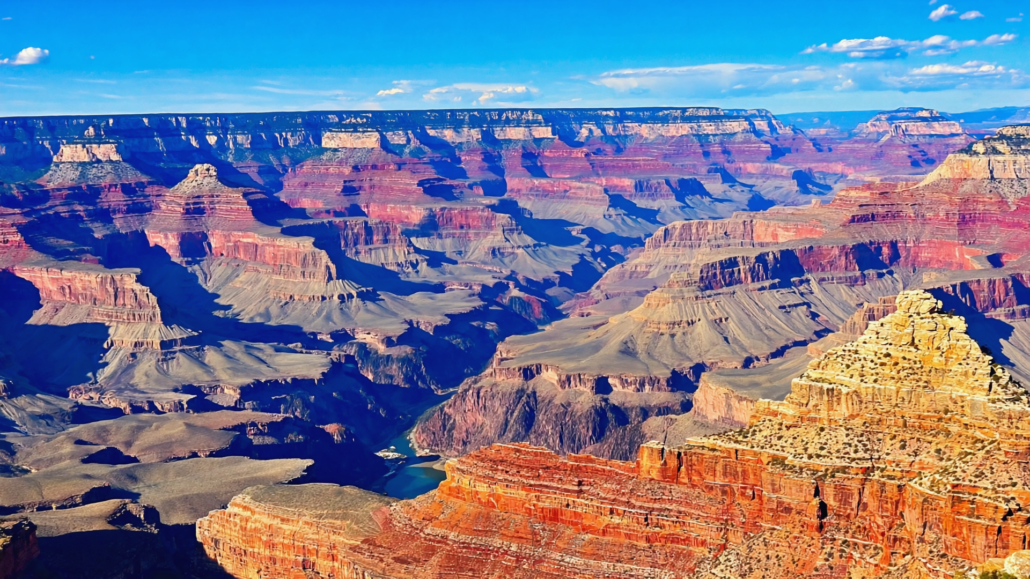
What the Grand Canyon Looks Like in Each Season: A Visual and Practical Breakdown for Trip Planners
The Grand Canyon does not look the same twice. That is not a poetic flourish, it is a physical fact rooted in how light, moisture, temperature, and atmospheric conditions interact with 277 miles of layered sandstone, limestone, and shale. A visitor who stands at Mather Point in July and one who stands at the same spot in January are, in a meaningful visual sense, looking at different places. Understanding Grand Canyon weather by season is not just a logistical concern; it is the key to choosing the version of the canyon you actually want to experience.
This guide breaks down all four seasons at the South Rim in detail: what the canyon looks like, what the trail conditions demand, how crowds behave, and what practical steps help you get the most from each window. Whether you are weighing a summer family trip, a quiet Grand Canyon winter visit, or an in-between shoulder season getaway, what follows gives you the visual and practical context to plan with confidence.
How the Canyon’s Appearance Changes With the Seasons
Before diving into individual seasons, it helps to understand why the Grand Canyon is so visually dynamic across the calendar year. The canyon’s appearance is shaped by three overlapping forces: the quality and angle of sunlight, the presence or absence of atmospheric moisture, and the vegetation response to temperature change.
The South Rim sits at roughly 7,000 feet above sea level, which means it occupies a distinct climate band separate from both the canyon floor (which is closer to 2,500 feet) and the surrounding plateau. That elevation difference creates dramatic temperature gradients, weather contrasts, and lighting conditions that change not just season to season but hour to hour within a single day.
Light angle matters enormously. In summer, the sun rides high and creates flatter, harsher illumination across the canyon walls by midday. In winter, the lower sun angle produces longer shadows, stronger contrast between lit and unlit rock faces, and a warmth of color in the late afternoon that photographers specifically travel to capture. Spring and fall offer transitional light that many visitors describe as the most balanced for viewing.
Atmospheric moisture changes the canyon’s color palette entirely. After summer monsoon rains, the air clears and rock colors deepen into vivid reds, oranges, and purples. Morning fog, which occasionally settles into the canyon in fall and winter, creates a surreal inversion effect where the rim sits above a cloud layer and the canyon appears to float. Snow on the canyon walls throws the geological strata into sharp relief, with white accumulation catching on every horizontal ledge and red rock glowing against a gray sky.
Vegetation plays a supporting role. The pinyon pine and juniper forests along the rim look relatively consistent year-round, but the Gambel oak and other deciduous species along certain rim trails turn gold and amber in October and November, framing canyon viewpoints with seasonal color that adds a second visual layer to any photograph.
Summer at the South Rim: Dramatic Light, Heavy Crowds, and Monsoon Magic
Summer is the most visited season at Grand Canyon National Park, and that fact alone shapes the experience in ways that go beyond weather. The best time to visit the Grand Canyon is genuinely subjective, but for families with school-age children, summer is often the only practical window, so understanding what to expect makes the difference between a frustrating visit and a memorable one.
What the Canyon Looks Like in Summer
From late June through August, the South Rim receives intense high-desert sun. Midday light is direct and overhead, which flattens the canyon’s visual depth and bleaches the color out of the rock faces. This is the canyon at its least photogenic between roughly 10 a.m. and 4 p.m. However, the early morning and evening hours compensate dramatically. Sunrise in summer arrives early, often before 5:30 a.m., and the canyon fills with warm horizontal light that turns the Redwall Limestone a vivid salmon-pink and casts long shadows into the side canyons. Sunset follows a similar logic, with golden hour extending from roughly 7 p.m. into the early evening.
The monsoon season, which typically runs from mid-July through mid-September, transforms the canyon’s atmosphere. Afternoon thunderstorms build over the plateaus, rolling through the canyon with dramatic cloud formations that create some of the most spectacular views of the entire year. Lightning over the canyon, sheets of rain visible from miles away as they cross distant mesas, and double rainbows arcing over the Colorado River gorge are all realistic summer experiences. The post-storm air is exceptionally clear, and the wet rock walls deepen in color noticeably.
Summer Crowds and What They Mean for Your Visit
The South Rim receives the majority of its annual visitors between Memorial Day and Labor Day. Parking at popular overlooks like Mather Point and Yavapai Point fills by mid-morning and remains full through the afternoon. The free Grand Canyon Tusayan shuttle service becomes genuinely essential during this period, as driving and parking within the park becomes a source of real frustration for unprepared visitors.
Rim Trail sections near Grand Canyon Village see constant foot traffic. The inner canyon trails, particularly the upper sections of Bright Angel and South Kaibab, are extremely busy and become genuinely dangerous for hikers who underestimate the heat differential between the rim and inner canyon. Temperatures at Phantom Ranch on the canyon floor regularly exceed 105°F in July and August, and the NPS’s heat safety guidance explicitly advises against hiking below the rim between 10 a.m. and 4 p.m. during this period.
Practical Summer Planning
The single most useful thing a summer visitor can do is front-load the day. Arriving at viewpoints before 7 a.m. provides the best light, the smallest crowds, and the safest conditions for any rim-to-inner-canyon hiking. Midday works well for indoor experiences, meals, and orientation activities. Stopping at Grand Canyon Visitor Center IMAX, located in Tusayan just outside the South Rim entrance, gives summer visitors a productive and comfortable midday option. Watching “Grand Canyon: Rivers of Time” on the six-story IMAX screen with IMAX with Laser technology provides geological and cultural context that makes the afternoon viewpoints more meaningful, regardless of how many other visitors are sharing them. The facility also sells various National Park entrance passes on-site, which saves time at the gate during the busiest entry periods.
| Season | Best Light Window | Crowd Level | Trail Conditions | Visual Highlight |
|---|---|---|---|---|
| Summer (Jun–Aug) | 5:30–8 a.m. / 7–8:30 p.m. | ⚠️ Very High | ⚠️ Extreme heat below rim | Monsoon storms, post-rain clarity |
| Fall (Sep–Nov) | 6:30–9 a.m. / 5–6:30 p.m. | ✅ Moderate | ✅ Ideal through October | Foliage, clear skies, long shadows |
| Winter (Dec–Feb) | 7:30–10 a.m. / 4–5:30 p.m. | ✅ Low | ⚠️ Ice possible on rim trails | Snow on canyon walls, fog inversions |
| Spring (Mar–May) | 6–9 a.m. / 6–7:30 p.m. | ⚠️ Moderate, rising in May | ⚠️ Mud possible, snow into April | Wildflowers, dramatic cloud formations |
Fall Travel at the Grand Canyon: The Season That Rewards Patient Planners
Grand Canyon fall travel occupies a particular place in trip-planning conversations because it combines nearly all of the things visitors want: comfortable temperatures, manageable crowds, outstanding light quality, and trail conditions that allow for genuine inner-canyon exploration. September through November is not the canyon’s most dramatic season visually, but it may be the most consistently satisfying one, and that distinction matters enormously when planning a trip around a fixed window of vacation time.
The Visual Character of Fall at the South Rim
September at the South Rim arrives with the tail end of monsoon season. The storms that dominated July and August begin to thin out, but the atmospheric clarity they produce lingers well into October. The result is a canyon with unusually vivid color: deep red Hakatai Shale, warm tan Coconino Sandstone, and the purple-gray of the Vishnu Schist at the bottom are all rendered in high contrast against a sky that is frequently a saturated cobalt blue.
As October progresses, the sun drops lower on the horizon and the golden-hour lighting windows expand. Shadows lengthen earlier in the afternoon, and the side canyons that bake in flat summer light begin to reveal their sculptural complexity. The inner canyon walls take on a warmth of tone that photographers specifically plan around, with late afternoon light on the Tonto Platform producing colors that shift from orange to deep amber as the sun approaches the western horizon.
By late October and into November, deciduous trees along certain sections of the Rim Trail and Bright Angel Trail add foreground interest that is simply absent in summer. Gambel oaks turn a clean golden yellow, and the bigtooth maples deeper in side canyons go orange and red. This is a secondary visual layer that most first-time visitors do not anticipate, and it genuinely changes the character of rim viewpoints that otherwise look similar across seasons.
Fall Trail Conditions and Hiking Windows
October is widely regarded as the optimal month for inner-canyon hiking at the South Rim. The inner canyon, which is brutally hot in summer, cools to manageable temperatures through most of October, with highs at Phantom Ranch often falling into the 70s°F. Bright Angel Trail and the South Kaibab Trail are both in their best condition of the year: the extreme heat risk is gone, the winter ice has not yet arrived, and trail surfaces are typically dry and stable.
This combination makes fall the most practical season for rim-to-river day hikes to destinations like Indian Garden (now Havasupai Gardens) and for multi-day backpacking trips to Bright Angel Campground or Phantom Ranch. Backcountry permits for fall dates are competitive but less so than summer, and the inner canyon’s reduced visitor volume makes for a quieter, more contemplative experience.
November introduces some variability. Snowfall on the South Rim typically becomes possible from mid-November onward, and while light dustings do not usually disrupt rim trail access, they can affect driving conditions on Arizona SR-64 and within the park. Travelers planning Grand Canyon fall travel in November should monitor road conditions through the NPS Grand Canyon current conditions page and carry appropriate cold-weather layers.
Why the Shoulder Season Crowds Make a Measurable Difference
The practical difference between a summer visit and an October visit at the South Rim is hard to overstate. The most popular overlooks along the East Rim Drive and Desert View can be experienced without competing for space along the railing. Sunrise at Yaki Point or Lipan Point, which requires arriving an hour early in summer to secure a spot, becomes accessible with a few minutes of lead time in fall. The rim trail walks that feel crowded and urban in July feel genuinely wild and quiet in October.
This crowd reduction is not just about comfort. It directly affects the quality of photographs, the ability to sit and absorb the view without interruption, and the safety of driving within the park. For families, photographers, and anyone who travels to experience rather than simply document, fall is the season that consistently exceeds expectations.
Winter at the Grand Canyon: A Completely Different Canyon
A Grand Canyon winter visit is not the compromise that some trip planners treat it as. It is a fundamentally different experience from any other season, and for certain types of travelers, it is the most rewarding version of the canyon available. The combination of snow, low-angle light, small crowds, and occasional fog inversions produces visual conditions that no other season replicates.
What Snow Does to the Canyon’s Appearance
When snow falls on the South Rim, it lands selectively. The horizontal ledges and benches of the canyon’s geological layers catch and hold snow while the vertical faces remain exposed. The result is a canyon that appears to be stratified in a new way: bands of white accumulation on every horizontal surface create a visual map of the geological layers that is, in purely aesthetic terms, extraordinary. The red and orange tones of the canyon walls contrast against the white in a way that no photograph fully captures until you have stood there and seen it.
Snow depth on the rim varies considerably. Light dustings of an inch or two are common through December, January, and February, while larger storms can deposit a foot or more. After a significant snowfall, the canyon takes on a scale that feels even more immense than usual, with the white foreground of the rim extending into a vast depth of color and shadow below.
The fog inversion phenomenon, which occurs when warmer air at lower elevations meets cold air descending from the rim, occasionally fills the canyon with a cloud layer that sits below the viewpoints. From the rim, the canyon appears to be filled with a smooth white surface, with only the highest buttes and temples emerging above it. Vishnu Temple, Wotan’s Throne, and the Zoroaster Temple protruding from a sea of cloud is a view that visitors who have seen it describe as genuinely unlike anything else in the American Southwest. These inversions are not predictable or guaranteed, but they occur with enough regularity in winter that photographers specifically time trips around favorable forecast conditions.
Winter Trail Access and Safety Considerations
The South Rim’s paved trails and main viewpoints remain accessible year-round, but winter conditions demand specific preparation. Ice accumulates on shaded sections of the Rim Trail and on the upper portions of Bright Angel Trail, particularly in January and February. Microspikes or traction devices are not optional equipment during icy periods, they are the difference between a safe walk and a genuinely dangerous one on the steep descents.
The inner canyon in winter offers its own appeal. While the rim can be cold and occasionally icy, the inner canyon’s lower elevation means significantly warmer temperatures. Hiking the upper sections of Bright Angel Trail in December or January offers a temperature escape from the rim while delivering a canyon experience with essentially no other hikers present. The contrast between a frosty rim at 25°F and a Bright Angel Creek trail at 50°F just a few miles below is one of the more surprising physical experiences the canyon offers.
The North Rim closes to vehicle access from approximately mid-October through mid-May, so winter visitors are exclusively South Rim visitors. This concentrates all winter visitation at the South Rim but also means that every service, shuttle, and facility that operates year-round is available, which is more than can be said for the North Rim at any other season.
Winter Visitor Services and What Remains Open
Winter is not an austere season at the South Rim. Most lodging within Grand Canyon Village operates year-round, and the reduction in summer crowds makes securing reservations significantly more straightforward, though popular dates around the Christmas holiday period book early. The park’s shuttle system continues operating through the winter on a modified schedule.
Grand Canyon Visitor Center IMAX in Tusayan remains open year-round, which is a meaningful convenience for winter visitors who arrive in cold or overcast conditions and want to orient themselves before heading into the park. The IMAX theater’s “Grand Canyon: Rivers of Time” provides a warm, engaging context for the geology and history of the canyon that pays dividends at every overlook afterward, regardless of the season. The on-site Pink Jeep Tours office also continues operating, with guided tour options that cover terrain and viewpoints that independent visitors often miss, particularly valuable in winter when unfamiliarity with road conditions adds a logistical variable. Booking IMAX tickets online in advance saves 20% and guarantees entry on days when groups are traveling through.
Spring at the Grand Canyon: High Drama and Variable Conditions
Spring is the Grand Canyon’s most unpredictable season, and that unpredictability is part of its appeal. March through May delivers a canyon in transition: snow lingers on shaded trails into April, wildflowers begin to appear on the Tonto Platform by late April, and the light quality shifts from winter’s sharp, low-angle clarity into the longer golden hours of late spring. Understanding Grand Canyon weather by season is nowhere more important than in spring, when a single week can contain freezing temperatures, warm sunny afternoons, high winds, and afternoon thunderstorms.
What the Canyon Looks Like in Spring
March at the South Rim still carries the visual character of winter. Snow remains possible, the canyon walls are rendered in high contrast by the still-low sun, and the rim trail is quiet. By late March, the days lengthen noticeably and the light begins to warm. April is a transitional month that can deliver exceptional views: the canyon’s rock colors deepen as the air warms and the residual winter moisture clears, and the expanding daylight hours mean more usable light at both ends of the day.
May is the month that most closely resembles summer in terms of light quality and visitor volume, but with milder temperatures that make it the more comfortable option for many travelers. The Colorado River runs high and turbid in spring due to snowmelt upstream, taking on a rich chocolate-brown color that stands in notable contrast to the sandy canyon floor. This is a visual element unique to spring that changes the canyon’s character at viewpoints with river visibility, including Desert View and the South Kaibab Trail.
Wildflowers along the Tonto Platform and in the side canyons become visible from late April onward, with Indian paintbrush, cliffrose, and various cacti coming into bloom. These are not the dramatic wildflower displays of the Sonoran Desert, but they add a foreground element to inner-canyon views that is both botanically interesting and visually welcome after the bare palette of winter.
Spring Wind and Its Effect on the Visitor Experience
Wind is the underappreciated variable of Grand Canyon spring planning. March and April bring consistent and sometimes strong winds across the South Rim, which affects photography (tripods become necessary), hiking comfort on exposed rim trails, and the canyon’s visual character. High winds lift dust from the canyon floor and create a haze that mutes colors and reduces visibility on some days. On other days, wind clears the atmosphere entirely and produces a crisp, hyper-detailed view of distant canyon features that is exceptional for long-range photography.
Wind also affects temperature perception significantly. A 55°F day on the South Rim with 30 mph winds feels dramatically colder than the thermometer suggests, which catches unprepared spring visitors off guard. Layering is the only appropriate strategy, with windproof outer shells as a non-negotiable item in any spring packing list.
Spring Crowds and the Rising Tide of May
March and April represent genuine Grand Canyon shoulder season tips territory: the park is not empty, but it is far less crowded than summer, and the combination of access, light quality, and trail conditions makes it an excellent planning window. Spring break in mid-March produces a noticeable but temporary crowd spike, particularly around popular overlooks. Outside of that window, March and April deliver a visitor density closer to fall than summer.
May sees a rapid climb toward summer-level crowds, driven by Memorial Day weekend and the beginning of school vacation season for families. By late May, parking at Mather Point and Yavapai Point is challenging by mid-morning, and the inner canyon heat is beginning to build toward dangerous summer levels. Visitors targeting May should apply the same morning-heavy schedule that summer visitors use: early start, midday shelter, late afternoon return to viewpoints.
Grand Canyon Shoulder Season Tips: Making the Most of the In-Between Windows
The two shoulder seasons, mid-September through October and March through April, offer a version of the Grand Canyon that the peak summer crowd never sees. For travelers with scheduling flexibility, these windows represent the highest-value combination of access, aesthetics, and comfort available at the South Rim. The following practical strategies maximize their advantages.
Timing Your Arrival Around Light and Crowds
In both shoulder seasons, the optimal visiting pattern inverts the summer schedule. Rather than rushing to beat summer crowds at 6 a.m., shoulder season visitors can arrive at viewpoints at 7 or 8 a.m. and still find manageable crowds with excellent light. The pressure to arrive before sunrise, which is real and worthwhile in summer, relaxes considerably. This makes shoulder season visits more accessible for families with young children and travelers who do not want to structure their days around extreme early waking.
Midweek visits compound the shoulder season advantage. Weekends in October and April see noticeably higher visitor volume than Tuesday through Thursday, and choosing a weekday arrival can make an already-quiet season feel almost private by peak-season standards.
Viewpoint Selection by Season
Not all viewpoints perform equally across seasons. Some are optimized for summer light and become less dramatic in winter, while others reveal their best character under the low sun angles of fall and winter. A practical breakdown:
- Mather Point: The most visited viewpoint at any season, but particularly rewarding at winter sunrise when the low sun angle throws the canyon’s layered walls into extraordinary relief. The paved access and proximity to the Visitor Plaza make it the default choice for first-time visitors regardless of season.
- Yaki Point (South Kaibab Trailhead): One of the best sunrise viewpoints in any season due to its eastward orientation. In fall, the combination of early light and reduced crowds makes this the top choice for serious photographers.
- Lipan Point: The best river viewpoint on the South Rim, with visibility extending across multiple canyon layers down to the Colorado. Particularly dramatic in spring when the river runs high and brown, and in winter when snow accumulates on the canyon’s horizontal ledges.
- Desert View Watchtower: Located at the eastern end of Desert View Drive, this viewpoint offers the widest panorama of any South Rim location and is the least impacted by the crowd concentrations near Grand Canyon Village. Worth the 25-mile drive from the visitor center area in any season, and particularly rewarding in fall when the eastern canyon receives long afternoon light.
- Pima Point: Accessible via the Hermit Road shuttle (or by car in the off-season when private vehicles are permitted), this viewpoint offers river visibility and a view into Hermit Canyon that is particularly striking in winter and early spring when the canyon below is in shadow and the far walls catch the last light of the afternoon.
The Pre-Park Stop That Changes the Trip
One of the most consistent pieces of advice from experienced South Rim visitors is to treat the time before entering the park as an opportunity rather than a delay. Grand Canyon Visitor Center IMAX, located in Tusayan just outside the South Rim entrance gates, is the most efficient way to convert arrival time into genuine orientation. The “Grand Canyon: Rivers of Time” IMAX film covers 1.7 billion years of geological history and the cultural context of the canyon in a format that is engaging for every age group. Watching it before entering the park means that every viewpoint you reach afterward carries a richer layer of meaning.
The facility’s on-site Pink Jeep Tours office, recognized as Best Tour Operator, is particularly useful for shoulder season visitors who want to access viewpoints and terrain that independent driving does not easily reach. Every Pink Jeep Tour originating from Grand Canyon Visitor Center IMAX includes a ticket to “Grand Canyon: Rivers of Time,” making the combination a natural starting point for the day. The on-site Explorers Café and Pizza Hut Express handle breakfast and lunch needs, and the retail store stocks hiking gear essentials that shoulder season visitors may have underestimated, layers, traction devices for fall hikers concerned about early snow, and sun protection for spring visitors who underestimate the high-elevation UV exposure.
For EV road-trippers planning a fall or spring visit along the Arizona Southwest corridor, the facility’s Ultra-Fast 150 kW and Hyper-Fast 350 kW charging stations make it a logical stop before or after the park, regardless of season.
Photography Planning by Season: A Framework for Visual Travelers
For travelers whose primary purpose is visual, photographers, content creators, or anyone who wants to return home with images that genuinely capture the canyon, season selection is the single highest-leverage decision in the planning process. The following framework organizes the canyon’s visual character by season for practical trip-timing decisions.
The Photographer’s Season Ranking
Ranked by overall photographic opportunity across rim and inner-canyon viewpoints:
- Fall (October): The most consistently rewarding month. Long golden hours, clear post-monsoon air, warm rock colors, and manageable crowds at viewpoints. The low sun angle at sunrise and sunset produces strong shadows that reveal the canyon’s sculptural complexity. Foliage adds foreground interest along rim and upper trail viewpoints.
- Winter (December–January): The highest ceiling for exceptional images, with snow conditions and fog inversions producing views that are genuinely rare and unreplicable in other seasons. The floor is also higher, however, with overcast winter days producing flat, muted views. High variance season: the best winter conditions are extraordinary, the average winter day is ordinary.
- Spring (April–May): Excellent light quality and the visual bonus of a high, turbid Colorado River. Wind haze is the main variable that reduces reliability. Late April and early May before the crowds build offer a strong combination of access and image quality.
- Summer (June–August): The hardest season to photograph well, but the monsoon storms produce dramatic cloud formations and post-rain clarity that deliver some of the canyon’s most dynamic imagery. Requires patience, early starts, and willingness to be present for weather events rather than scheduling around them.
Practical Photography Tips Across Seasons
Regardless of season, a few consistent principles apply to canyon photography at the South Rim:
- The canyon’s east-facing walls receive morning light and the west-facing walls receive afternoon light. Arriving at viewpoints with knowledge of which walls you want lit determines what time of day to be there.
- Overcast light, which many photographers treat as a loss day, actually produces excellent results for inner-canyon detail photography because it eliminates the harsh shadows that obscure geological features in direct sun. Winter overcast is particularly useful for capturing the canyon’s layered stratigraphy without blown-out highlights.
- The canyon’s scale works against wide-angle lenses in many situations. A telephoto lens in the 70–200mm range allows isolation of specific canyon features, a single butte, a bend in the river, a section of trail, that communicate the scale more effectively than wide compositions that try to capture everything at once.
- Sunrise at the Grand Canyon is not always about the sky. On days with an unremarkable sunrise, the first 20 minutes of direct light hitting the canyon walls as the sun clears the horizon produces a warm orange wash across the rock that is worth being present for regardless of cloud formations above.
Packing and Preparation: Season-Specific Gear That Actually Matters
Packing for a Grand Canyon visit is not complicated, but it is season-specific in ways that catch first-time visitors off guard. The South Rim’s 7,000-foot elevation changes the calculus compared to the desert environment many visitors expect, and the inner canyon’s radically different climate means that a single trip can require gear for two completely different environments.
Summer Packing Essentials
The NPS recommends a minimum of one liter of water per hour for inner-canyon hiking during summer. This is not a general suggestion, it is a physiological baseline derived from heat and exertion at high temperatures. Beyond water, summer packing priorities include:
- Electrolyte supplements (hyponatremia from drinking water without sodium replacement is a documented medical issue on inner-canyon trails)
- Sun protection rated for high-altitude UV (the South Rim’s elevation increases UV exposure relative to sea level)
- Wide-brim hat and sun-protective clothing for rim trail walking
- Early-morning layers (summer rim temperatures before 7 a.m. can be surprisingly cool)
Fall Packing Essentials
Fall packing is the most flexible of any season because the temperature range is moderate and the hazards are limited. Key additions for fall-specific conditions include:
- Warm layers for late October and November mornings, when rim temperatures can be in the 30s°F at sunrise
- Rain jacket for the tail end of monsoon season in September
- Microspikes if visiting in November when early snow is possible on shaded trail sections
Winter Packing Essentials
Winter at the South Rim demands genuine cold-weather preparation. A down or synthetic insulated jacket, windproof outer shell, warm hat and gloves, and waterproof footwear are not optional for rim trail walking in December through February. Microspikes or traction devices for icy trail sections should be considered standard equipment. For inner-canyon winter hiking, the temperature gradient means packing for both 20°F conditions at the rim and 50°F conditions below the rim, requiring a layering system that can be adjusted throughout the day.
Spring Packing Essentials
Spring’s variability makes it the season where over-packing is most justified. A packing list that covers warm base layers, mid-layers, a windproof shell, and sun protection covers the full range of conditions likely to be encountered in March and April. Gaiters are useful for hikers who may encounter wet mud or snow on upper trail sections in early spring.
Frequently Asked Questions About Grand Canyon Weather by Season
What is the best time to visit the Grand Canyon for good weather?
October is generally the most reliably pleasant month for rim visits, combining cool temperatures, low humidity, and excellent light quality. May offers similar comfort levels with slightly more variability. Both months avoid the extremes of summer heat and winter cold while delivering trail conditions suitable for most visitors.
Does it snow at the Grand Canyon?
Yes. The South Rim receives regular snowfall from November through March, with December, January, and February being the most likely months for significant accumulation. Light dustings are common; larger storms occasionally deposit a foot or more. Snow on the canyon walls creates some of the most visually dramatic conditions of any season, but it does require appropriate cold-weather preparation for rim visitors.
How hot does the Grand Canyon get in summer?
The South Rim averages highs in the upper 70s°F to low 80s°F in July, which is comfortable. The inner canyon, however, operates in a completely different climate: Phantom Ranch at the bottom of the canyon regularly exceeds 105°F in July and August. This temperature differential is the primary safety consideration for summer visitors and the reason the NPS advises against below-rim hiking during midday hours in summer.
What is Grand Canyon shoulder season and when does it occur?
Grand Canyon shoulder season refers to the periods between peak summer visitation and the quieter winter months. The two primary shoulder windows are mid-September through October (post-summer, pre-winter) and March through April (post-winter, pre-summer). Both offer a combination of manageable crowds, moderate temperatures, and good trail access that many experienced visitors prefer over peak summer.
Can you hike the Grand Canyon in winter?
Yes, with appropriate preparation. The upper sections of Bright Angel Trail and the South Kaibab Trail are accessible year-round, though icy conditions require traction devices on shaded sections. The inner canyon is actually warmer than the rim in winter and offers a compelling hiking experience with minimal other visitors present. Winter is not the right season for unprepared first-time hikers, but experienced hikers who equip properly find it one of the most rewarding seasons for inner-canyon access.
Is the Grand Canyon busy in fall?
Moderately. September remains relatively busy as summer visitors extend their trips and fall break travelers arrive. October is the sweet spot: crowds drop noticeably from summer levels but the park is far from empty. November sees a further reduction in visitor volume, with the period after Thanksgiving being among the quietest of the year at the South Rim.
What causes the fog inversions at the Grand Canyon in winter?
Fog inversions occur when a temperature inversion traps cool, moist air in the canyon below a layer of warmer air above. The canyon’s depth creates an unusually sheltered environment for this phenomenon. When conditions are right, the inversion layer fills the canyon with cloud or fog up to a specific elevation, leaving the highest buttes and temples visible above a smooth white surface. These inversions are most common in November through January and are not predictable more than a day or two in advance.
What should I do first when arriving at the Grand Canyon?
For most South Rim visitors, the most productive first step is stopping at Grand Canyon Visitor Center IMAX in Tusayan before entering the park. The facility is located just outside the South Rim entrance gates and allows visitors to purchase National Park entrance passes on-site (saving time at the gate), watch “Grand Canyon: Rivers of Time” on the six-story IMAX screen for geological and cultural orientation, and book Pink Jeep Tours that depart directly from the front door. Starting with IMAX means every viewpoint inside the park carries a richer layer of context from the first moment.
Is Grand Canyon fall travel better than spring?
For most visitors, fall edges out spring because of greater weather reliability and superior light quality. October delivers consistently clear skies, warm rock colors, and comfortable temperatures with a high degree of predictability. Spring offers similar conditions but with more variability from wind, mud, and lingering snow. Both are excellent choices compared to peak summer, and the decision often comes down to scheduling practicality rather than one being objectively superior.
What is the Grand Canyon weather like in December?
December at the South Rim is cold and often dramatic. Rim temperatures average highs in the low 40s°F and lows that regularly drop below freezing. Snowfall is common, creating the snow-on-canyon-walls conditions that winter visitors find uniquely rewarding. Days are short, with sunrise after 7:30 a.m. and sunset before 5:30 p.m., which compresses the usable daylight window. The park is significantly less crowded than summer, and the visual conditions on clear winter days are exceptional.
Are there seasonal closures at the Grand Canyon South Rim?
The South Rim remains open year-round, including all major viewpoints, the main visitor facilities, and most lodging. Some services operate on reduced winter schedules. The Hermit Road is open to private vehicles from December through February when the seasonal shuttle restriction is lifted, which is a practical benefit of winter visiting. The North Rim closes to vehicle access from approximately mid-October through mid-May, so North Rim visitors must plan accordingly.
What film should I watch before entering the Grand Canyon?
“Grand Canyon: Rivers of Time” at the Grand Canyon IMAX Theater in Tusayan is the most comprehensive cinematic orientation available before entering Grand Canyon National Park. Screened on a six-story IMAX screen with IMAX with Laser technology, the film covers the canyon’s 1.7 billion years of geological history and its cultural significance in a way that meaningfully enhances every viewpoint experience that follows. Tickets are available online in advance, and booking online saves 20% off at-the-door pricing.
Key Takeaways for Grand Canyon Trip Planners
- Season determines the visual character of the canyon more than any other planning variable. Choosing the right season is not just about weather comfort, it changes the light quality, color palette, and visual drama of every viewpoint you visit.
- Fall (October) is the highest-reliability season for combining comfortable hiking conditions, excellent light, manageable crowds, and good trail access. It is the season that most consistently delivers on its promise.
- Winter offers the canyon’s most dramatic visual potential with snow conditions and fog inversions, but requires cold-weather preparation and tolerance for shorter daylight windows.
- Summer rewards early risers who arrive at viewpoints before 8 a.m. and plan midday activities away from the rim. The monsoon season produces genuinely dramatic storm and post-storm conditions for patient visitors.
- Spring is the most variable season and requires the most flexible packing and planning approach. April is more reliable than March; May approaches summer conditions in both crowd level and heat.
- Stopping at Grand Canyon Visitor Center IMAX in Tusayan before entering the park is a practical step in any season, providing orientation, pass purchase, dining, and tour booking in a single stop just outside the South Rim entrance gates. Book IMAX tickets online in advance to save 20%.
- Inner-canyon temperatures differ dramatically from rim temperatures in every season. Plan and pack for both environments if any below-rim hiking is on the itinerary.
- The best viewpoints vary by season based on light angle and what visual elements are active. Lipan Point excels in spring for river views; Yaki Point is a fall sunrise standout; Mather Point rewards winter visits with snow and low-angle light.

About the author
Explore The Canyon Editorial Team
See The Canyon

