
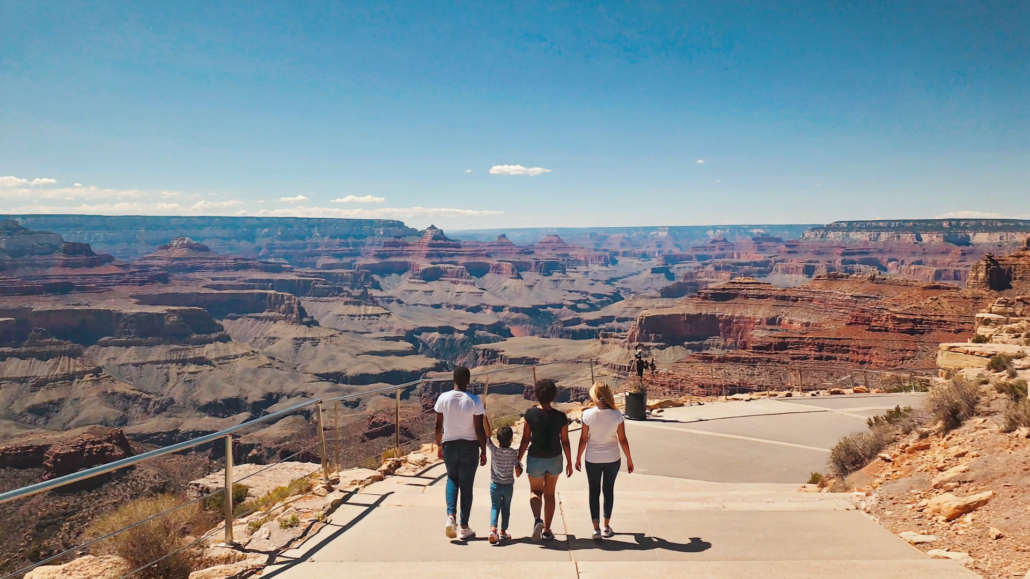
Grand Canyon Accessibility Explained: Rim Trail Paving, Shuttle Routes, and Inclusive Visitor Services
The Grand Canyon draws millions of visitors every year, but not everyone experiences it the same way. For travelers using wheelchairs, families pushing strollers, older adults with limited mobility, or visitors with sensory challenges, the question isn’t just “what should I see?” It’s “can I actually get there?” The honest answer is more encouraging than many people expect. The South Rim has invested significantly in paved trails, accessible shuttle routes, and inclusive visitor services that make the canyon genuinely reachable for a wide range of abilities. This guide walks through what’s available, how to use it, and how to plan a visit that works for everyone in your group.
Understanding the South Rim’s Accessibility Infrastructure
The South Rim of Grand Canyon National Park offers more accessible infrastructure than most first-time visitors realize. The combination of paved rim-side pathways, a free shuttle system, and modern visitor facilities means that a meaningful canyon experience is achievable without hiking a single unpaved trail.
Accessibility at the South Rim has been a priority for the National Park Service for several decades. The canyon’s geology creates natural challenges: much of the terrain around the rim is uneven, rocky, and subject to erosion. But the infrastructure layer built on top of that terrain tells a different story. Paved paths, ramp access to viewpoints, accessible restroom facilities, and a robust shuttle network combine to create an experience that doesn’t require physical agility to be profound.
For families traveling with young children in strollers, the infrastructure overlaps significantly with wheelchair-accessible routes. The same paved surfaces that accommodate mobility devices also work for stroller wheels, making South Rim trip planning considerably more straightforward for families than many assume. The key is knowing which specific routes are paved, which viewpoints have level surfaces, and where the shuttle stops are positioned relative to the viewpoints themselves.
One important distinction for trip planning: accessibility infrastructure is concentrated primarily along the South Rim’s developed corridor, from Mather Point in the east through Grand Canyon Village and westward toward Hermit’s Rest. The more remote sections of the park, including the North Rim and backcountry areas, offer far fewer accessible facilities. For most visitors with mobility considerations, the South Rim’s developed area is the right place to focus.
What “Accessible” Actually Means at the Canyon
The term “accessible” covers a spectrum. At the Grand Canyon South Rim, accessible infrastructure generally means paved or compacted-surface pathways with grades of 5% or less over extended distances, accessible parking with van spaces, ramped entry points at viewpoints, and shuttle buses equipped with wheelchair lifts or ramps. Not every viewpoint meets every standard, and conditions can change seasonally due to weather and maintenance. The National Park Service’s official Grand Canyon accessibility page provides the most current details on specific facility conditions and temporary closures, and it’s worth reviewing before your trip.
The Grand Canyon Rim Trail: What’s Paved and What Isn’t
The Grand Canyon Rim Trail is the primary pedestrian route along the South Rim, stretching roughly 13 miles from Hermit’s Rest in the west to South Kaibab Trailhead in the east. For visitors with mobility considerations, the most important thing to know is that the trail is not uniformly paved along its entire length. Different sections have very different surface conditions, and planning your route based on those conditions makes a significant difference in the experience.
The most accessible and heavily used portion of the Rim Trail runs approximately 3 miles from Mather Point westward through Grand Canyon Village to Maricopa Point. This section is paved and wide enough to accommodate wheelchairs and strollers side by side. It passes some of the most dramatic viewpoints on the South Rim, including Mather Point (arguably the single most visited viewpoint in the park), Yavapai Point, and several overlooks near the historic El Tovar and Bright Angel Lodge area. Grades along this stretch are generally gentle, though there are occasional short inclines where the rim’s natural topography requires a modest rise or descent.
Moving west from Maricopa Point toward Hermit’s Rest, the trail surface transitions to unpaved compacted gravel and natural terrain. This section is still navigable on foot but becomes significantly more challenging for wheelchairs without a companion to assist, and it’s not appropriate for most strollers. The views from this western section are extraordinary, but visitors relying on smooth surfaces should plan to access these viewpoints via the Hermit Road shuttle rather than walking the trail itself.
East of Mather Point, the trail to the South Kaibab Trailhead is mostly unpaved and not recommended for wheelchairs or strollers. Visitors who want to access the eastern viewpoints should use the Kaibab/Rim Route shuttle, which stops at Yaki Point and the South Kaibab Trailhead.
Key Paved Rim Trail Highlights
Within the paved corridor, several viewpoints stand out as particularly worthwhile stops. Mather Point is the natural starting place for most visitors. The viewpoint has a large paved platform with ample space, protective railings along sections of the edge, and accessible restrooms nearby. The views from Mather Point encompass a wide arc of the inner canyon, including the Colorado River far below, and the orientation center adjacent to the point provides interpretive displays at accessible heights.
Yavapai Point and Geology Museum sit about a mile west of Mather Point along the paved section. The geology museum building itself is accessible, with ramp entry and accessible restrooms. The exhibits inside use touchable rock samples, large-format visual displays, and audio components, making them useful for visitors with different sensory profiles. The viewpoint outside offers panoramic canyon views with interpretive signage at varying heights.
Bright Angel Trailhead area near the historic lodges gives visitors a ground-level view of one of the canyon’s most famous trails without requiring any descent. The rim-level observation area is paved and accessible, and the historic architecture of the El Tovar and Bright Angel Lodge area adds a cultural dimension to the experience.
How the Grand Canyon Shuttle System Works for Accessible Travel
The free shuttle system operated by the National Park Service is the backbone of accessible transportation along the South Rim. During peak season (roughly spring through fall), private vehicles are restricted from Hermit Road, making the shuttle the only way for most visitors to reach the western viewpoints. For visitors with mobility considerations, the shuttle system is more than a convenience, it’s the primary tool for accessing the full length of the South Rim corridor.
All shuttle buses on the South Rim are equipped with wheelchair lifts and can accommodate standard-size wheelchairs and scooters. Passengers with mobility devices board and exit through a dedicated door, and drivers are trained to deploy the lift safely. The process takes a few extra minutes per boarding, so factoring in slightly longer wait times at stops is good practice during busy periods.
The Three Main Shuttle Routes
The South Rim shuttle network operates three primary routes relevant to most visitors:
- Village Route (Blue): Connects the main visitor area, including the Grand Canyon Visitor Center inside the park (at Canyon View Information Plaza near Mather Point), Market Plaza, Bright Angel Lodge, and Maswik Lodge. This route runs frequently and provides the essential connector between parking areas and the rim. It’s the first shuttle most visitors take and the one that links the major accessible facilities together.
- Hermit Road Route (Red): Runs westward from the Village along Hermit Road to Hermit’s Rest, stopping at eight viewpoints along the way: Trailview Overlook, Maricopa Point, Powell Point, Hopi Point, Mohave Point, The Abyss, Pima Point, and Hermit’s Rest. Hopi Point is widely regarded as one of the finest sunset viewpoints on the South Rim, and this shuttle makes it accessible without a long walk on unpaved terrain. The shuttle is seasonal (Hermit Road is open to private vehicles in winter).
- Kaibab/Rim Route (Orange): Runs from the Visitor Center Plaza east to Yaki Point and the South Kaibab Trailhead, with stops along the way. This route accesses the eastern viewpoints that are not reachable via the paved rim trail without significant effort.
Shuttle stops are marked on the park’s official map, available at the entrance gates and at the visitor center. Most stops have paved areas immediately adjacent, though the surfaces between the stop and the viewpoint itself can vary. Checking the NPS accessibility guide for specific stop conditions is advisable if smooth surfaces are a requirement rather than a preference.
Accessible Parking at the South Rim
Visitors who hold a valid disability placard or license plate and prefer to drive to specific viewpoints have limited but real options. Mather Point parking area near Canyon View Information Plaza has designated accessible spaces. Yavapai Point has accessible parking immediately adjacent to the geology museum. During peak hours, these spaces fill quickly, and there’s no guarantee of availability without arriving early. Hermit Road viewpoints are only accessible by private vehicle (including vehicles with disability placards) during winter months when the road opens to cars. In all seasons, the shuttle provides a reliable backup when parking isn’t available.
Accessible Viewpoints: A Practical Ranking for Trip Planning
Not all viewpoints are equal for visitors with mobility considerations. The following overview organizes the South Rim’s major viewpoints by accessibility, giving you a practical framework for building an itinerary that matches your group’s needs.
| Viewpoint | Surface Condition | Shuttle Access | Accessible Restrooms Nearby | Best For |
|---|---|---|---|---|
| Mather Point | ✅ Fully paved | ✅ Village Route | ✅ Yes | All visitors, first stop |
| Yavapai Point | ✅ Paved with ramps | ✅ Village Route | ✅ Yes (in museum) | Geology interest, families |
| Bright Angel Trailhead | ✅ Paved rim area | ✅ Village Route | ✅ Yes | Viewing hikers, history |
| Hopi Point | ⚠️ Partially paved | ✅ Hermit Road Route | ⚠️ Seasonal | Sunset viewing |
| Powell Point | ⚠️ Compacted gravel | ✅ Hermit Road Route | ❌ No | Quieter experience |
| Desert View | ⚠️ Mixed | ❌ Drive-to only | ✅ Yes | Eastern canyon, Watchtower |
| Hermit’s Rest | ⚠️ Compacted gravel | ✅ Hermit Road Route (seasonal) | ✅ Yes | Historic architecture, quieter rim |
This framework helps when building a daily itinerary. A visitor who uses a manual wheelchair and travels with a companion can reasonably cover Mather Point, Yavapai Point, and the Bright Angel area in a half-day using the Village Route shuttle, then take the Hermit Road shuttle to Hopi Point for a late-afternoon view. That’s a full and genuinely spectacular day at the canyon without any unpaved terrain.
Grand Canyon Family Activities That Work for Every Age
Traveling to the Grand Canyon with children requires a different kind of planning than an adult-only trip, and the South Rim offers more family-friendly infrastructure than many parents expect. The challenge isn’t finding things to do at the Grand Canyon with kids, it’s sequencing them so the youngest and oldest members of the group don’t hit a wall before the best moments happen.
Start with the right orientation. Children, especially younger ones, benefit enormously from understanding what they’re about to see before they see it. Walking up to the rim cold, with no context for the canyon’s scale, can produce reactions ranging from awe to genuine fear to disinterest, depending on the child. An immersive introduction changes that dynamic. Watching “Grand Canyon: Rivers of Time” on the six-story IMAX screen at Grand Canyon Visitor Center IMAX in Tusayan, just outside the South Rim entrance, frames the canyon’s geology and history in a way that makes the first rim view land with real impact. Children who’ve seen the film arrive at the rim with vocabulary for what they’re seeing, which transforms their experience from passive observation to active discovery.
Age-Specific Activities Along the South Rim
For ages 4-7: The Junior Ranger program, offered by the National Park Service, is one of the most effective ways to keep young children engaged throughout a South Rim visit. Kids pick up a Junior Ranger booklet at the visitor center, complete age-appropriate activities (drawing, observation exercises, simple questions), and receive an official Junior Ranger badge from a ranger. The program is self-paced and designed to work alongside a normal day of sightseeing.
The Yavapai Geology Museum is particularly well-suited to younger children, with hands-on rock samples and large visual displays that don’t require reading to engage with. The adjacent viewpoint is fully paved and has enough space for kids to move around safely while adults look at the view.
For ages 8-12: This age group often responds well to guided experiences. Pink Jeep Tours, which operate out of Grand Canyon Visitor Center IMAX and are recognized as Best Tour Operator, offer guided canyon-area tours that bring the landscape to life with narrated geology, history, and wildlife spotting. Every Pink Jeep Tour departing from Grand Canyon Visitor Center IMAX includes a ticket to “Grand Canyon: Rivers of Time,” making the combination of film and tour a natural full-morning program. Kids in this age range tend to engage actively with knowledgeable guides, and the jeep format removes the physical demands of hiking while still delivering an immersive outdoor experience.
For teens: Teens often want agency in their experience. Letting them lead the family along the paved rim trail, choose the shuttle stops, and set the pace tends to produce more engagement than a structured adult-led itinerary. The South Kaibab Trail’s Ooh Aah Point (a short, steep descent from the rim) is a popular goal for teens who want a taste of actual canyon hiking without committing to a full-day trail. Note that this section is unpaved and not appropriate for strollers or wheelchairs.
Managing the Logistics of Family Travel at the South Rim
Stroller navigation is generally smooth along the paved rim corridor and shuttle system. Full-size strollers work well on paved surfaces; lightweight umbrella strollers are easier to fold for shuttle boarding. Baby carriers are useful for viewpoints where strollers can’t reach the edge safely.
Food logistics matter significantly with children. The South Rim has dining options inside the park at Bright Angel Bicycling and Bright Angel Lodge, and a general store at Market Plaza. Before entering the park, Grand Canyon Visitor Center IMAX in Tusayan offers Pizza Hut Express and Explorers Café, both of which are practical, quick options for families who want to eat before the park visit or who are returning and hungry. Tusayan also has several other dining options outside the park gates.
For families with infants and toddlers, the most important logistical note is shade. The South Rim’s high altitude (around 7,000 feet) means UV exposure is intense even on mild days. The paved rim trail has limited natural shade between viewpoints, and midday sun can make extended outdoor time uncomfortable for small children. Morning visits, late-afternoon visits, or visits during shoulder seasons (spring and fall) are generally more comfortable for young families than peak summer midday hours.
Inclusive Visitor Services: Beyond Physical Accessibility
Physical accessibility, meaning paved paths and accessible shuttles, is only one dimension of inclusive visitor services at the South Rim. A genuinely inclusive visit also accounts for sensory sensitivities, cognitive accessibility, language access, and the needs of visitors who are deaf or hard of hearing, blind or low-vision, or who have neurodivergent family members.
Ranger Programs and Interpretive Accessibility
The National Park Service offers American Sign Language (ASL) interpretation for select ranger programs at the South Rim. Availability varies by season and staffing, so checking the current program schedule at the Grand Canyon Visitor Center inside the park (at Canyon View Information Plaza) is the best way to find interpreted programs during your visit. The NPS also offers audio description tours and tactile exhibits at select locations.
For visitors who are blind or low-vision, the Yavapai Geology Museum’s tactile rock displays provide a hands-on engagement with canyon geology that doesn’t depend on sight. Several ranger programs are designed with verbal description built in, making them useful even without visual access to the canyon itself.
Neurodivergent visitors and families traveling with children who have sensory sensitivities benefit from early morning visits, when crowds are thinner and ambient noise is lower. The paved rim trail between Mather Point and Yavapai Point is at its quietest in the first hour after the park opens. The shuttle system can be loud and crowded at peak times, which may be a factor for visitors with sensory sensitivities. Midweek visits outside summer months significantly reduce crowd density at shuttle stops and viewpoints.
Language Access and International Visitor Support
The South Rim’s international visitor population is substantial, and the NPS provides multilingual materials at the visitor center and entrance stations. The park map is available in several languages, and many interpretive signs include multiple language options. International visitors who want deeper orientation before entering the park benefit from the visual storytelling format of the IMAX film at Grand Canyon Visitor Center IMAX, which communicates the canyon’s scale and significance without relying entirely on language comprehension.
For tour groups traveling with non-English speakers, Pink Jeep Tours’ guided format provides real-time narration that can accommodate translation and questions in a more flexible way than self-guided exploration. The combination of guided jeep tour and IMAX film creates a structured, language-supported introduction to the canyon that works well for international tour groups arriving at the South Rim for the first time.
Planning Your Stop at Grand Canyon Visitor Center IMAX Before You Enter the Park
One of the most practical accessibility decisions a visitor can make is to stop at Grand Canyon Visitor Center IMAX in Tusayan before passing through the South Rim entrance gates. This stop, located just minutes from the South Rim gates, addresses several logistical challenges at once and sets up a more successful day in the park.
First, it’s where you can purchase National Park entrance passes. Buying your pass here rather than at the entrance station eliminates one potential line from your morning, which matters during peak season when entrance queues can run long. The facility sells various park pass options, including the America the Beautiful pass (National Parks Annual Pass), which is valid at over 2,000 federal recreation sites and represents excellent value for families or frequent park visitors.
Second, the IMAX film “Grand Canyon: Rivers of Time” provides the orientation context that makes the canyon more meaningful on first view. The film runs on a six-story screen with IMAX with Laser technology, and its geological and cultural narrative gives visitors a framework for interpreting what they’ll see at the rim. For families with children, older adults who want to understand what they’re looking at, and first-time visitors of any age, this 34-minute film is one of the most time-efficient investments you can make in your overall canyon experience. Booking IMAX tickets online in advance saves 20%, and advance booking also ensures you can time your film around your planned park arrival.
Third, the facility provides practical amenities that reduce friction during a park visit. On-site dining at Pizza Hut Express and Explorers Café lets you eat before entering the park rather than navigating in-park dining during peak hours. The large retail store stocks hiking gear, sunscreen, water bottles, and souvenirs, allowing you to pick up anything you forgot to pack before you’re deep in the park and far from resupply options. EV drivers can take advantage of the Ultra-Fast 150 kW and Hyper-Fast 350 kW charging stations on-site, arriving at the park with a full charge rather than managing range anxiety during the visit.
For visitors with mobility considerations specifically, the Grand Canyon Visitor Center IMAX facility is fully accessible, with level entry, accessible restrooms, and plenty of space to navigate with a wheelchair or stroller. It’s a low-stress environment to get oriented, gather supplies, and prepare for the more dynamic terrain of the park itself.
The Tusayan shuttle service also connects the Tusayan area to the South Rim, providing an additional transportation option for visitors who prefer not to drive into the park or who are managing parking logistics with a large group.
What to Expect From Pink Jeep Tours for Accessibility and Families
Guided tours solve a specific problem for visitors with mobility considerations and families: they remove the planning burden of figuring out which viewpoints are accessible, how to get between them, and what you’re actually looking at when you arrive. Pink Jeep Tours, recognized as Best Tour Operator and operating from Grand Canyon Visitor Center IMAX, take on all of that logistics so visitors can focus entirely on the experience.
Jeep-based tours are inherently more accessible than hiking-based alternatives. Passengers are transported to viewpoints rather than walking to them, which extends the range of the South Rim that’s reachable for visitors who can’t cover long distances on foot. While specific vehicle accessibility features (such as step height and seating configuration) should be confirmed directly with Pink Jeep Tours at booking, the guided format generally accommodates a wider range of physical abilities than independent trail hiking.
For families, the guided narration is a significant value-add. Canyon geology is genuinely complex, and the narrative that makes it compelling for a 10-year-old requires real storytelling skill. Pink Jeep guides are trained in both the science and the story, and the combination of vehicle-based exploration with expert narration tends to produce high engagement across age groups. Children who might lose interest on a long walking tour often stay actively curious throughout a jeep tour because the pace of discovery matches their attention span.
Every Pink Jeep Tour departing from Grand Canyon Visitor Center IMAX includes a ticket to “Grand Canyon: Rivers of Time,” making the pairing of film and guided tour a natural full-experience package. Many visitors find that seeing the film first deepens the jeep tour, since they arrive with geological vocabulary and visual context that makes the guide’s narration more meaningful. Others prefer the reverse sequence, using the tour to identify specific features and then watching the film to understand the deeper story behind them. Either order works well.
The combination of IMAX orientation and guided jeep exploration is particularly well-suited to the accessible-travel use case. A visitor who uses a wheelchair can watch the film, purchase their park pass, and then join a jeep tour to reach canyon viewpoints that would otherwise require walking on unpaved terrain. That’s a genuinely full South Rim experience achieved without a single step on an unpaved surface.
Seasonal Considerations for Accessible South Rim Visits
Accessibility conditions at the South Rim shift meaningfully across seasons, and timing your visit around those shifts can make a significant practical difference.
Spring (March through May) is widely regarded as one of the best windows for accessible visits. Crowds are building but haven’t reached summer peak levels, shuttle frequency is good, and temperatures at the rim are comfortable for extended outdoor time. Snow can affect trail and road conditions through early spring, particularly at higher elevations, so checking the NPS conditions page before travel is advisable.
Summer (June through August) brings peak crowds and peak temperatures. At the rim (around 7,000 feet elevation), summer daytime temperatures are generally mild to warm, but the combination of high UV exposure, midday heat, and large crowds can make accessible navigation more challenging. Shuttle queues are longer, viewpoints are more crowded, and accessible parking spaces fill very early. Morning visits (arriving before 8 AM) dramatically improve the experience during summer months. The upside: shuttle frequency is at its highest, and all facilities are fully staffed and operational.
Fall (September through November) is arguably the optimal season for visitors with mobility considerations and families. Crowds thin significantly after Labor Day, temperatures are comfortable, and the light quality during fall afternoons produces some of the most dramatic canyon photography of the year. Shuttle service continues through the season, and the Hermit Road shuttle typically runs through late November.
Winter (December through February) offers the quietest experience, with significantly reduced crowds and the possibility of snow on the rim, which creates genuinely stunning visual conditions. However, winter brings reduced shuttle frequency and the opening of Hermit Road to private vehicles, which changes the transportation dynamic. Some facilities operate on reduced winter hours. For visitors with mobility considerations who can tolerate cold temperatures, a winter visit to the South Rim is a remarkably peaceful experience, with accessible viewpoints that are crowded all summer available in near-solitude. The Presidents’ Day weekend traditionally offers free park entry, making late February an attractive budget-friendly window.
The Grand Canyon Skywalk and Accessible Alternatives
Many visitors researching Grand Canyon accessibility encounter information about the Grand Canyon Skywalk, a glass-bottomed walkway extending over the canyon on the West Rim. It’s worth understanding clearly: the Skywalk is located on the West Rim, which is on Hualapai Nation land and is a separate destination from the South Rim. It’s approximately 250 miles from Tusayan and Grand Canyon Village by road, and it requires a separate admission and dedicated travel day.
The Skywalk itself is accessible to wheelchair users, with the glass walkway surface being smooth and navigable. Workers have famously maintained the structure in remarkable conditions, as described in coverage of cleaners working suspended 4,000 feet above the canyon while visitors walk the 70-foot walkway above them.
For visitors who want a dramatic canyon view without significant hiking, the South Rim’s paved viewpoints at Mather Point and Yavapai Point deliver comparable visual impact and are far more logistically accessible for most travelers. The decision between West Rim and South Rim should be based on your overall itinerary and what else you want to see, not just the Skywalk’s accessibility features.
Frequently Asked Questions About Grand Canyon Accessibility and Visitor Services
Is the Grand Canyon South Rim wheelchair accessible?
Yes, substantially. The paved section of the Rim Trail running from Mather Point through Grand Canyon Village to Maricopa Point is fully wheelchair accessible, as are the shuttle buses on all three main routes. Several viewpoints have paved platforms and accessible restrooms. Not every area of the South Rim is accessible, but a full and meaningful day is achievable entirely on accessible infrastructure.
Are all Grand Canyon shuttle buses wheelchair accessible?
All shuttle buses operated by the National Park Service on the South Rim routes are equipped with wheelchair lifts and can accommodate standard-size wheelchairs and motorized scooters. Boarding takes a few extra minutes. During peak season, some stops can be crowded, so waiting for the next bus if the current one is at capacity is sometimes necessary.
Can you see the Grand Canyon without hiking?
Absolutely. Some of the most dramatic canyon views on the South Rim are accessible from paved viewpoints reachable by shuttle or car. Mather Point, Yavapai Point, and Hopi Point all deliver breathtaking views without any hiking required. Pink Jeep Tours also transport passengers to viewpoints by vehicle, and the IMAX film at Grand Canyon Visitor Center IMAX provides an immersive visual experience of the canyon’s scale and geology.
What is Grand Canyon Visitor Center IMAX, and is it inside the park?
Grand Canyon Visitor Center IMAX is a privately operated facility located in Tusayan, Arizona, just outside the South Rim entrance gates. It is not operated by the National Park Service and is distinct from the official NPS visitor center inside Grand Canyon Village. It screens the flagship film “Grand Canyon: Rivers of Time” on a six-story IMAX screen, sells National Park entrance passes, offers dining at Pizza Hut Express and Explorers Café, houses a large retail store, and hosts Pink Jeep Tours departures.
What are the best things to do at the Grand Canyon with young children?
The Junior Ranger program, the Yavapai Geology Museum’s hands-on exhibits, and a Pink Jeep guided tour are consistently the strongest options for young children. Watching “Grand Canyon: Rivers of Time” at Grand Canyon Visitor Center IMAX before entering the park helps children understand what they’re seeing. Early morning visits reduce heat and crowds, making the experience more manageable for small children.
Does Grand Canyon Visitor Center IMAX have accessible facilities?
Yes. The facility in Tusayan is fully accessible, with level entry, accessible restrooms, and ample space for wheelchairs and strollers throughout the building. The IMAX theater itself accommodates wheelchair users, and the dining and retail areas are navigable without barriers.
When is the best time to visit the South Rim for accessible travel?
Fall (September through November) and spring (March through May) offer the best combination of comfortable temperatures, good shuttle frequency, and reduced crowds. Summer is the peak season with the highest service levels but also the longest queues. Winter offers the quietest experience but with reduced shuttle frequency and some facilities on limited hours.
Can I bring a stroller on the Grand Canyon shuttles?
Yes. Strollers can be folded and brought aboard the shuttle buses. Lightweight umbrella-style strollers are easiest to manage on shuttles. Full-size strollers work well on the paved rim trail and shuttle stop areas but are harder to fold quickly for boarding. Baby carriers are a useful supplement for viewpoints where stroller access is limited.
Are there sensory-friendly options at the South Rim?
Early morning visits (before 9 AM) offer the quietest environment, with lower crowd density and reduced ambient noise at shuttle stops and viewpoints. The Yavapai Geology Museum has tactile exhibits. Midweek visits outside summer months significantly reduce sensory load. The NPS offers ASL-interpreted ranger programs on a seasonal basis; check the current schedule at the park visitor center on arrival.
Is the Grand Canyon Junior Ranger program accessible?
Yes. The Junior Ranger program is designed to be completed alongside a normal day of visiting the South Rim. The activity booklet includes options at varying complexity levels, and completion can be based on a subset of activities. Rangers at the visitor center can advise on which activities are most accessible for children with specific needs.
Does Grand Canyon Visitor Center IMAX offer EV charging?
Yes. The facility in Tusayan offers both Ultra-Fast 150 kW and Hyper-Fast 350 kW EV charging stations on-site, making it a practical charging stop for road-trip travelers arriving at or departing from the South Rim.
Can I buy a National Parks Annual Pass at Grand Canyon Visitor Center IMAX?
Yes. The facility sells various National Park entrance passes, including the America the Beautiful pass, before you enter the park. Purchasing your pass here can save time at the entrance station, particularly during peak season when entrance queues are longer.
Key Takeaways: Making the South Rim Work for Every Visitor
- The South Rim has more accessible infrastructure than most visitors expect. A paved rim trail segment, fully accessible shuttle buses, and paved viewpoints at Mather Point and Yavapai Point make a meaningful canyon experience achievable for visitors with significant mobility limitations.
- The shuttle system is the most important accessible transportation tool. All three main shuttle routes serve viewpoints that would be unreachable by foot for many visitors. Understanding the Village, Hermit Road, and Kaibab/Rim routes before your visit allows you to plan an itinerary that matches your group’s physical capacity.
- Stopping at Grand Canyon Visitor Center IMAX before entering the park solves multiple logistical problems at once. Park passes, orientation via IMAX film, dining, gear, and EV charging are all available in one stop in Tusayan, just minutes from the South Rim gates.
- The IMAX film “Grand Canyon: Rivers of Time” enhances the canyon experience for every visitor type, from young children who need context for what they’re seeing to international visitors who benefit from visual rather than language-dependent orientation. Book online to save 20%.
- Pink Jeep Tours extend the accessible range of the South Rim by transporting visitors to viewpoints rather than requiring them to walk there. Every tour departing from Grand Canyon Visitor Center IMAX includes a Rivers of Time IMAX ticket.
- Fall and spring are the optimal seasons for accessible travel, offering comfortable conditions, good service levels, and reduced crowds compared to summer peak.
- Early morning visits improve accessibility conditions at every time of year, with shorter shuttle queues, available accessible parking, and lower sensory load at viewpoints.
- Inclusive visitor services extend beyond physical accessibility to include ASL-interpreted ranger programs, multilingual materials, tactile exhibits, and Junior Ranger programming that engages visitors of all abilities and ages.

About the author
Explore The Canyon Editorial Team
See The Canyon
Learn more →


Leave a Reply
Want to join the discussion?Feel free to contribute!